Annals of global warming: Al Gore didn’t invent it, Isaac Asimov explained in 1989

June 8, 2011

Amber Jenkins wrote over at NASA’s site:

I stumbled upon this video earlier today. It’s Isaac Asimov, famous science fiction writer and biochemist, talking about global warming — back in January 1989. If you change the coloring of the video, the facial hair style, and switch out Asimov for someone else, the video could pretty much have been made today.

Asimov was giving the keynote address at the first annual meeting of The Humanist Institute. “They wanted me to pick out the most important scientific event of 1988. And I really thought that the most important scientific event of 1988 will only be recognized sometime in the future when you get a little perspective.”

What he was talking about was the greenhouse effect, which, he goes on to explain, is “the story everyone started talking about [in 1988], just because there was a hot summer and a drought.” (Sound familiar, letting individual weather events drive talk of whether the Earth’s long-term climate is heating up or cooling down??)

The greenhouse effect explains how certain heat-trapping (a.k.a. “greenhouse”) gases in our atmosphere keep our planet warm, by trapping infrared rays that Earth would otherwise reflect back out into space. The natural greenhouse effect makes Earth habitable — without our atmosphere acting like an electric blanket, the surface of the earth would be about 30 degrees Celsius cooler than it is now.

The problem comes in when humans tinker with this natural state of affairs. Our burning of fossil fuels (coal, oil and gas) constantly pumps out carbon dioxide — a heat-trapping gas — into the atmosphere. Our cutting down of forests reduces the number of trees there are to soak up some of this extra carbon dioxide. All in all, our atmosphere and planet heats up, (by about 0.6 degrees Celsius since the Industrial Revolution) with the electric blanket getting gradually thicker around us.

“I have been talking about the greenhouse effect for 20 years at least,” says Asimov in the video. “And there are other people who have talked about it before I did. I didn’t invent it.” As we’ve stressed here recently, global warming, and the idea that humans can change the climate, is not new.

As one blogger notes, Asimov’s words are as relevant today as they were in 1989. “It’s almost like nothing has happened in all this time.” Except that Isaac Asimov has come and gone, and the climate change he spoke of is continuing.

Asimov’s full speech can be seen here.

Scientists have been on the job that long, yes.  Al Gore didn’t invent global warming or climate change, contrary to the working beliefs of much of the “no human warming” crowd.

One of the commenters at Jenkins’ blog put things in perspective:

Jim
January 8, 2011 – 10:22 PST

Interestingly, 1988 was
• the last year that we were not in ecological overshoot
• the last year we were at 350 Parts per million CO2
• the publication date of Joseph Tainter’s he Collapse of Complex Societies http://intersci.ss.uci.edu/wiki/index.php/The_Collapse_of_Complex_Societies


Quote of the moment: Why does the Clean Air Act mention “climate?” – Naomi Oreskes

June 3, 2011

From “The Invention of Lying” at the American Prospect:

This is ultimately about regulation — its’ about the proper role of government — and what we’re seeing in Congress right now is nothing new. We saw it back in the Newt Gingrich years. It’s about gutting the regulatory structure of the federal government and the main agenda now is to gut the EPA. The Supreme Court ruled very clearly that the EPA does have legal authority — not just authority, legal responsibility — to regulate carbon dioxide under the Clean Air Act.

You know, no journalist has ever asked me why the Clean Air Act, signed in 1973, mentions climate.

Q:  Why does the Clean Air Act mention climate?

Thank you. Because people already knew back in the 1960s that pollution could change the climate.

– Naomi Oreskes to Robert S. Eshelman, “The Invention of Lying,” The American Prospect, June 3, 2011


LA Times on the Texas drought

May 29, 2011

Contrary to the Warming Contrarians (WCs), Texas is still in a drought — a bad one.

Vodpod videos no longer available.

LA Times on the Texas drought, posted with vodpod

Oddly, the great story on the Texas drought that showed up in the Dallas Morning News last week, does not show up on their website.  Because this is a climate change-related issue, I think we should track it.

Tip of the old scrub brush to Michael Tobis at Only In It For The Gold.


Chronic drought complicated by chronic denialism

May 26, 2011

Which is worse:  To be in the depths of a drought, or to deny drought where it exists?

I ask the question because, as one cannot tear one’s eyes away from a train wreck about to occur, I watch Steve Goddard’s blog.  Occasionally Steve or one of his fellow travelers says something so contrary to reality or fact that I can’t resist pointing it out.

In some discussion over there, Goddard suggested that because there is above-average snowpack around Salt Lake City and in Northern Utah, Lake Powell’s decade-long struggle with extreme drought is over.  Therefore, to Goddard, global warming does not exist.

(No, I’m not really exaggerating.  Seriously.  Go look.  No one there seems to have ever had a course in logic, nor in English composition and essay writing.  If Al Gore got svelte, one suspects half the commenters there would never be able to speak again.)

It is true that this year, contrary to the past decade, snowpack is high along the Wasatch Front and in the Uinta Mountains of Utah, and in Wyoming and Colorado areas that drain into the Green and Colorado Rivers.  Consequently, forecasters say that Lake Powell may gain a few feet of depth this year.  Powell is down about 50 feet, however, and even a record snowpack won’t erase the effects of drought on the lake.  (Yeah, I know:  The Wasatch doesn’t drain into the Colorado system — it drains to the Great Salt Lake, as indeed do many of the streams that have great snowpack in Utah — so a lot of the record snowpack won’t get within 400 miles of Lake Powell.  That’s geography, and it would be one more area that commenters would embarrass themselves in.  Don’t ask the pig to sing if you aren’t going to spend the time to teach it; if you need the aphorism on teaching pigs to sing, look it up yourself.)

Since Lake Powell won’t lose a lot of elevation this year, the Goddardites (Goddardians?  Goddards?  Goddardoons?) pronounce the U.S. free of drought.

Right.

Check it out for yourself, Dear Reader.  Here’s an animation from the National Drought Center, showing drought measurements in the contiguous 48 states plus Alaska and Hawaii, over the past 12 weeks:

Drought in the U.S., 12 weeks ending May 17, 2011, National Drought Mitigation Center, U of Nebraska-Lincoln

Drought in the U.S., 12 weeks ending May 17, 2011, National Drought Mitigation Center, U of Nebraska-Lincoln - click on map for a larger version at the Drought Monitor site.

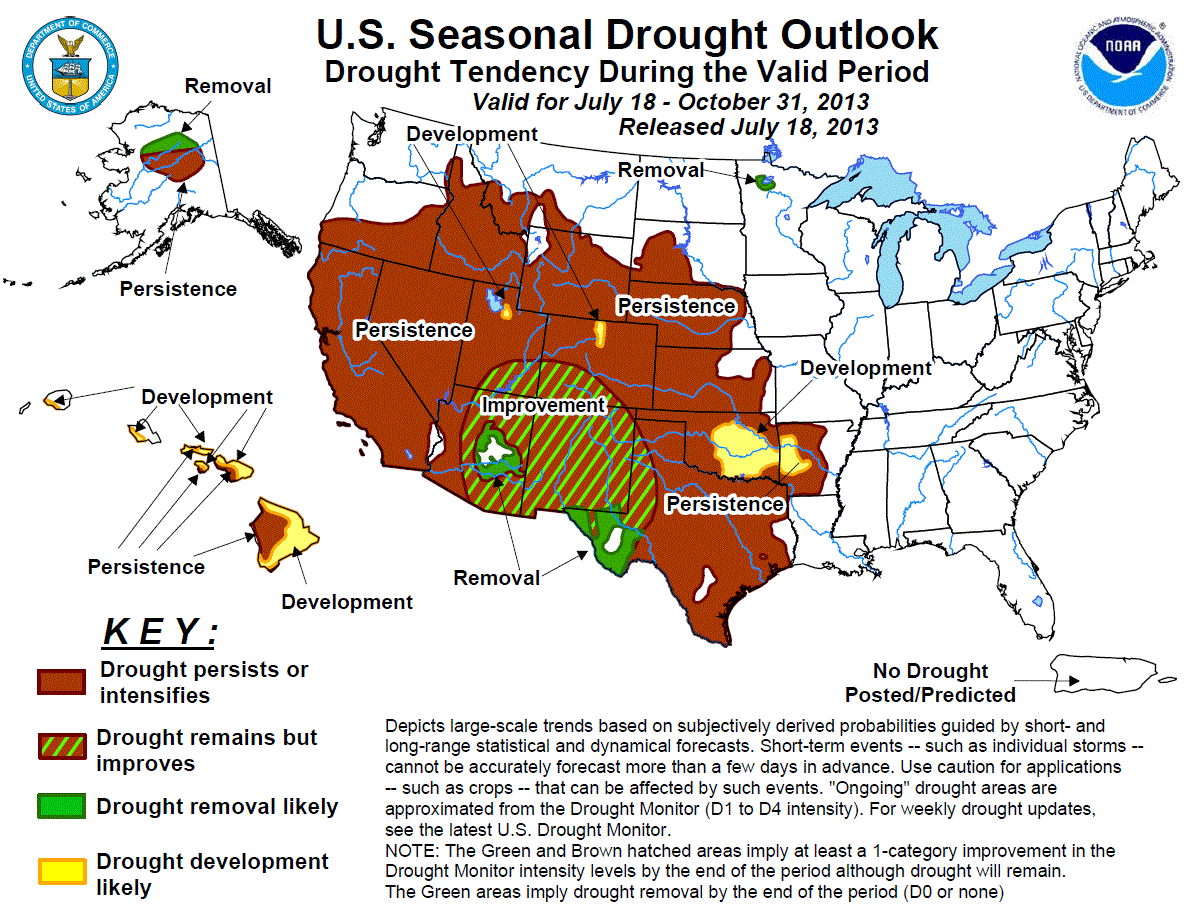
Here’s the drought outlook map from the Climate Prediction Center at NOAA:

U.S. Seasonal Drought Outlook Map, released May 19, 2011, NOAA and the Climate Prediction Center

U.S. Seasonal Drought Outlook Map, released May 19, 2011, NOAA and the Climate Prediction Center - click image for a larger version at NOAA's site.

It would be wonderful were these droughts to break soon.  But that is very unlikely.

So, why would anyone deny it?

Then, just to indicate the bait-and-switch logic these guys use, Goddard came back with a claim that the 1956 drought in Texas was worse, as if that means the current drought doesn’t exist.  Fore reasons apparent only to those whose heads get pinched by tinfoil hats, he also notes the CO2 levels for 1956.  I think I know what point he’s trying to make, but someone should tell him that apples are not oranges, and comparing apples and oranges to pomegranates doesn’t increase the supply of tennis balls.

Let’s just stick to the facts.  The experts who must operate the dams and lakes and get water to Mexico on schedule say the drought along the Colorado persists.  Who are we to gainsay them?

Resources:  

GEOSat photos of Lake Powell and drought, 2000 to 2004 - Dr. Paul R. Baumann, SUNY - Oneonta College

GEOSat photos of Lake Powell and drought, 2000 to 2004 - Dr. Paul R. Baumann, SUNY - Oneonta College


Encore post: Rebutting junk science, “100 things to know about DDT” point #6 (the “500 million saved” or “500 million died” errors)

June 22, 2009

Encore post — originally posted in August 2007.  Another in a continuing series, showing the errors in JunkScience.com’s list of “100 things you should know about DDT.” (No, these are not in order.)  In the summer of 2009, the denialists have trotted this error out again.

Steven Milloy and the ghost of entomologist J. Gordon Edwards listed this as point six in their list of “100 things you should know about DDT “[did Edwards really have anything to do with the list before he died?]:

6. “To only a few chemicals does man owe as great a debt as to DDT… In little more than two decades, DDT has prevented 500 million human deaths, due to malaria, that otherwise would have been inevitable.”

[National Academy of Sciences, Committee on Research in the Life Sciences of the Committee on Science and Public Policy. 1970. The Life Sciences; Recent Progress and Application to Human Affairs; The World of Biological Research; Requirements for the Future.]

In contrast to their citation for the Sweeney hearing record, which leads one away from the actual hearing record, for this citation, the publication actually exists, though it is no longer available in print. It’s available on-line, in an easily searchable format. [I urge you to check these sources out for yourself; I won’t jive you, but you should see for yourself how the critics of Rachel Carson and WHO distort the data — I think you’ll be concerned, if not outraged.] The quote, though troubled by the tell-tale ellipses of the science liar, is accurately stated so far as it goes.

The problems? It’s only part of the story as told in that publication.  The National Academy of Science calls for DDT to be replaced in that book; NAS is NOT calling for a rollback of any ban, nor is NAS defending DDT against the claims of harm. The book documents and agrees with the harms Rachel Carson wrote about eight years earlier.

Sign at the National Academy of Sciences building, Washington, D.C.

Sign at the National Academy of Sciences building, Washington, D.C.

Milloy (and Edwards, he claims), are trying to make a case that the National Academy of Sciences, one of the more reputable and authoritative groups of distinguished scientists in the world, thinks that DDT is just dandy, in contrast to the views of Rachel Carson and environmentalists (who are always cast as stupid and venal in Milloy’s accounts) who asked that DDT use be reduced to save eagles, robins and other songbirds, fish, and other wildlife, and to keep DDT useful against malaria.

First, there is no way that a ban on DDT could have been responsible for 500 million deaths due to malaria.  Calculate it yourself, the mathematics are simply impossible: At about 1 million deaths per year, if we assume DDT could have prevented all of the deaths (which is not so), and had we assumed usage started in 1939 instead of 1946 (a spot of 7 years and 7 million deaths), we would have 69 million deaths prevented by 2008. As best I can determine, the 500 million death figure is a misreading from an early WHO report that noted about 500 million people are annually exposed to malaria, I’m guessing a bit at that conclusion — that’s the nicest way to attribute it to simple error and not malicious lie. It was 500 million exposures to malaria, not 500 million deaths. It’s unfortunate that this erroneous figure found its way into a publication of the NAS — I suppose it’s the proof that anyone can err.

This error, “500 million deaths,” crops up in several publications after it was originally made near the end of the 1960s; honest researchers would get a good copy editor who would do the math and realize that 500 million people would not have died from malaria had there been no control at all, since 1939, when DDT was discovered to have insecticidal properties. Were Milloy and Edwards making a good faith case, I’d excuse it; but Edwards was a scientist and should have known better, Milloy has been spreading this falsehood long enough he could not fail to know better.

But the actual publication from the National Academy of Sciences suggests other issues that JunkScience.com would rather you not know about.

Importantly and specifically, the National Academy of Sciences is calling for broad research 1.) to avoid the problems that DDT presented (problems which Junk Science denies exist), and 2.) to combat the continuing evolution of the insect pests (evolution which Junk Science also denies), and 3.) to provide insecticides that hit specific targets to avoid the collateral damage of harming helpful insects, other animals and especially predators of the harmful insects (more problems that Junk Science pretends do not exist).

Three pages carry references to DDT in the book, The Life Sciences: Recent Progress and Application to Human Affairs — The World of Biological Research Requirements for the Future (National Academy of Sciences, 1970). This was a study of the state of science in several areas, with a survey of places particularly ripe for research considering human needs in the world. It was a sort of road map of where governments and other funders of research should spend their research monies in order to have the greatest beneficial effects.

The book suggests the need for extensive funding for research in biology over the following decade or two, or four. Were Milloy and Edwards correct that DDT was the panacea lifesaver, one might wonder why DDT was included in the book at all except to note a great success that precludes need for further research. That’s not what the book says at all.

Among the chief recommendations, NAS said research had to focus on rapidly biodegradable, closely targeted chemical pesticides to replace the DDT-style, long-lived, broad spectrum pesticides. NAS recognized the environmental dangers of DDT first and foremost in the introduction and statement of key recommendations:

It is imperative that new, degradable insecticides and pesticides with highly specific actions be devised and that their ecological consequences be understood, as it is imperative that the full ecological impact of the existing armamentarium of such agents be evaluated. Classical dose responses, evaluated only in terms of mortality or morbidity statistics, will not suffice; such data also must include an assessment in terms of modern knowledge of cell physiology, metabolism, and cytogenetics. [see page 11 of the book.]

These are exactly the things Milloy and Edwards ignore. This is a warning that simple toxicity tests on humans are not enough — pesticides need to be tested for downstream effects. That is what Rachel Carson called for in Silent Spring, research to understand the full effects of chemicals we use in the wild. This recommendation from NAS fully recognizes that chemicals like DDT, while they may offer significant benefits, can at the same time be significantly dangerous and damaging.

From the general introduction, the NAS authors point to three specific DDT-related issues. In general, the NAS view of DDT can be summarized like this: ‘DDT produced some great benefits fighting harmful insects, but its benefits need to be balanced against its great dangers and great potential for long-term damage. DDT is the poster child for beneficial chemicals that are also hazardous. We need to understand all the dangers as well as some of the benefits, in order to make wise decisions on chemical use. In the interim, where we have gaps in our knowledge, we should be careful.’

By carefully selecting only part of a statement by the NAS in one of the three areas of research, and leaving out all the qualifying statements, Milloy and the late Edwards misrepresent what NAS said. NAS was not calling for greater use of DDT. NAS was not calling for continued use of DDT. NAS was not criticizing any of the bans on DDT usage. NAS was saying we don’t know how great is the danger from DDT, and more study is needed; and use of DDT must be restricted in the interim.

Excerpt 1: Crop research

Increase research in rotating crops, herbicides and pesticides: In a section mentioning the need for alternative treatments, and commending organic methods of farming, on page 182 NAS notes the efficacy of crop rotation, and then talks about the need to have several different tools available to get rid of weeds and insect pests.

Similarly, recognition of the insecticidal properties of DDT in 1939, initially used against insects directly injurious to man, indicated the intelligent application of understanding of insect physiology, entomology, pharmacology, and the arts of the organic chemist could prevent crop destruction by insects. To date, the use of 2,4-D has increased yearly even though it has been replaced in part, and DDT is being withdrawn because of concern for its potentially adverse effects on man, transfer to the general environment, prolonged persistence, destruction of beneficial insects and possibly other wildlife, and stimulation of resistance in the target insects. These are now matters of broad general concern, and it is regrettable that public decisions must be made on the basis of our limited knowledge. But these compounds paved the way for modern agriculture. Without their equivalent, modern intensive agriculture is not possible, and, just as the continual breeding of new crop strains is imperative, so too is a continuing search for effective herbicides and pesticides, optimally with specific effects on offending organisms, degradable in the soil and nontoxic to man and animals. Attainment of these goals will require continuously increasing understanding of plant and insect physiology and life cycles.

Control of undesirable species by biological means is, in many ways, the most attractive possibility for future exploration. The notion is by no means new; attempts at such control began late in the nineteenth century. Indeed, some 650 species of beneficial insects have been deliberately introduced into the United States from overseas, of which perhaps 100 are established. These are now major factors in the control of aphids and a variety of scale insects and mealybugs. More recently, microbes and viruses have been considered for these purposes, a few of which are being used; for example, spores of the bacterium B. thuringiensis are used to control the cabbage looper and the alfalfa caterpillar. Some insects have been utilized for control of weeds — e.g., prickly pear in Australia and the Klamath weed in the western United States — while a combination of the cinnabar moth and the ragwort seed fly is required to keep down the population of the toxic range weed, the tansy ragwort.

There is no ringing endorsement for bringing back DDT, but rather a much more sophisticated understanding demonstrated that a variety of tools, some chemical and some living, need to brought to bear in agriculture and health — coupled with a clear understanding that non-beneficial effects need to be studied and understood, for all attempts to control pests for crops, and threats to humans. This is quite contrary to the general tone of Milloy’s and Edwards’s list, and far beyond the misleading snippet they offer.

Near the end of that first paragraph, the NAS call for pesticides that are pest specific, rapidly degradable once released, and nontoxic to humans and other beneficial creatures, targets and shoots directly at DDT, which is non-specific, long-lived in the soil, and toxic to almost everything.

That’s just the first of the three mentions of DDT.

Excerpt 2: Industrial technologies – Pesticide research

The second mention is in a discussion specific to pesticides. The NAS panel recommends research to find safe, short-lived alternatives that target specific pests. DDT is a long-lived toxin that has broad targets. This is a very long entry, but unlike the JunkScience.com guys, I think accuracy is more than one quote ripped out of context; in context, you see that NAS is not defending DDT as a safe, panacea against malaria.

I quote from the NAS publication at length, below; I want you to see that NAS is not contradicting Rachel Carson in any way; in fact, NAS is paying homage to Carson, adopting her calls to action in research and development, while updating the science which showed, in 1969, that Carson was right more than anyone could have known. Because it’s a long quote, I’ll put it in a different color, not boxing it where the formatting gets out of hand:

___________________________

From: The Life Sciences: Recent Progress and Application to Human Affairs — The World of Biological Research Requirements for the Future (National Academy of Sciences, 1970)

[Beginning on page 213]

Pesticides

As noted earlier, the properties of DDT and 2,4-D inaugurated a new era in management of our living resources and gave rise to a new industry. Each touched off a wave of research that continues to the present, seeking newer compounds that are species-specific, safe, and degradable. For the moment, the use of such compounds is indispensable; until superior means and materials are found, these compounds are essential to the success of our agriculture, while assisting in maintenance of our woodlands and protection of our health. It is the scale of this use, rather than their intrinsic toxicity, that has properly generated public concern over the effects of these chemicals on the public health. In 1966, total production of all pesticides in the U.S. was 1,012,598,000 pounds.

The rapid increase in use occurred because new pesticides have been developed that control hitherto uncontrolled pests, and broader use of pesticides in large-scale agriculture has increased crop yields significantly. Current trends in crop production involving large acreages, greater use of fertilizers, and intensive mechanized cultivation and harvesting offer particularly favorable opportunities for insect pests and would result in large crop losses to these pests unless control measures were applied.

The increased number of new pesticides in part reflects a second generation of pesticides with more appropriate persistence for economic control of specific pests, more complete control of the pest, less hazard for the applicator, or less hazardous residues on the crop. An additional impetus to the development of the pesticides comes from the fact that many insect pests have developed resistance to the older pesticides. The development of pest resistance does not necessarily entail the development of more dangerous pesticides; the new agent need only be chemically different to overcome resistance. The continuing search for new, more nearly ideal pesticides requires the joint effort of research teams composed of organic chemists, biochemists, pharmacologists, physiologists, entomologists, and botanists. The effort is managed much like the development of new drugs, each chemical entity being tested in a “screen” of a variety of insects.

About 73 percent of the total insecticide usage is in agriculture, and about 25 percent is used in urban areas by homeowners, industry, the military, and municipal authorities. The remaining 2 percent is applied to forest lands, grassland pasture, and on salt and fresh water for mosquito control. Over 50 percent of the insecticide used in agriculture is applied to cotton acreage alone.

When insect-control measures are not used in agriculture, insect pests take 10 to 50 percent of the crop, depending on local conditions. Losses of this magnitude are not readily tolerated in the United States in the face of a rapidly increasing population and a concomitant decrease in agricultural acreage. In this sense, the use of pesticides might be deemed essential at this time for the production and protection of an adequate food supply and an adequate supply of staple fiber. While alternative methods of pest control are under investigation and development, they are not yet ready to displace completely the chemical pesticides, and it appears that a pesticide industry will be required for some years to come.

Pesticides have been tremendously effective, but individual pesticides, like sulfa drugs and antibiotics, tend to lose their effectiveness as species resistance to them develops. Hence, there will be a continuing search for new pesticides as long as pesticides are considered to be required for the economy or the public health. This search will require the continuing participation of able biologists. As with drugs, new pesticides, optimally, should be selectively toxic for specific pests, rather than broadly toxic against a wide variety of pests with serious side-effects on nonpest species. Broad-spectrum pesticides affect an essential enzyme or system common to a wide variety of pests. A selective pesticide, on the other hand, either should affect an essential enzyme or system peculiar to a particular pest or should be applied in such a way that only the particular pest gains access to it.

An interesting example of a selective pesticide is the rodenticide norbormide, which is highly toxic for rats, particularly for the Norway rat. By contrast, the acute oral toxicity of norbormide for other species is much lower, the lethal dose for a great variety of birds and mammals, per kilogram of body weight, being more than 100 times greater. The mechanism of the selective toxic action of the norbormide for rats is not yet elucidated.

Achievement of target specificity requires a sophisticated knowledge of the anatomical, physiological, or biochemical peculiarities of the target pest as compared with other pests or vulnerable nonpests; a pesticide may then be developed that takes advantage of these peculiarities. This is obviously not easy to accomplish, and norbormide may prove to be unique for many years. An alternative is the introduction of a systemic pesticide into the host or preferred food of the target pest. Other pests or nonpests would not contact the pesticide unless they shared the same host or food supply. As an example, a suitable pesticide may be applied to the soil and imbibed by the root system of a plant on which the pest feeds. The pest feeding on the plant then receives a toxic dose. The application of attractants or repellents (for nontarget species) would increase the selectivity of the systemic pesticide. The use of systemic pesticides on plants used for food by humans or domestic animals poses an obvious residue problem.

There has been a strong public reaction against the continued use of pesticides on the grounds that such use poses a potential threat to the public health as well as being a hazard to wildlife. Careful investigations have so far failed to establish the magnitude of the threat to the public health; i.e., there are as yet few if any clear-cut instances of humans who have suffered injury clearly related to exposure to pesticides that have been used in the prescribed manner. Report No. 1379 of the 89th Congress (July 21, 1966)* concluded:

The testimony balanced the great benefits of disease control and food production against the risks of acute poisoning to applicators, occasional accidental food contamination and disruption of fish and wildlife. . . . The fact that no significant hazard has been detected to date does not constitute adequate proof that hazards will not be encountered in the future. No final answer is possible now, but we must proceed to get the answer. (Italics ours [NAS]).

Failure to establish such hazard does not mean that it does not exist. There are no living animals, including those in the Antarctic, that do not bear a body burden of DDT. Large fish kills and severe effects on bird populations have been demonstrated. The large-scale use of these agents has been practiced for less than two decades, and use has increased annually until this year (1969). Whereas the anticholinesterase compounds, which have high acute toxicity (and hence are highly hazardous to the applicator), are readily and rapidly degraded in nature, the halogenated hydrocarbons are not. With time, their concentration in the soil and in drainage basins, lakes, ponds and even the oceans must continue to increase, thereby assuring their buildup in plant and animal tissues. Over a sufficient time period, this is potentially disastrous. And should such a period pass without relief, the situation could not be reversed in less than a century. Because of the large economic benefit to the farmer, it is pointless to adjure him to be sparing; unless restrained by law, he will make his judgment in purely personal economics terms. But mankind badly needs the incremental food made possible by use of effective pesticides, and the enormous benefit to public health of greatly reducing the population of insects that are disease vectors is a self-evident boon to humanity. Thus it is imperative that alternative approaches to pest control be developed with all possible dispatch, while we learn to use available pesticides only where they are clearly necessary and desirable and to apply them in the minimal amounts adequate to the purpose.

A recent development in insect-pest control has been the possible use of juvenile hormone. This hormone, normally produced by insects and essential for their progress through the larval stages, must be absent from the insect eggs if the eggs are to undergo normal maturation. If juvenile hormone is applied to the eggs, it can either prevent hatching or result in the birth of immature and sterile offspring. There is evidence to suggest that juvenile hormone is much the same in different species of insects, and analogs have been prepared that are effective in killing many species of insects, both beneficial and destructive. There would, therefore, be great danger of upsetting the ecological balance if juvenile hormone were applied on a large scale.

What is needed, then, is development of chemical modifications of juvenile hormone that would act like juvenile hormone for specific pests but not for other insects. For example, a preparation from balsam fir, which appears to be such an analog, has been identified and is effective against a family of bugs that attack the cotton plant, but not against other species. If it proves possible to synthesize similar analogs specific for other pests, a new type of pesticide may emerge. If this happens, it will be extremely important to explore possible side-effects on other insect species and on warm-blooded animals before introduction of yet a new hazard into the biosphere.

We cannot rest with existing pesticides, both because of evolving resistance to specific compounds and because of the serious long-term threat posed by the halogenated hydrocarbons. While the search for new, reasonably safe pesticides continues, it is imperative that other avenues be explored. It is apparent that this exploration will be effective only if there is, simultaneously, ever-increasing understanding of the metabolism, physiology, and behavior of the unwanted organisms and of their roles in the precious ecosystems in which they and we dwell.

__________________

* U.S. Congress. Senate. Committee on Government Operations. Interagency Environmental Hazards Coordination, Pesticides and Public Policy (Senate Report 1379). Report of the Subcommittee on Reorganization and International Organizations (pursuant to S. R. 27, 88th Cong., as amended and extended by S. R. 288), 89th Cong., 2d sess., Washington, D.C., U.S. Government Printing Office, 1966.

________________________________

Anyone should be able to see from various parts of that excerpt that NAS was not defending DDT as harmless; that instead, NAS was saying that despite its great utility, DDT use needed to be extremely limited, and that substitutes for it needed to be found as quickly as possible — and then, the substitutes need to be researched to make sure they don’t have unintended bad effects, on other species, at other places, at other times.

Excerpt 3: The Great Hazards – Man and his environment

The third excerpt has the money quote — it contains an obvious error of fact, but an error that has been seized upon and trumpeted from one end of the world to the other: The 500 million dead miscalculation. Critics of environmental stewards like to trot this out, sometimes going so far as to accuse Carson and environmentalists of genocide, for the deaths of 500 million people that would have been prevented but for our concerns ‘for a few silly birds.’

I reiterate, the mathematics do not work. If we assumed 5 million deaths to malaria every year for the 20th century, we’d get 500 million deaths. Records indicate total deaths as high as 3 million in some years; since World War II, deaths have averaged about 1 million per year. So, even were it true that DDT bans unnecessarily caused all those deaths (and it’s not true), the total, between 1946 and 2006 would be about 50 million deaths. The “500 million deaths” figure is incorrect by a multiple of 10, at least, in addition to being absolutely in error historically. DDT never offered the realistic hope of eradicating malaria; by 1965, it was already failing where it was applied, and human institutional failures (not environmentalists) prevented its application in places where it might have helped.

The National Academy of Sciences (NAS) discusses hazards from chemistry and biochemistry, in one of its final chapters studying life sciences and their applications to human affairs. NAS authors write about the need to study causes of deaths and how to prevent them (including lung cancer and smoking), and there is discussion on the difficulty of getting clear answers to every question. In a section titled “Man and his environment,” NAS discusses environmental damage: Deforestation, pollution, and animal and plant extinctions. On page 430, there is an example given of supposedly beneficial chemicals turning toxic once released; DDT is the example:

Then NAS discusses DDT:

Large-scale use of pesticides can start a chain in which these substances concentrate in plant an animal tissues and, when ingested, accumulate in the adipose [fat] tissue of the human body. As an illustration of this process, consider the record of Clear Lake, California, where DDD (a breakdown product of DDT) entered the lake at 0.02 part per million (ppm). A year later, its concentration was 10 ppm in the plankton, 900 ppm in fish that eat the plankton, and 2,700 ppm in fish that eat fish that eat plankton. No data are available concerning people who ate such fish.

* * * * *

The effects of these changes in the environment on man himself are not known.

NAS notes that absence of proof of damage should not imply safety, and the article notes that small doses of pollutants, repeated over time, can cause serious health problems.

And then, on page 432, NAS discusses the harmful, latent effects of substances considered to be beneficial — using DDT as the example:

Until reliable evidence thus obtained becomes available, public health measures designed to minimize exposure to such pollutants are patently advisable. But surely a rule of reason should prevail. To only a few chemicals does man owe as great a debt as to DDT. It has contributed to the great increase in agricultural productivity, while sparing countless humanity from a host of diseases, most notably, perhaps, scrub typhus and malaria. Indeed, it is estimated that, in a little more than two decades, DDT has prevented 500 million deaths due to malaria that would otherwise have been inevitable. Abandonment of this valuable insecticide should be undertaken only at such time and in such places as it is evident that the prospective gain to humanity exceeds the consequent losses. At this writing, all available substitutes for DDT are both more expensive per crop-year and decidedly more hazardous to those who manufacture and utilize them in crop treatment or for other, more general purposes.

The health problems engendered by undesirable contaminants of the environment may also be raised by substances that are intentionally ingested. Only large-scale, long-term epidemiological research will reveal whether the contraceptive pills, pain killers, sleeping pills, sweetener, and tranquilizers, now consumed on so great a scale, have any untoward long-range effects on their consumers.* Man has always been exposed to the hazards of his environment and it may well be that he has never been more safe than he is today in the developed nations. Food contamination is probably minimal as compared with that in any previous era, communal water supplies are cleaner, and, despite the smog problem, air is probably less polluted than in the era of soft coal or before central heating systems were the norm. Witness the fact that jungle dwelling natives of South America exhibit a considerably higher incidence of chromosomal aberrations in their somatic cells than does the American population. But modern man also increasingly exposes himself to the chemical products of his own technologies and has both the biological understanding to ascertain the extent of such hazards and the prospect of technological innovation to minimize them where they are demonstrated. To do less would be improvident and derelict.

__________________________

* This sentence was written in June 1969. Revelations of the untoward effects of both steroid contraceptives and cyclamates were made public months later.

__________________________

As presented by the “100 facts about DDT” list, all the qualifiers, warnings, and listed harms of DDT are left off. The numbers cited in the quoted section are in error, and considering that the NAS was calling for research into the harms of DDT, research to replace DDT with chemicals that were short-lived, more carefully targeted by species, and fully researched to avoid the collateral harms DDT caused, it seems dishonest to present that edited quote as an endorsement of DDT. It is no endorsement at all.

And so, it is dishonest to present the quote at all so grossly out of context.

Steven Milloy should strike #6 from his list of “100 things you should know about DDT.”

Save

Save


Alma conference on DDT and human health calls for DDT phase out (Pine River statement)

May 5, 2009

Wheels of science grind carefully, accurately, and consequently, slowly.

The report from last year’s Alma College conference on DDT and human health has been published in .pdf form at Environmental Health Perspectives:  “The Pine River Statement:  Human Health Consequences of DDT Use.”

Carefully?  Check out the pages of references to contemporary studies of human health effects.  Each one of the studies cited is denied by the more wild advocates of DDT use, and each of those studies refutes major parts of the case against DDT restrictions.

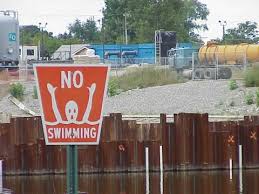
Warning sign near the old Velsicol plant where DDT was produced, on the Pine River, Michigan. The 1972 ban on DDT use in the U.S. was prompted by damage to wildlife and domestic animals; a 2009 conference noted that human health effects of DDT are also still of great concern, and perhaps cause alone for continuing the ban on DDT.

Warning sign near the old Velsicol plant where DDT was produced, on the Pine River, Michigan. The 1972 ban on DDT use in the U.S. was prompted by damage to wildlife and domestic animals; a 2009 conference noted that human health effects of DDT are also still of great concern, and perhaps cause alone for continuing the ban on DDT.

Accurately?  Notice how the conference marks those areas where we do not have good research, such as in the long-term health effects to people who live in the houses that are sprayed with DDT for indoor residual spraying (IRS).  While the conference report cites studies showing elevated DDT levels in the milk of women who live in those homes, they draw no unwarranted conclusions.  Alas, that leaves the field free for Paul Driessen to rush in and claim there are no ill effects — but read the paper for yourself, and you’ll see that’s far from what the research shows.  The paper exposes Steven Milloy’s claims to be almost pure, unadulterated junk science.

Slowly?  Well, it’s been more than a year.

The paper makes one powerful statement that is only implicit:  The claims that DDT is safe, and that use of the stuff should be increased, are wildly inflated.

The paper’s abstract:

Objectives: Dichlorodiphenyl trichloroethane (DDT) was used worldwide until the 1970s, when concerns about its toxic effects, its environmental persistence, and its concentration in the food supply led to usage restrictions and prohibitions. In 2001, more than 100 countries signed the Stockholm Convention on Persistent Organic Pollutants (POPs), committing to eliminate the use of 12 POPs of greatest concern. DDT use was however allowed for disease vector control. In 2006, the World Health Organization and the U.S. Agency for International Development endorsed indoor DDT spraying to control malaria. To better inform current policy, we reviewed epidemiologic studies published in the last five years which investigated the human health consequences of DDT and/or DDE exposure.

Data Sources and Extraction: We conducted a PubMed search in October 2008 and retrieved 494 studies.

Data Synthesis: Use restrictions have been successful in lowering human exposure to DDT, however, blood concentration of DDT and DDE are high in countries where DDT is currently being used or was more recently restricted. The recent literature shows a growing body of evidence that exposure to DDT and its breakdown product DDE may be associated with adverse health outcomes such as breast cancer, diabetes, decreased semen quality, spontaneous abortion, and impaired neurodevelopment in children.

Conclusions: Although we provide evidence to suggest that DDT and DDE may pose a risk to human health, we also highlight the lack of knowledge about human exposure and health effects in communities where DDT is currently being sprayed for malaria control. We recommend research to address this gap and to develop safe and effective alternatives to DDT.

Rachel Carson was right.

Tell other people about this conference report.  This is real science, and it deserves to be spread far and wide.

Tip of the old scrub brush to Ed Lorenz at Alma College, both for providing the news, and for his work to organize the original conference.

Other information:


DDT falsehoods, taken as an article of faith

December 31, 2008

Brown pelican egg rendered uncapable of protecting the (now dead) chick when DDT prevented the mother pelican from forming an adequate shell for the egg.

Brown pelican egg rendered uncapable of protecting the (now dead) chick when DDT prevented the mother pelican from forming an adequate shell for the egg. Pelican Media image.

Just when you start thinking the world is safe for the facts — safe for the truth — some well-meaning-but-poorly-informed person comes along to remind you that it’s a constant struggle to keep the flame of truth from being snuffed out for no good reason.

Henry I. Miller didn’t publish a screed demanding DDT be misused against West Nile virus this year, which I count as a major victory.  As you know, DDT is the wrong stuff to use to fight West Nile, so calling for DDT in that case merely means you’re an ideologue who wants to slam science, and it probably means you wish disease victims would hurry up and die.  (“More statistics to use against libruls!”)

Henry I. Miller. How many years at the Hoover Institute before he finds the library at Stanford to check his claims on DDT?

Henry I. Miller. How many years at the Hoover Institute before he finds the library at Stanford to check his claims on DDT?

And even Oklahoma’s reigning Senate fool Tom Coburn lifted his hold on the bill naming for Rachel Carson the post office in her hometown.

But, on the second to last day of the year, comes Bob Mattes at Reformed Musings, to claim that climate change is a hoax, and say he knows it’s so because DDT is safe and Rachel Carson was wrong. Mattes is a deacon in a Presbyterian church in Virginia; the name of his site is a reference to reformed theology, I gather.

When someone claims as a matter of faith, things that are well known to be wrong and easily debunked, that someone is unlikely to be swayed by the facts. In fact, Mattes allows no criticism of his post at his blog — he’s turned off comments on that post.

Will he drop by here to read his errors?  Not likely.  Would he correct the errors if he knew?  It’s not good to gamble when the odds are long against you.

Reformed Musings said:

Want a concrete example of the impact of eco-socialism? Three letters – DDT.

Well, no, I don’t want an alleged example of eco-socialism from an eco-fascist, one whose mind is made up, incorrectly, and who will not let the facts sway him.  Notice that the authority he cites is that well-known purveyor of junk science, Junk Science, the ethically-challenged website run by the industry campaign in favor of DDT.  If one dances to the devil’s tune, one should not claim not to be doing the devil’s work.

If this be eco-socialism, it’s God-blessed, and we should revel in it and make the most of it.

In the 60’s, there was the big DDT scare, with activists claiming that the pesticide was killing off our birds and bees.

Right.  And it was true, DDT was killing our birds and bees.  It took more than 30 years of not using DDT to rescue our national symbol, the bald eagle, from DDT’s killer effects.  Is it fair to call it a “scare” if it’s true?

Rachel Carson sold the big lie in her famous book Silent Spring, which was full of misrepresentations.

See, here’s how we know Mattes doesn’t know what he’s talking about, and probably hasn’t read the book.  Carson was very careful in her book.  She offered more than 50 pages of citations to science papers and hard research to support what she wrote — a “don’t take my word for it, check it out for yourself” kind of honesty.

Discover magazine carried an article about DDT and Carson’s book in November 2007Discover said that, since 1962, more than 1,000 peer-reviewed publications support Carson’s conclusions, a record remarkable in any branch of science.

In fact, Carson may have underestimated the impact of DDT on birds, says Michael Fry, an avian toxicologist and director of the American Bird Conservancy’s pesticides and birds program. She was not aware that DDT—or rather its metabolite, DDE—causes eggshell thinning because the data were not published until the late 1960s and early 1970s. It was eggshell thinning that devastated fish-eating birds and birds of prey, says Fry, and this effect is well documented in a report (pdf) on DDT published in 2002 by the Department of Health and Human Services’ Agency for Toxic Substances and Disease Registry (ATSDR). The report, which cites over 1,000 references, also describes how DDT and its breakdown products accumulate in the tissues of animals high up on terrestrial and aquatic food chains—a process that induced reproductive and neurological defects in birds and fish.

Had Mattes been paying attention (was he even alive then?), he’d have noted that President John F. Kennedy tasked the President’s Science Advisory Council to check out Carson’s book, to see whether it was accurate, and whether the government should start down the path of careful study and careful regulation of pesticides as she suggested.  In May 1963 the PSAC reported back that Carson was dead right on every issue, except, maybe for one.  PSAC said Carson wasn’t alarmist enough, that immediate action against pesticides was justified, rather than waiting for later studies or delaying for any other reason.

So, here I issue a challenge to Bob Mattes:  Tell us where Rachel Carson was wrong.  Cite for us a page in Silent Spring where she made a significant error in science, a point that has not been borne out as correct in later studies.

I’ve been making this challenge for a year and half now, and not even Stephen Milloy has been able to offer a single error Carson made.  A few have said they “heard” Carson erred in one thing or another, but upon checking, we’ve always found that the claimed errors were nowhere to be found, or the errors alleged were misstated, or, more often, what was claimed as error simply was not.

It’s a very odd situation:  We have a deacon of the Presbyterians assaulting the honor of a distinguished scientist, using false claims as his ammunition.

As usual, the ignorant entertainment industry frothed at the mouth for the new fad cause. Joni Mitchell sang: “Hey, farmer, farmer, put away that DDT now. Give me spots on my apples but leave me the birds and the bees.” Cute, huh?

As a result, DDT was banned world-wide. Problem was, not only were the zealots wrong, but nothing killed deadly malaria-carrying mosquitoes better than DDT.

DDT has never been banned worldwide.  It’s still manufactured in several places — it’s still a deadly hazard in India.  It’s been in constant use in many nations, such as Mexico and South Africa.  Limitations on DDT use have always included a loophole allowing DDT to be used to protect against malaria — even the 2001 Persistant Organic Pesticides Treaty has a special clause allowing DDT to be used against malaria.

So it’s false to claim that DDT was banned worldwide, ever.  We might be much better to get to that position because it would keep nuts from claiming that all we have to do is poison Africa to make Aricans healthy — but in any case, there is no ban on DDT to fight malaria.

Use of DDT began to decline in the mid 1960s when mosquitoes began to exhibit resistance and even immunity to the stuff.  Genetic studies now find that almost all mosquitoes in the world have multiple copies of a gene that allows the bug to digest DDT more as a nutrient, rendering it ineffective as a pesticide.  The World Health Organization had begun an ambitious campaign to knock down mosquito populations long enough that malaria would die out; but by the mid 1960s, the burgeoning resistance to DDT rendered that campaign untenable.  DDT use against mosquitoes, which was never undertaken in much of Africa because some local governments were not stable enough to manage an anti-mosquito campaign, declined, and stopped in places where DDT simply did not work.

In fact it was gross overuse of DDT by agricultural interests that drove the resistance among insects.  Had that overuse been controlled earlier, we might have been able to kill of malaria.  It was not a ban on DDT that caused its use to decline.  It was that DDT stopped working.  No one in their right mind will spend money on a pesticide that doesn’t work, no matter how cheap the stuff is.

But it wasn’t popular culture that got DDT banned.  In the late 1960s litigation on DDT spraying worked through the courts.  By 1972, two federal courts ruled in separate cases that the federal government had failed to carry out its obligations to control the use of DDT as required by law, based on evidence presented in court that demonstrated clear harm.  Both courts ordered the government to promptly hold the administrative hearings necessary to alter the registration for DDT.  The hearings started in the Department of Agriculture, which moved slowly.  When the Environmental Protection Agency (EPA) was created, it got the authority to regulate pesticides from Ag.  The courts ordered EPA to get off its duff and speed the process.

In the midst of a nine-month-long hearing process that accumulated thousands of pages of scientific documentation of the harms of DDT, manufacturers of the pesticide voluntarily changed their labels to limit use of DDT essentially to emergency situations, not general broadcast applications. Judge Edmund Sweeney, the EPA administrative law judge, thought that change, which was what was pending, meant that EPA did not need to act, and he so ruled at the end of the process.  EPA Administrator William Ruckleshaus, a veteran of more recent environmental litigation, understood the courts had ordered a more ironclad change, and he imposed tighter registration standards on DDT that prohibited its use on agricultural crops, except in emergencies.  There was also a loophole built in to protect public health.

DDT manufacturers sued EPA to overturn the rule.  The courts ruled that the scientific evidence was overwhelming, and that EPA’s rule was firmly grounded.  The manufacturers did not appeal further.  So, DDT use in the U.S. was severely restricted by the end of 1972, following earlier restrictiosn in Sweden.

Can Mattes read a calendar?  How does a ban on DDT in Sweden in 1970, in the U.S. in 1972, make Africa stop using DDT in 1965?

Literally millions of poor have needlessly died from malaria in Third World countries as a result of the ban. Malaria is the 4th leading cause of death in the world. Drug-resistant strains are starting to dominate. Eradication is the real answer. Only recently have countries like South Africa defied the ban and started spraying DDT again to fight malaria. Ideas have consequences – eco-socialism routinely kills, just not in the comfy apartments of the self-serving eco-socialists.

What ban is he talking about? South Africa suspended DDT use only briefly at the end of the 20th century — but South Africa’s problems are not caused because South African mosquitoes roared back when they were not sprayed wholesale with DDT.  Malaria in South Africa rose when the disease came over the border from other nations where the disease was less controlled.  South Africa brought back DDT use, though in a more limited fashion.  There was no ban to defy.  Mattes is telling a whopper here.

Mattes cites the Centers for Disease Control when he says malaria is the fourth leading killer in the world.  He either fails to notice or fails to say that CDC does not ask for DDT to be brought back to fight malaria.  CDC calls for bednets, for draining of breeding areas, for better medical care and better diagnosis, but not for more DDT.  Why?  When the leading disease fighting organization in the world does not ask for DDT, we might assume it puts DDT way down on its list of priorities (as it does).  Remember, CDC’s origins were in the fight against mosquito-borne diseases.  CDC speaks with authority on mosquito eradication.  CDC does not ask for more DDT, anywhere.  His own authority — he should listen to them.

Health care professionals note that malaria made a serious resurgence when the malaria parasites themselves became resistant to the pharmaceuticals used to treat them.  This has nothing to do with DDT, because DDT is not given as a drug to humans (it’s a poison, mildly carcinogenic, and there is no demonstrated effectiveness against the parasite).

Can Bob Mattes read a map?  How do restrictions on spraying DDT on cotton fields in Texas, cause malaria to increase in Africa?

Mattes closes his post:

History shows that the eco-socialists have NEVER been right. EVERY scare prediction they’ve ever tried fails to materialize. Unfortunately, history starts today for most folks. We don’t teach logic or real science in public schools anymore, just the religion of political correctness. Ignorance breeds disaster, especially for those in developing countries who can’t speak for themselves and don’t have a George Soros funding their latest fad cause. Remember DDT. Remember global cooling. Remember the limitations of computer modeling. Don’t be duped.

Except, the “eco-socialists” as Mattes mislabels them were right about DDT, they were right about malaria, they were right on the science about wildlife damage from DDT, and they were right on the history.

Ignorance does indeed breed disaster, which is where Mattes’s views will take us.  He should carefully consider his closing trio of words, and follow them religiously.

If Mattes is so wrong on every claim about DDT, do you think we should trust anything he says about climate change?

Updates:


Hydrogen power: Still a gas after all these years

April 20, 2008

There must have been news conferences, press releases and lengthy stories, but I missed them.  It came as a quiet surprise to stumble across GM’s website talking about a fleet of 100 hydrogen fuel-cell cars, on the road now.

Chevy has launched a test fleet of hydrogen-powered fuel cell Equinox SUVs. This fleet hit the streets of New York City, Washington, D.C., and Southern California.

“Project Driveway” is the first large-scale market test of fuel cell vehicles with real drivers in the real world. Why? Because hydrogen fuel cells use zero gasoline and produce zero emissions. They’re a sustainable technology for a better environment. And they ultimately reduce our dependence on petroleum. Equinox Fuel Cell is an electric vehicle powered by the GM fourth-generation fuel cell system, our most advanced fuel cell propulsion system to date. The electric motor traction system will provide the vehicle with instantaneous torque, smooth acceleration, and quiet performance.

The Equinox Fuel Cell will go nearly 150 miles per fill-up, and reach a top speed of 100 mph. Green Car Journal has given the Chevy Equinox Fuel Cell its Green Car Vision Award. The Equinox Fuel Cell won the award over several nominees, including the Honda FCX Clarity and Toyota Prius Plug-In.

If you live in one of those cities, you may be eligible to test drive one of the vehicles.  Were I there, my application to try one would have been in before I started this piece.

It took 20 years longer than it should have to get hybrid fueled vehicles on the road; hydrogen power lags at least as far back.  To those of us who long ago gave up hoping the Detroit Big 3 might see the light on hydrogen in any form, the news GM has a fleet of fuel-cells in pre-Beta testing is most interesting.  We remember GM’s last foray into electric cars.  Hopes do not rise, at least not great hopes, and not high.

It’s been 31 years since Roger Billings drove a hydrogen-powered internal combustion car in Jimmy Carter’s inaugural parade.  Hope abides, but not forever.  Feathers cannot sustain hope that long, Emily.

Fuel cells provide significant advantages, though.  The need for something like fuel cells should drive a market to make the things work.   [More about fuel cells, hydrogen, and Roger Billings, below the fold.]

Read the rest of this entry »


Problem for climate change skeptics: Climate changing

March 17, 2008

It’s just one more report to throw on the pyre of reports to be burned if it ever turns out as skeptics say and others hope, global climate change is just a momentary trend: From 1999 to 2006, the pace of glacier melting worldwide picked up.

We had a cold winter; skeptics will argue that the winter of 2007-2008 was not included, and it reverses the trend.

If only that were so.


DDT conference: Safe or not? Who will report?

March 12, 2008

March 14 beckons from the near horizon. A group of scientists and policy wonks will gather at Alma College, in Alma, Michigan, to look at the issues of DDT and health. This is the first major conference of its kind since the POPs Treaty, at least.

Logo for Kenaga DDT Conference, Alma College, 2008

Controversy again swirls around DDT, with a large industry campaign again after the reputation of Rachel Carson just the same as in 1963 — though Ms. Carson has been dead since 1964. The disinformation campaign also impugns environmentalists, health care workers (especially if they’ve ever worked for the World Health Organization), Al Gore (there is no rationale), and when the minions think they can get away with it, it impugns bed nets and stagnant pool draining.

This public relations campaign against Rachel Carson enjoys a great deal of success. Oklahoma’s Sen. Tom Coburn, who seems never to have met an insult to a scientist he couldn’t use, successfully stopped the U.S. Senate from passing a bill naming a post office in honor of Rachel Carson, one of Coburn’s greatest legislative achievements. Several people in Congress, including Utah’s Rep. Rob Bishop, were similarly hornswoggled.

This conference could put real, accurate information in front of the public.

Are my expectations way too high? I hope reporting from this conference might inject sanity, comity, humility and courtesy back into the discussions of how to treat malaria, and whether DDT should ever be used.

Associated Press? Reuters? New York Times? Chicago Tribune? Detroit News, or Detroit Free Press? Lansing State Journal?

Who will report from the conference?

I hope major news outlets will have reporters there.

Resources:


DDT and health effects on children

February 25, 2008

Current issue of On Earth (Winter 2008), an article by Kim Larsen about fighting malaria in Africa, “Bad Blood”:

DDT can interfere with the feedback loop in the pituitary gland, which releases the milk-producing hormone prolactin. Studies show that exposure to DDT at critical points in pregnancy or just after childbirth can reduce the output of breast milk, or even dry it up. In such instances the mother will turn to formula, which is expensive. And in Africa formula feeding often leads to another death sentence for babies: diarrhea (infants have no immunity to the microbes that abound in contaminated drinking water throughout much of the continent). Here, then, exposure to DDT may cause as swift and bleak an outcome as exposure to a mosquito.

On Earth is a publication of the Natural Resources Defense Council (NRDC).


March 14, 2008 conference on DDT and health

February 1, 2008

Poster for 2008 conference on DDT

Steven Milloy must be apoplectic.

On March 14, 2008, Alma College, in Alma, Mich., is hosting a conference examining what is known about the impact of DDT on human health and the environment.

The conference will bring together a number of national and international experts to frame and lead discussions of current knowledge of DDT. Attendees will engage with experts to plan what research or other projects are needed to address questions about the impact of DDT and other persistent organic pollutants (POPs).

The conference is jointly sponsored by the Center for Responsible Leadership at Alma College, the Ohio Valley Chapter of the Society for Environmental Toxicology and Chemistry, and the Pine River Superfund Task Force, a U.S. Environmental Protection Agency (EPA) community advisory group (CAG) for Superfund sites in the Pine River watershed in Michigan.

Why Alma College?

For a number of years students and faculty at Alma have helped support the work of the Pine River Task Force. The Superfund sites in the watershed of the Pine River resulted from the massive dumping of byproducts from production of DDT and a fire retardant based upon polybrominated biphenyls (PBBs) by Velsicol Chemical Company. In addition to general dumping of wastes, Velsicol was responsible in 1973 for one of the worst food contamination mistakes in history, when PBB was erroneously mixed with animal feed and remained undetected for a year.

While highly contaminated for decades, the Pine River watershed has been fortunate to be the location of Alma College, with a long tradition of community involvement, and also the home of a number of people with remarkable expertise. One of the long time members of the CAG was the late Eugene Kenaga (1917-2007), for whom the conference is named.

Eugene Kenaga

During World War II, Dr. Kenaga served as an officer in a malariology unit in the Pacific Theater, using DDT. For forty-two years he was a research scientists with the Dow Chemical Company, for many years in charge of their entomological research. In 1968 he served on a three-member blue ribbon pesticide advisory panel (for Michigan Governor George Romney) that restricted use of DDT in the state. After the formation of EPA, he served on a variety of EPA advisory panels. He was also one of the founders of the International Society of Environmental Toxicology and Chemistry (SETAC).

And:

Recently, the College, SETAC, and Task Force have become aware of an international campaign that questions the national and international restrictions on the use of DDT. Knowledge of this campaign led to the decision to bring together international experts and concerned citizens to discuss what is known and needs to be known about the impacts on human health and the environment arising from exposure to DDT and the other POPs.

Serious scholars, academic rigor, real scientists, real science, government agencies charged with protecting human health and environmental quality, the Center for Responsible — will any of the DDT advocates have the backbone to show? They don’t appear to fit any of those categories.

Eugene Kenaga International DDT Conference on Environment and Health
March 14, 2008
Alma College, Alma, Mich.

DDT: What We Know; What Do We Need to Know?

Speakers scheduled for the conference, listed below the fold.

Read the rest of this entry »


Eagle recovery still on, since DDT halt

December 26, 2007

One-paragraph in a story in the Philadelphia Daily Inquirer with a lot of impact:

A record number of bald eagles soared past Hawk Mountain in Berks County this fall, continuing a comeback that began with the banning of DDT in 1972. Then, 18 eagles were counted during the typical migration. The count this fall: 230. – Don Sapatkin

Caption from PennLive.com blog: Visitors and staff gather on the South Lookout at Hawk Mountain Sanctuary, near Kempton, Berks County. (HAWK MOUNTAIN SANCTUARY PHOTO)

Caption from PennLive.com blog: Visitors and staff gather on the South Lookout at Hawk Mountain Sanctuary, near Kempton, Berks County. (HAWK MOUNTAIN SANCTUARY PHOTO) (Photo substituted here for previous photo noted below, which has gone missing in DatedLinksLand)

 South Lookout at Hawk Mountain, Pennsylvania

South Lookout at Hawk MountainThe view from a rocky ledge near the entrance at Hawk Mountain provides a spectacular view of the countryside and is a good vantage point for watching migrating raptors in the fall. This photo was taken the afternoon of 10-16-2006.  Public domain photo, via Answers.com.

The white area at upper center is the “River of Rocks”. According to http://www.hawkmountain.org, this formation is a mile-long boulder field, up to 40 feet deep, which was deposited 10,000-12,000 years ago (the end of the last Ice Age), when glaciers stopped 40-50 miles to the north of this location. Repeated freezing and thawing cracked boulders from the ridgetop that gradually slid to their current position.


‘Twas DDT nearly killed the beast

December 20, 2007


This University of Buffalo South Campus resident keeps a watchful eye over the nesting box in the Mackay tower that was custom-designed by UB facilities staff. - See more at: http://www.buffalo.edu/news/news-releases/arts-and-culture.host.html/content/shared/university/news/news-center-releases/2010/04/11203.html#sthash.hqz74P1J.dpuf

This University of Buffalo South Campus resident keeps a watchful eye over the nesting box in the Mackay tower that was custom-designed by UB facilities staff. – See more at: http://www.buffalo.edu/news/news-releases/arts-and-culture.host.html/content/shared/university/news/news-center-releases/2010/04/11203.html#sthash.hqz74P1J.dpuf

It was DDT that nearly did in the peregrine falcon, not habitat destruction, not hunters, not egg collectors.

Dr. [Tom] Cade, who said he had been fascinated by falcons from childhood and who did his Ph.D. dissertation on the peregrine and gyrafalcon in Alaska, recalled that at first the peregrine’s plight was mistakenly attributed to overdevelopment, molestation by falconers, collection of its brown speckled eggs by admirers and wanton killing by people who simply did not like falcons. But at a conference at the University of Wisconsin in 1965, experts realized that the crash of falcons was a worldwide problem, and, as Rachel Carson suggested in ”The Silent Spring,” DDT was probably the main culprit.

DDT is an organochloride compound that breaks down into DDE, a highly persistent chemical that is stored in the fat of animals that consume it, especially predators like peregrines that are at the top of the food chain. DDE interferes with the deposition of calcium in the shells of the birds’ eggs, leaving them too fragile to survive incubation by females weighing two or three pounds.

Remarkable story of the dedication of one ornithologist, a successful program to revive an endangered species, and serendipity with a happy ending, in an often-overlooked article by science writer Jane Brody at the New York Times, February 15, 2000.

Junk science advocates claim that DDT did no serious damage to birds; the story of the peregrine falcon indicates that DDT was the major culprit in a worldwide decline of raptors. (This is direct refutation of claims by Steven Milloy and the late Gordon Edwards.)

Apart from the rebuttal points, Brody’s story tells how scientists work, how they make mistakes and recover, and how luck plays a huge role in some endeavors.

Peregrine falcons were delisted from the endangered species list in 2000, due largely to the success of Tom Cade’s captive breeding program, coupled with a decline in DDT in the wild after DDT use was restricted.


The Story of Stuff

December 15, 2007

How many different lesson plans can you get from this video? How about from this video with the add-ons?

Vodpod videos no longer available. from www.willbrehm.com

posted with vodpod
You can see a higher quality version at Will Brehm’s “Story of Stuff” website.

The site offers a lot. E-mail updates on issues, cheap DVDs of the movie ($10.00 each for the first 10, $9.00 each for the next 10 . . . you may want to get a copy for each social studies classroom), background stories to the movie, story of Annie Leonard, background sheets, lists of organizations working on the issues and reading lists and more. I found no lesson plans, but you can surely cobble one together for an hour class, with 20 minutes taken up by the film. Plus you can download the movie, for free.

Go noodle around the site: There are lots of possibilities for student projects, student discussions, in-class exercises, homework, and fun.

This movie details, quickly and with good humor, the economics of recycling, the economics of waste disposal, and the economics of production. This provides a great gateway to talk about civics and government, and how to make things happen like garbage collection and recycling; a gateway to talk about economics, especially the various flows of money and goods; a gateway to talk about geography and how we have used our land and rivers to bury and carry waste; and how we use natural resources generally.

This would also be a good video for Boy Scout merit badge classes for the Citizenship in the Community and Citizenship in the Nation badges.

Contrasted with most of the industrial grade video I’ve seen for economics classes, this is fantastic. It’s better than any of the sometimes ambitious, but ultimately dull productions from the Federal Reserve Banks (are you listening, Richard Fisher? Hire Will Brehm’s group). (No offense, Osgood — yours is the best of that lot.)

Sen. Tom Coburn, R-Okla., probably has political objections to the movie, claiming it leans left, which indicates it’s in the mainstream. If you’re using any other supplemental material in your classes, this just balances it out.

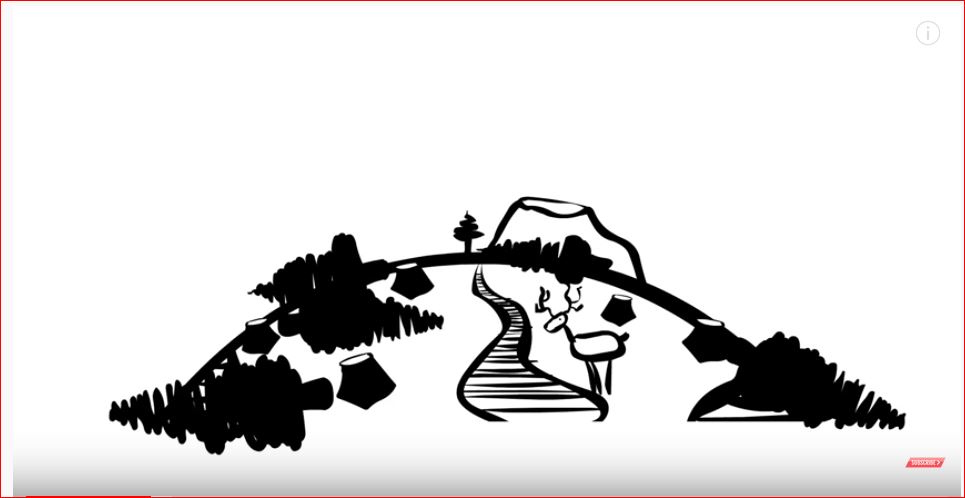
Screen capture from the film, “Story of Stuff”