Incomplete history and Willie Nelson

December 27, 2008

Fort Worth Weekly did a story on Willie Nelson’s living in Fort Worth in the 1950s.  The writer drove by Willie’s old haunts.

But no pictures? No directions on how to get to the future shrines?  How is the National Register of Historic Places supposed to find the things?

The Weekly was doing what might amount to a local sidebar on Willie Nelson: An Epic Life, Joe Nick Patoski’s biography of the composer and singer.  The Weekly needs to learn a bit about including web links, and especially about including photographs!

(Who’s going to get Patoski’s book, get the addresses, and post photos?)

Accuracy note: I linked to Robert Hilburn’s review of the book in the Los Angeles Times; he has another version of the story of Willie’s first wife, Martha, sewing him in the bedsheets when he came home drunk, then beating him with a broom.  Hilburn’s review is worth reading just to get this story from another view.


FAIL repeated: Challenges to Obama’s eligibility

December 26, 2008

Some weeks ago we visited six hurdles that the case against Barack Obama’s eligibility for the presidency would have to overcome to disqualify him.

All six hurdles still remain.  No one has made any serious response to any of the six.

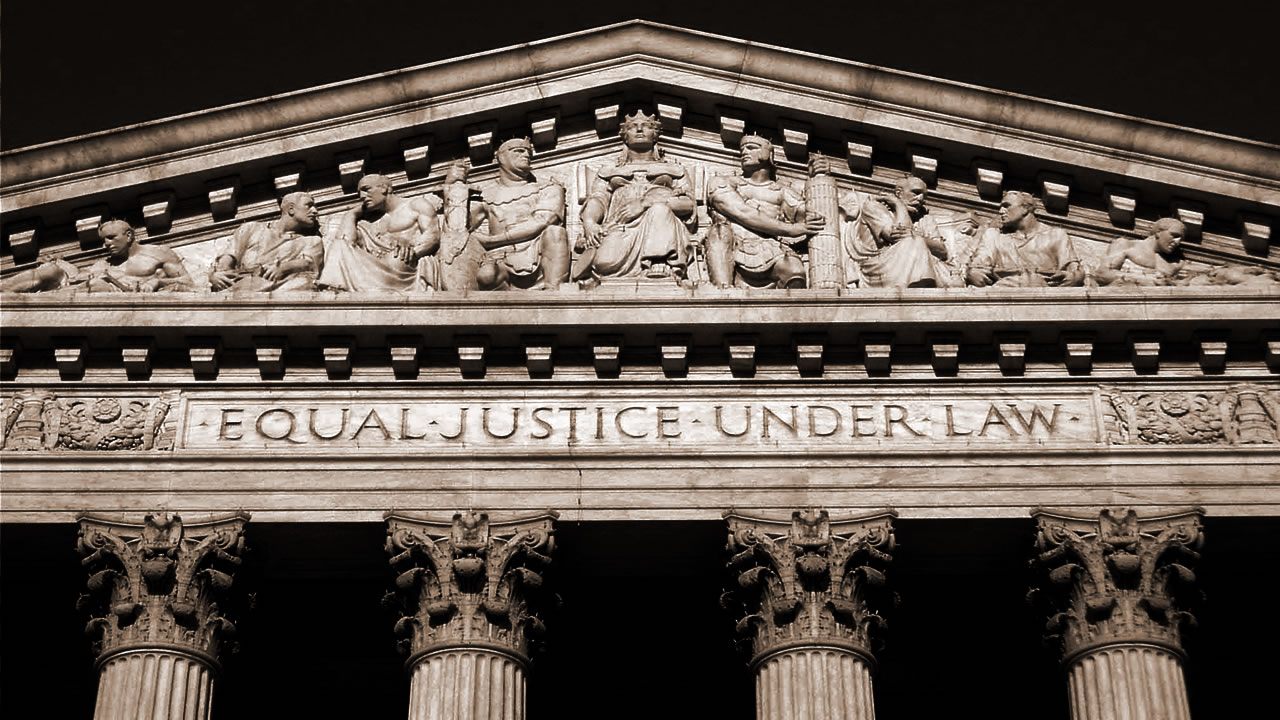
Above the West Entrance to the U.S. Supreme Court is engraved Equal Justice Under Law

Above the West Entrance to the U.S. Supreme Court is engraved "Equal Justice Under Law"

But the Birth Certificate Obsessed (BCO) people go on and on.

Let me note that the six hurdles still stand — six reasons why the objections to Obama’s eligibility will fail:

  1. Obama has a U.S. passport (claims that he doesn’t have a passport were put to rest when it was revealed, in March 2008, that State Department workers had illegally accessed his passport records).
  2. Because we know Obama has a U.S. passport, we can be quite sure his draft status was verified before it was issued — which puts to bed any issue about his registering for the draft (which he wouldn’t have been required to do in any case until 1980 — draft registration had been suspended in 1973 until the Afghanistan/Soviet crisis).
  3. Obama’s a lawyer; the National Conference of Bar Examiners, or the Illinois Bar, would have checked on any problems that surfaced when verifying his fitness to practice law.
  4. Obama was a U.S. senator; as a matter of course, the FBI does a background check on every U.S. senator to verify they may view top secret material. Security clearances are absolutely necessary for members of the Intelligence Oversight Committee, the Foreign Relations Committee, and the Armed Services Committee.  Obama was a member of the Foreign Relations Committee, chairing the subcommittee that deals with U.S. relations with NATO — a post that requires top secret clearances.
  5. Obama has been getting the full national security briefing every day that the president gets; CIA and Homeland Security would have to verify his top secret clearances, and then some.  There is absolutely no indication that this top, top check was not carried out.
  6. Perhaps most important, Obama posted an image of his birth certificate on-line in June; experts who checked the actual document verify it is real, and therefore authoritative.

Each of these six circumstances creates a rebuttable presumption that Obama is a citizen, and a natural born citizen under the somewhat ambiguous requirements of Article II of the Constitution.  In order to make a case that Obama is ineligible, contestants would need to make a strong showing, with clear evidence, to rebut the presumptions created by by these official actions.

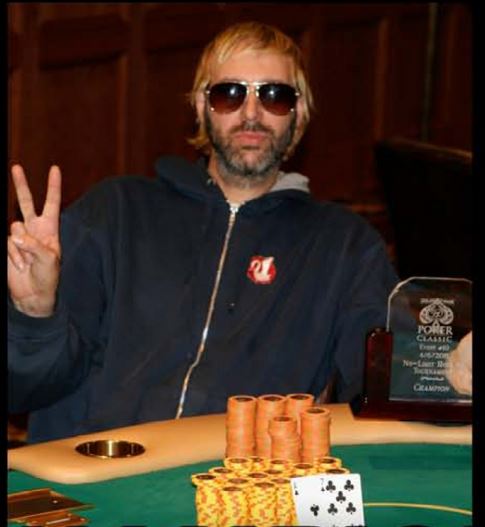
Professional poker player Leo Donofrio has made no such evidentiary showing, anywhere, at any time.  Nor has any other Obama critic presented any evidence to overcome any of these six presumptions.

Recently a poster named Carlyle complained that my previous post had been unknown to him. While I posted trackbacks to his post at Texas Darlin’, that blog censors my posts and trackbacks, and thereby deprived this BCO from knowing about the facts (indeed, trackbacks are automatic, since Texas Darlin’ is also a WordPress blog; the only way the trackbacks and comments don’t show up at TD’s blog is because she censors them).  With some fury, Carlyle and others found that post from November 27 and complained I was unfair to them.  However, none has presented any serious challenge to the six hurdles.

How can I be unfair when they won’t make a case?

Here, below the fold, is an example of the heated and off-target responses I’ve gotten.  Of course, I offer comments as we go.

Read the rest of this entry »


Yes, Virginia, Santa Claus still exists

December 25, 2008

Francis Pharcellus Church, the man who answered Virginia's simple query about Santa Claus

This is a bit of an encore post, from 2007.  Merry Christmas.

Is this the man who really saved Santa Claus?

The Newseum itself doesn’t open until opened in the autumn of 2007, but some exhibits are already up, were online earlier. Important ones.

Among other things already up is this explanation for the 1897 editorial in The New York Sun, with the famous line: “Yes, Virginia, there is a Santa Claus.” It is “history’s most reprinted editorial,” the Newseum says.

While you’re there, look at other exhibits already in place. This is a good source for kids’ reports and for teachers’ lectures.

Update: Parallel Divergence is at it again (remember the “how Hubble killed God?”) Here it is: “How Google Earth Killed Santa Claus.”

Update May 2007: Coverage of the Newseum’s pending opening.

Update December 2008More on the Sun editorial

And about angels:


Who invented Santa Claus, and the Night Before Christmas?

December 24, 2008

An encore post from 2007

Thomas Nast invented Santa Claus? Clement C. Moore didn’t write the famous poem that starts out, “‘Twas the night before Christmas, and all through the house . . . ?”

The murky waters of history from Millard Fillmore’s Bathtub soak even our most cherished ideas and traditions.

But isn’t that part of the fun of history?

Santa Claus delivers to Union soldiers, "Santa Claus in Camp" - Thomas Nast, Harper's Weekly, Jan 3, 1863

Thomas Nast’s first published drawing featuring Santa Claus; for Harper’s Weekly, “A Journal of Civilization,” January 3, 1863 Nast portrayed the elf distributing packages to Union troops: “Santa Claus in camp.” Nast (1840-1904) was 23 when he drew this image.

Yes, Virginia (and California, too)! Thomas Nast created the image of Santa Claus most of us in the U.S. know today. Perhaps even more significant than his campaign against the graft of Boss Tweed, Nast’s popularization of a fat, jolly elf who delivers good things to people for Christmas makes one of the great stories in commercial illustration. Nast’s cartoons, mostly for the popular news publication Harper’s Weekly, created many of the conventions of modern political cartooning and modeled the way in which an illustrator could campaign for good, with his campaign against the graft of Tammany Hall and Tweed. But Nast’s popular vision of Santa Claus can be said to be the foundation for the modern mercantile flurry around Christmas.

Nast is probably ensconced in a cartoonists’ hall of fame. Perhaps he should be in a business or sales hall of fame, too.  [See also Bill Casselman’s page, “The Man Who Designed Santa Claus.]

Nast’s drawings probably drew some inspiration from the poem, “Account of a Visit from St. Nicholas,” traditionally attributed to Clement C. Moore, a New York City lawyer, published in 1822. The poem is among the earliest to describe the elf dressed in fur, and magically coming down a chimney to leave toys for children; the poem invented the reindeer-pulled sleigh.

Modern analysis suggests the poem was not the work of Moore, and many critics and historians now attribute it to Major Henry Livingston, Jr. (1748-1828) following sleuthing by Vassar College Prof. Don Foster in 2000. Fortunately for us, we do not need to be partisans in such a query to enjoy the poem (a complete copy of which is below the fold).

The Library of Congress still gives Moore the credit. When disputes arise over who wrote about the night before Christmas, is it any wonder more controversial topics produce bigger and louder disputes among historians?

Moore was not known for being a poet. The popular story is that he wrote it on the spur of the moment:

Moore is thought to have composed the tale, now popularly known as “The Night Before Christmas,” on December 24, 1822, while traveling home from Greenwich Village, where he had bought a turkey for his family’s Christmas dinner.

Inspired by the plump, bearded Dutchman who took him by sleigh on his errand through the snow-covered streets of New York City, Moore penned A Visit from St. Nicholas for the amusement of his six children, with whom he shared the poem that evening. His vision of St. Nicholas draws upon Dutch-American and Norwegian traditions of a magical, gift-giving figure who appears at Christmas time, as well as the German legend of a visitor who enters homes through chimneys.

Again from the Library of Congress, we get information that suggests that Moore was a minor celebrity from a well-known family with historical ties that would make a good “connections” exercise in a high school history class, perhaps (”the link from Aaron Burr’s treason to Santa Claus?”): (read more, below the fold)

Clement Moore was born in 1779 into a prominent New York family. His father, Benjamin Moore, president of Columbia University, in his role as Episcopal Bishop of New York participated in the inauguration of George Washington as the nation’s first president. The elder Moore also administered last rites to Alexander Hamilton after he was mortally wounded in a tragic duel with Aaron Burr.

A graduate of Columbia, Clement Moore was a scholar of Hebrew and a professor of Oriental and Greek literature at the General Theological Seminary in Manhattan. [See comment from Pam Bumsted below for more on Moore.] He is said to have been embarrassed by the light-hearted verse, which was made public without his knowledge in December 1823. Moore did not publish it under his name until 1844.

Tonight, American children will be tucked in under their blankets and quilts and read this beloved poem as a last “sugarplum” before slipping into dreamland. Before they drift off, treat them to a message from Santa, recorded by the Thomas Edison Company in 1922.

Santa Claus Hides in Your Phonograph
By Arthur A. Penn, Performed by Harry E. Humphrey.
Edison, 1922.
Coupling date: 6/20/1922. Cutout date: 10/31/1929.
Inventing Entertainment: The Motion Pictures and Sound Recordings of the Edison Companies

Listen to this recording (RealAudio Format)

Listen to this recording (wav Format, 8,471 Kb)

But Henry Livingston was no less noble or historic. He hailed from the Livingtons of the Hudson Valley (one of whose farms is now occupied by Camp Rising Sun of the Louis August Jonas Foundation, a place where I spent four amazing summers teaching swimming and lifesaving). Livingston’s biography at the University of Toronto site offers another path for a connections exercise (”What connects the Declaration of Independence, the American invasion of Canada, the famous poem about a visit from St. Nick, and George W. Bush?”):

Henry Livingston Jr. was born in Poughkeepsie, New York, on Oct. 13, 1748. The Livingston family was one of the important colonial and revolutionary families of New York. The Poughkeepsie branch, descended from Gilbert, the youngest son of Robert Livingston, 1st Lord of Livingston Manor, was not as well off as the more well-known branches, descended from sons Robert and Philip. Two other descendants of Gilbert Livingston, President George Walker Herbert Bush and his son, President-Elect George W. Bush, though, have done their share to bring attention to this line. Henry’s brother, Rev. John Henry Livingston, entered Yale at the age of 12, and was able to unite the Dutch and American branches of the Dutch Reformed Church. At the time of his death, Rev. Livingston was president of Rutgers University. Henry’s father and brother Gilbert were involved in New York politics, and Henry’s granduncle was New York’s first Lt. Governor. But the law was the natural home for many of Henry’s family. His brother-in-law, Judge Jonas Platt, was an unsuccessful candidate for governor, as was his daughter Elizabeth’s husband, U.S. Supreme Court Justice Smith Thompson. Henry’s grandson, Sidney Breese, was Chief Justice of the Illinois Supreme Court.

Known for his encyclopedic knowledge and his love of literature, Henry Livingston was a farmer, surveyor and Justice of the Peace, a judicial position dealing with financially limited criminal and civil cases. One of the first New Yorkers to enlist in the Revolutionary Army in 1775, Major Henry Livingston accompanied his cousin’s husband, General Montgomery, in his campaign up the Hudson River to invade Canada, leaving behind his new wife, Sarah Welles, and their week-old baby, on his Poughkeepsie property, Locust Grove. Baby Catherine was the subject of the first poem currently known by Major Livingston. Following this campaign, Livingston was involved in the War as a Commissioner of Sequestration, appropriating lands owned by British loyalists and selling them for the revolutionary cause. It was in the period following Sarah’s early death in 1783, that Major Livingston published most of his poems and prose, anonymously or under the pseudonym of R. Ten years after the death of Sarah, Henry married Jane Patterson, the daughter of a Dutchess County politician and sister of his next-door neighbor. Between both wives, Henry fathered twelve children. He published his good-natured, often occasional verse from 1787 in many journals, including Political Barometer, Poughkeepsie Journal, and New-York Magazine. His most famous poem, “Account of a Visit from St. Nicholas,” was until 2000 thought to have been the work of Clement Clarke Moore (1779-1863), who published it with his collected poems in 1844. Livingston died Feb. 29, 1828.

More on Henry Livingston and his authorship of the Christmas poem here.

Thomas Nast, Merry Old Santa Claus, Harper's Weekly, Jan 1, 1881


Our views of Santa Claus owe a great deal also to the Coca-Cola advertising campaign. Coca-Cola first noted Santa’s use of the drink in a 1922 campaign to suggest Coke was a year-round drink (100 years after the publication of Livingston’s poem). The company’s on-line archives gives details:

In 1930, artist Fred Mizen painted a department store Santa in a crowd drinking a bottle of Coke. The ad featured the world’s largest soda fountain, which was located in the department store of Famous Barr Co. in St. Louis, Mo. Mizen’s painting was used in print ads that Christmas season, appearing in The Saturday Evening Post in December 1930.

1936 Coca-Cola Santa cardboard store display

  • 1936 Coca-Cola Santa cardboard store display

Archie Lee, the D’Arcy Advertising Agency executive working with The Coca-Cola Company, wanted the next campaign to show a wholesome Santa as both realistic and symbolic. In 1931, The Coca-Cola Company commissioned Michigan-born illustrator Haddon Sundblom to develop advertising images using Santa Claus — showing Santa himself, not a man dressed as Santa, as Mizen’s work had portrayed him.
1942 original oil painting - 'They Remembered Me'

  • 1942 original oil painting – ‘They Remembered Me’

For inspiration, Sundblom turned to Clement Clark Moore’s 1822 poem “A Visit From St. Nicholas” (commonly called “‘Twas the Night Before Christmas”). Moore’s description of St. Nick led to an image of Santa that was warm, friendly, pleasantly plump and human. For the next 33 years, Sundblom painted portraits of Santa that helped to create the modern image of Santa — an interpretation that today lives on in the minds of people of all ages, all over the world.

Santa Claus is a controversial figure. Debates still rage among parents about the wisdom of allowing the elf into the family’s home, and under what conditions. Theologians worry that the celebration of Christmas is diluted by the imagery. Other faiths worry that the secular, cultural impact of Santa Claus damages their own faiths (few other faiths have such a popular figure, and even atheists generally give gifts and participate in Christmas rituals such as putting up a decorated tree).

For over 100 years, Santa Claus has been a popular part of commercial, cultural and religious life in America. Has any other icon endured so long, or so well?

Add to FacebookAdd to NewsvineAdd to DiggAdd to Del.icio.usAdd to StumbleuponAdd to RedditAdd to BlinklistAdd to TwitterAdd to TechnoratiAdd to Furl

________________________
Below:
From the University of Toronto Library’s Representative Poetry Online

Major Henry Livingston, Jr. (1748-1828)

Account of a Visit from St. Nicholas

1 ‘Twas the night before Christmas, when all thro’ the house,
2 Not a creature was stirring, not even a mouse;
3 The stockings were hung by the chimney with care,
4 In hopes that St. Nicholas soon would be there;
5 The children were nestled all snug in their beds,
6 While visions of sugar plums danc’d in their heads,
7 And Mama in her ‘kerchief, and I in my cap,
8 Had just settled our brains for a long winter’s nap –
9 When out on the lawn there arose such a clatter,
10 I sprang from the bed to see what was the matter.
11 Away to the window I flew like a flash,
12 Tore open the shutters, and threw up the sash.
13 The moon on the breast of the new fallen snow,
14 Gave the lustre of mid-day to objects below;
15 When, what to my wondering eyes should appear,
16 But a miniature sleigh, and eight tiny rein-deer,
17 With a little old driver, so lively and quick,
18 I knew in a moment it must be St. Nick.
19 More rapid than eagles his coursers they came,
20 And he whistled, and shouted, and call’d them by name:
21 “Now! Dasher, now! Dancer, now! Prancer, and Vixen,
22 “On! Comet, on! Cupid, on! Dunder and Blixem;
23 “To the top of the porch! to the top of the wall!
24 “Now dash away! dash away! dash away all!”
25 As dry leaves before the wild hurricane fly,
26 When they meet with an obstacle, mount to the sky;
27 So up to the house-top the coursers they flew,
28 With the sleigh full of Toys — and St. Nicholas too:
29 And then in a twinkling, I heard on the roof
30 The prancing and pawing of each little hoof.
31 As I drew in my head, and was turning around,
32 Down the chimney St. Nicholas came with a bound:
33 He was dress’d all in fur, from his head to his foot,
34 And his clothes were all tarnish’d with ashes and soot;
35 A bundle of toys was flung on his back,
36 And he look’d like a peddler just opening his pack:
37 His eyes — how they twinkled! his dimples how merry,
38 His cheeks were like roses, his nose like a cherry;
39 His droll little mouth was drawn up like a bow.
40 And the beard of his chin was as white as the snow;
41 The stump of a pipe he held tight in his teeth,
42 And the smoke it encircled his head like a wreath.
43 He had a broad face, and a little round belly
44 That shook when he laugh’d, like a bowl full of jelly:
45 He was chubby and plump, a right jolly old elf,
46 And I laugh’d when I saw him in spite of myself;
47 A wink of his eye and a twist of his head
48 Soon gave me to know I had nothing to dread.
49 He spoke not a word, but went straight to his work,
50 And fill’d all the stockings; then turn’d with a jerk,
51 And laying his finger aside of his nose
52 And giving a nod, up the chimney he rose.
53 He sprung to his sleigh, to his team gave a whistle,
54 And away they all flew, like the down of a thistle:
55 But I heard him exclaim, ere he drove out of sight –
56 Happy Christmas to all, and to all a good night.

CNN Poll: 20% of Americans

December 23, 2008

Either 20% of Americans have never heard of Aaron Burr, or only 20% of Americans are paying attention.  I can’t decide which, but this CNN poll clearly points to one, or the other, depending on your view:

WASHINGTON (CNN) – A new national poll suggests that one of out of five Americans think that Dick Cheney is the worst vice president in American history.

Twenty-three percent of those questioned in a CNN-Opinion Research Corporation survey released Tuesday say that Cheney is the country’s worst vice president, when compared to his predecessors. Another 41 percent feel that Cheney is a poor vice president, with 34 percent rating him a good number two.

Only 1 percent of those polled say that Cheney is the best vice president in U.S. history.

Aaron Burr, Library of Congress image

Aaron Burr, Library of Congress image

Vice President Richard Cheney, White House photo

Vice President Richard Cheney, White House photo

Aaron Burr, you recall, is the vice president who, when the electoral college organization goofed and put him into a tie with Thomas Jefferson for president, suddenly thought he was better qualified than Jefferson and tried to take the race from him; the only vice president ever tried for treason; and the fellow whose dueling killed Alexander Hamilton, the financial genius of our nation’s early years.

20% of Americans think Cheney was worse than Aaron Burr?  Wow.  Just wow.

Aaron Burr shooting Alexander Hamilton, or Dick Cheney hunting doves in Texas?

Aaron Burr shooting Alexander Hamilton, or Dick Cheney hunting doves in Texas?


Creationism vs. Christianity

December 20, 2008

Several weeks ago I responded to a lengthy thread at Unreasonable FaithThe original post was Garry Trudeau’s “Doonesbury” cartoon of the guy in a doctor’s office, just diagnosed with an infection.  The physician asks the guy if he’s a creationist, explaining that if he is, the doc will treat him with old antibiotics in honor of his belief that evolution of bacteria doesn’t occur. [Time passes: You may find the Doonesbury cartoon here, at Nature.com, in an article discussing issues with creationism.]

Point being, of course, that evolution occurs in the real world.  Creationists rarely exhibit the faith of their claims when their life, or just nagging pain, is on the line.  They’ll choose the evolution-based medical treatment almost every time.  There are no creationists in the cancer or infectious disease wards.

At one point I responded to a comment loaded with typical creationist error.  It was a long post.  It covered some ground that I’ve not written about on this blog.  And partly because it took some time to assemble, I’m reposting my comments here.  Of course, without the Trudeau cartoon, it won’t get nearly the comments here.

I’ll add links here when I get a chance, which I lacked the time to do earlier.  See my post, below the fold.

Read the rest of this entry »

Historic winds of December

December 17, 2008

In English, it’s just one letter difference between “winds” and “wings.”  An encore post, commemorating one historic event from December 17 involving both winds and wings:

December 17, written in the wind

Wright Bros. flyer at Kittyhawk, first flight

Photo from Treasures of the Library of Congress; “First Flight” by John T. Daniels (d. 1948); this is a modern gelatin print from the glass negative.

Ten feet in altitude, 120 feet traveled, 12 seconds long. That was the first flight in a heavier-than-air machine achieved by Orville and Wilbur Wright of Dayton, Ohio, at Kittyhawk, North Carolina, on December 17, 1903.

From the Library of Congress:

On the morning of December 17, 1903, Wilbur and Orville Wright took turns piloting and monitoring their flying machine in Kill Devil Hills, North Carolina. Orville piloted the first flight that lasted just twelve seconds. On the fourth and final flight of the day, Wilbur traveled 852 feet, remaining airborne for 57 seconds. That morning the brothers became the first people to demonstrate sustained flight of a heavier-than-air machine under the complete control of the pilot.

No lost luggage, no coffee, no tea, no meal in a basket, either.

Resources on the Wright Brothers’ first flight:


Typewriter of the moment: Muckraker Upton Sinclair

December 17, 2008

Without typewriter, however.*

A journalist and novelist, labeled by President Theodore Roosevelt as a “muckraker,” Upton Sinclair. The caption to the Associated Press photo said it was Sinclair working on his first movie screenplay in 1943, part of his generally forgotten life in California. In fact, several of his works were made into movies.

Upton Sinclair, Los Angeles Times

Upton Sinclair, from the Los Angeles Times

* I had difficulty getting the images to work in this post.  Odd stuff kept popping up.  Then, as a reader Michael Todd gently noted, I discovered I’d used a picture of Sinclair Lewis in place of Upton Sinclair.

In working to correct the problem, I discovered no photos of Upton Sinclar with his typewriter.  So, here we have Upton Sinclair, without typewriter.  How embarrassing.


Typewriter of the moment: Rachel Carson

December 14, 2008

From the library of Life Magazine images available for sale through an agreement with Google:  “Marine biologist and author Rachel Carson, 1952.”  Photo by Hank Walker.  [Photo no longer available at that site; this is the same image, I believe]

Rachel Carson in 1952.  Life Magazine photo by Hank Walker

This photo was taken about the time Carson left the U.S. Fish and Wildlife Service, about the time her best-selling book The Sea Around Us was a hit.  This was a decade before the publication of her most famous work, Silent Spring, and 12 years prior to her death from cancer in 1964.


Typewriter of the moment: Sheryl Oring, and “the next president”

December 14, 2008

Sheryl Oring at her typewriter, collecting messages from Americans to the next president.

Sheryl Oring at her typewriter, collecting messages from Americans "to the next president."

Remember Sheryl Oring?  In the spring of 2008 she was wandering the nation with her typewriter and portable table in tow, typing out postcards to “the next president” from people she found in public spaces willing to share their hopes for the next presidential administration.

Five weeks away from the inauguration of Barack Obama, I wonder what Oring’s postcards could tell us?  Where is she now?

Check out her website, I Wish to Say.  Maybe your classroom could support a similar project from your students.  What do these cards tell us about Americans?  What do they tell us about our electoral process?  What do they tell us about our hopes and fears?  DBQ, anyone?

One of several thousand postcards from Americans, collected by Sheryl Oring (and typed by her) to send to the next president -- who we now know will be Barack Obama.

Two of several hundred postcards from Americans, collected by Sheryl Oring (and typed by her) to send to "the next president" -- who we now know will be Barack Obama.

Many of the postcards will be on display through January 25, 2009, at the McCormick Foundation‘s Freedom Museum in Chicago.  Admission is free.

In comments, tell us what you would have told Oring to put on a postcard from you.

Resources:


2008 Lurie/UN Award winning political cartoons

December 13, 2008

Judges returned their ballots — the winners of the 2008 Ranan Lurie Political Cartoon Awards have been announced at the United Nations.

First place to a Greek cartoonist, Michael Kountouris of Eleftheros Typos:

Michael Kountoris, Eleftheros Typos, 1st place in the Lurie/UN Cartoon Awards, 2008

Michael Kountoris, Eleftheros Typos, 1st place in the Lurie/UN Cartoon Awards, 2008

Of the 13 cartoons, 1st, 2nd, 3rd and honorable mentions, at least six touch on environmental topics.  Is this a representation of a the cartoons published in the past year?

All the cartoons honored deserve your viewing — go see them here.

The award is offered annually by the UN Correspondents Association in honor of Ranan Lurie, who probably still is the most widely syndicated cartoonist in history.  A sample of Lurie’s work, below the fold.

Read the rest of this entry »


Pearl Harbor, “A day that will live in infamy”

December 7, 2008

Encore post, from December 7, 2006.


1941 AP file photo, small boat rescues victims from U.S.S. West Virginia

Associated Press 1941 file photo of a small boat assisting in rescue of Pearl Harbor attack victims, near the U.S.S. West Virginia, as the ship burns.

Today is the 65th [67th] anniversary of Japan’s attack on the U.S.’s Pacific Fleet at Pearl Harbor, Hawaii.

Our local newspaper, The Dallas Morning News, has a front-page story on survivors of the attack, who have met every five years in reunion at Pearl Harbor. Today [2006] will be their last official reunion. The 18-year-olds who suffered the attack, many on their first trips away from home, are in their 80s now. Age makes future reunions impractical.

From the article:

“We’re like the dodo bird. We’re almost extinct,” said Middlesworth, now an 83-year-old retiree from Upland, Calif., but then – on Dec. 7, 1941 – an 18-year-old Marine on the USS San Francisco.

Nearly 500 survivors from across the nation were expected to make the trip to Hawaii, bringing with them 1,300 family members, numerous wheelchairs and too many haunting memories.

Memories of a shocking, two-hour aerial raid that destroyed or heavily damaged 21 ships and 320 aircraft, that killed 2,390 people and wounded 1,178 others, that plunged the United States into World War II and set in motion the events that led to atomic bombings of Hiroshima and Nagasaki.

“I suspect not many people have thought about this, but we’re witnessing history,” said Daniel Martinez, chief historian at the USS Arizona Memorial. “We are seeing the passing of a generation.”

Another article notes the work of retired history professor Ron Marcello from the University of North Texas, in Denton, in creating oral histories from more than 350 of the survivors. This is the sort of project that high school history students could do well, and from which they would learn, and from which the nation would benefit. If you have World War II veterans in your town, encourage the high school history classes to go interview the people. This opportunity will not be available forever.

There is much to be learned, Dr. Marcello said:

Dr. Marcello said that in doing the World War II history project, he learned several common themes among soldiers.

“When they get into battle, they don’t do it because of patriotism, love of country or any of that. It’s about survival, doing your job and not letting down your comrades,” he said. “I heard that over and over.”

Another theme among soldiers is the progression of their fear.

“When they first got into combat, their first thought is ‘It’s not going to happen to me.’ The next thought is ‘It might happen to me,’ and the last thought is ‘I’m living on borrowed time. I hope this is over soon,’ ” Dr. Marcello said.

Dr. Marcello said the collection started in the early 1960s. He took charge of it in 1968. Since Dr. Marcello has retired, Todd Moye has taken over as the director.

Other sources:

While this is not one of the usual dates listed by Congress, you may fly your U.S. flag today.

End of 2006 post —

Other resources (2007):

USS Missouri Memorial – Main Battery - from the Panoramas of World War II site

USS Missouri Memorial – Main Battery - from the Panoramas of World War II site


Without hysterics, the Obama eligibility issue

December 5, 2008

In a conference today [December 5, 2008] the Supreme Court will reconsider together whether to take on a suit challenging the eligibility of Barack Obama to be president of the United States under a sometimes-arcane  section of Article II of the Constitution.

Is Barack Obama a “natural born” citizen of the U.S.?

In the building where “Equal Justice Under Law” is engraved high over the front door, poker-player Leo Donofrio’s challenge will be examined to see whether at least four of the nine justices of the Court think he has enough of a case to actually merit a hearing.  Justice David Souter rejected Donofrio’s case earlier, so this is a hail-Mary play on the part of Obama’s opponents.

Equal Justice Under Law, the West Pediment of the U.S. Supreme court. AAPF image

Equal Justice Under Law, the West Pediment of the U.S. Supreme court. AAPF image

The Court takes seriously the principle engraved over the door, however.  This is the same Court that ruled earlier this year an accused terrorist and all-around bad guy held at Guantanamo Bay has the right to a writ of habeas corpus over the objections of the Most Power Man in the World, U.S. President George W. Bush.  The humble, gritty, or even unsavory history of litigants does not limit their rights under the law.

Leo Donofrio in his usual office. Leo Donofrio image

Leo Donofrio in his usual office. Leo Donofrio image

So the question is, what sort of case does Donofrio have against Obama’s eligibility?

Would Justice Clarence Thomas have agreed to bring this case to the conference if it doesn’t have a chance to succeed?

I’ve not lunched with Thomas in more than two decades, so I can’t speak with any inside knowledge.  Historically, the Court, and indeed all the federal courts, have agreed to examine cases like this often simply to provide an authoritative close to the issue.  In this case, the outright hysteria of the anti-Obama partisans suggests the issue should be put to bed if possible.

Under usual Court procedures, we won’t learn the results of the conference until Monday.  I would not be surprised if the results are announced today, just to promote the settling of the issue.

Does Donofrio have a case?

I don’t see a case.  It’s clear that Obama is a U.S. citizen now.  Donofrio’s argument is rather strained, and sexist.  He claims that Obama’s father having been a British subject in 1961 (Kenya was not yet independent), Obama had dual citizenship at birth — and, further, Donofrio alleges, this dual citizenship trumps both Obama’s birth on U.S. soil (which should be dispositive) AND Obama’s mother’s U.S. citizenship, conferring a special status that doesn’t meet the intentions of the framers of the Constitution.

Donofrio’s claim is odd in that it would grant a lesser-status to children of legal immigrants than is allowed by law to children of illegal immigrants, or temporary visitors.  It also is bizarre, to me, in the way it dismisses Obama’s mother’s existence as a factor in Obama’s citizenship status — and while equal rights for women were not wholly obtained in 1961, no one has successfully argued that the citizenship of the father trumps that of the mother in citizenship cases.

Donofrio is arguing that Obama’s dual citizenship at birth disqualifies him from holding the presidency, technically, in a very narrow reading — though Obama would have absolutely every other right of a natural born citizen.

A couple of observations:

First, this is not an easy issue to litigate. Standing is the easiest way for a federal court to avoid a decision — what harm can a citizen claim from letting Obama be president?  It’s difficult to find an injury even were Donofrio’s claims valid.  No blood, no foul.  No injury, no standing to sue.  It is upon this basis that most of the cases against Obama’s eligibility have been tossed out, as Donofrio’s has been tossed, twice already.

Second, it is unclear what entity enforces the eligibility clause of the Constitution, or indeed, whether any entity can. For most of the summer Obama’s critics were pressuring the Federal Election Commission (FEC) to do something, even though the FEC lacks a quorum of members to do anything.  More to the point, there is nothing in any law that confers on the FEC the function of checking the citizenship status of any candidate.  Sometime in October they finally figured out that state secretaries of state might have a role, since they set up the ballots in each state.

I admit I thought that, until I reflected on the issue of the electoral college.  In U.S. presidential elections, voters do not vote directly for president and vice president.  Instead, we vote to elect people who will be the electors who decide — electors of the electoral college.  The history of this institution can be found elsewhere.  For the sake of these suits, however, it means that the secretaries of state have no role at all in the eligibility of the candidates.  They rule on the eligibility of the electors, which is an entirely different kettle of fish. Some states even list the electors on the ballot.

But in any case, it means Donofrio is suing the wrong entity, even if we can’t tell him what the correct entity is.

Third and most important, Donofrio is asking for U.S. citizenship law to be overturned in a most inconvenient time and place. Dual citizenship is a bar to very little in American life.  There is an assumption that people who hold that status are fully American citizens, absent a showing of contrary facts.  There are no contrary facts in evidence from Donofrio, nor from anyone else, despite promises of the revelation of conspiracies.

In short, Donofrio is arguing that there is, somewhere, somehow, some information that Barack Obama is not the shining patriot his life story reveals.  Donofrio doesn’t know what that information is, or where it might be found, but he thinks maybe the State of Hawaii is complicit in a conspiracy to hide this information, which is hidden on the hand-written records of Obama’s birth in 1961.  You might think Donofrio has watched “National Treasure” a few too many times, and whether it’s that movie or some other source, you’d be right — paranoid suspicions of conspiracy are not the stuff good court cases are made of.

The dozen or more cases against Obama’s eligibility all suffer from this astounding, dramatic lack of evidence.  Is there an affidavit from someone who alleges that Obama’s citizenship should be called into question?  If so, they’ve not been presented to any court.  (Obama tormentor Corsi claims to have interviewed Obama’s Kenyan grandmother, and he alleges she said through an interpreter that Obama was born in Kenya; oddly, he didn’t bother to get an affidavit from the woman, nor from anyone else — and others who listen to the tape think she thought Corsi was asking about the birth of her son, not grandson.  This is not solid evidence.)

I argued earlier there is a long chain of evidence creating rebuttable presumptions that Obama’s a natural born U.S. citizen.  To contradict this chain of evidence, contestants should provide extraordinary, clear evidence of contradiction.  What is offered by Donofrio is neither extraordinary, nor clear, nor necessarily contradictory to the presumptions.

This is not an issue solely for the hysterical.  Lawyers and scholars have looked at the issue through the years, and intensely this year, and arrived at the conclusion that Obama is perfectly eligible for the presidency.

Will sanity ever prevail?

Resources you may want to consult:

Vodpod videos no longer available.


Whiskey and Cigar Day 2008: Churchill and Twain

November 30, 2008

Encore Post:  From 2007; alas, things at the Texas State Board of Education have gotten no better.

Mark Twain, afloat

November 30 is the birthday of Mark Twain (1835), and Winston Churchill (1874).

Twain had a comment on recent actions at the Texas Education Agency:

In the first place God made idiots. This was for practice. Then He made School Boards.

– Following the Equator; Pudd’nhead Wilson’s New Calendar

The Nobel literature committees were slow; Twain did not win a Nobel in Literature; he died in 1910. Churchill did win a Nobel Prize in Literature, in 1953.

Both men were aficionados of good whiskey and good cigars. Both men suffered from depression in old age.

Both men made a living writing, early in their careers as newspaper correspondents. One waged wars of a kind the other campaigned against. Both were sustained by their hope for the human race, against overwhelming evidence that such hope was sadly misplaced.

churchill-time-cover-man-of-the-year-1941.jpg

Both endured fantastic failures that would have killed other people, and both rebounded.

Both men are worth study.

Twain, on prisons versus education: “Every time you stop a school, you will have to build a jail. What you gain at one end you lose at the other. It’s like feeding a dog on his own tail. It won’t fatten the dog.” – Speech, November 23, 1900

Churchill on the evil men and nations do:

“No One Would Do Such Things”

“So now the Admiralty wireless whispers through the ether to the tall masts of ships, and captains pace their decks absorbed in thought. It is nothing. It is less than nothing. It is too foolish, too fantastic to be thought of in the twentieth century. Or is it fire and murder leaping out of the darkness at our throats, torpedoes ripping the bellies of half-awakened ships, a sunrise on a vanished naval supremacy, and an island well-guarded hitherto, at last defenceless? No, it is nothing. No one would do such things. Civilization has climbed above such perils. The interdependence of nations in trade and traffic, the sense of public law, the Hague Convention, Liberal principles, the Labour Party, high finance, Christian charity, common sense have rendered such nightmares impossible. Are you quite sure? It would be a pity to be wrong. Such a mistake could only be made once—once for all.”

—1923, recalling the possibility of war between France and Germany after the Agadir Crisis of 1911, in The World Crisis,vol. 1, 1911-1914, pp. 48-49.

Image of Twain aboard ship – origin unknown. Image of Winston S. Churchill, Time Magazine’s Man of the Year for 1941, copyright 1941 by Time Magazine.

More on Mark Twain

More on Winston Churchill

Orson Welles, with Dick Cavett, on Churchill, his wit, humor and grace (tip of the old scrub brush to the Churchill Centre):


Obama’s birth certificate: Astrologers bring sound reason

November 30, 2008

Texas Darlin‘ and the bevy of sites who contest the authenticity of Barack Obama’s birth certificate need to come up for air once in a while.  When astrologers start using better science, logic and reason than those obsessed with Obama’s birth certificate, it’s time for those so obsessed to change their ways, don’t you think?

See also the six ways the arguments against Obama’s birth certificate fail.