Moving ice on Utah Lake, from a drone movie by Bill Church, screen capture.
Where does the great @BillChurchPhoto post his photos? (Update: On Instagram, and sales at BillChurchPhoto.com.) His work around Utah Lake, and Utah, is spectacular (and I hope people buy his images so he’s making money off of the great art he’s captured).
Here is a photo of plain old Utah Lake, in February. Church makes it look beautiful and exciting, instead of just cold and muddy.
Frustratingly, the only information from @BestEarthPix is “Oregon, USA.” It’s a mule deer, in a lake. Which lake? Who was the lucky/skilled photographer? No details.
Can you supply details? The photographer should get credit, I think.
The Flat Mountain arm of Yellowstone Lake at sunrise, Yellowstone National Park, Wyoming, 2016. Image courtesy Neal Herbert/Yellowstone National Park. Gado Images/Alamy Stock Photo
How disappointing, and maddening, that what looks like a great image turns out to be faked.
Spread the word; friends don't allow friends to repeat history.
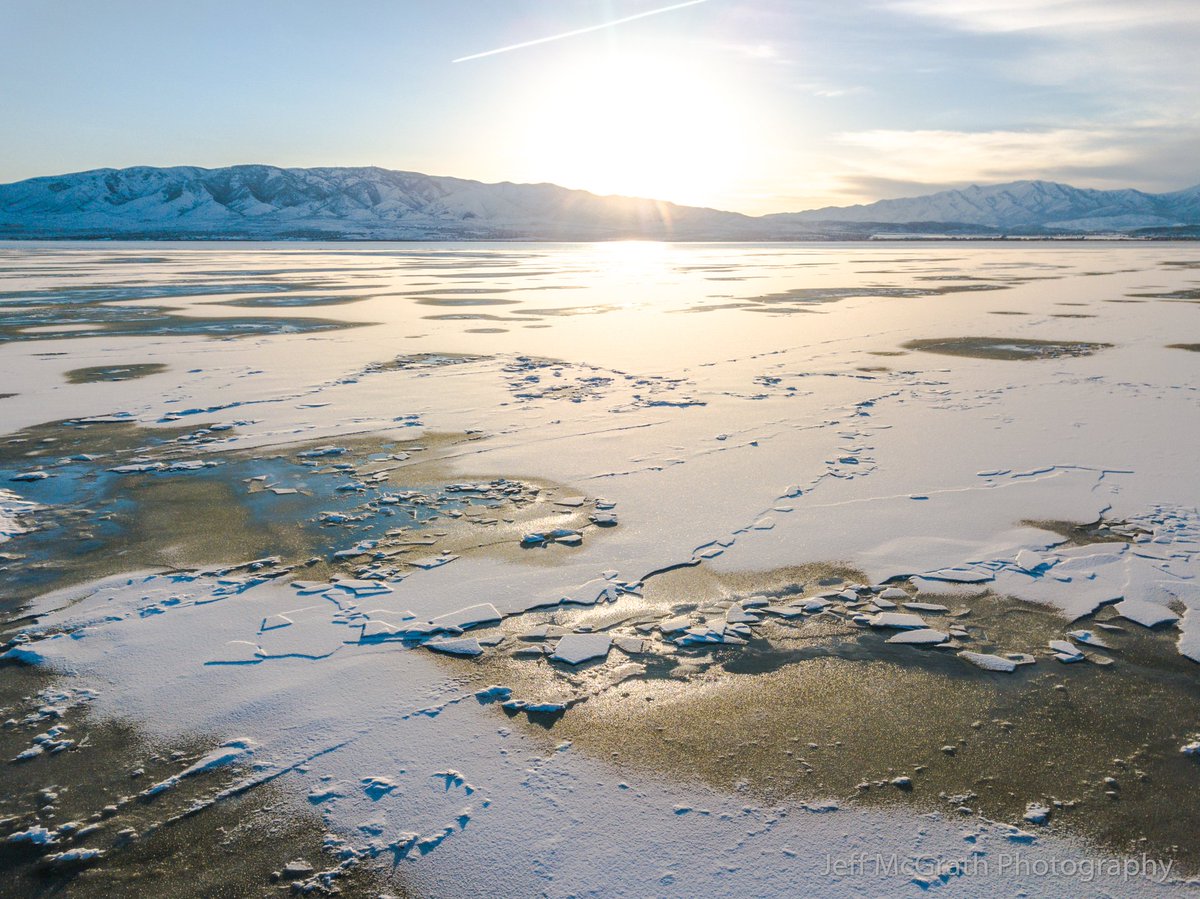
Jeff McGrath (@youtah) on Twitter: Utah Lake is just stunning right now. This was taken at the Northern End with my drone while flying for recreational fun. #utwx #dronephotography #recreationaldrone
Northern end of Utah Lake, near Lehi, probably near the old boat launch and harbor near where the old amusement park Saratoga was (now a town loaded with housing tracts).
My grandfather, Leo Stewart, Sr., came into the world 30 or so miles south, in Benjamin, Utah, named after a family patriarch of sorts, Benjamin Franklin Stewart. When he was very young, my grandfather said, they’d boat out a half-mile or so into the lake and look down into 20 feet of water, and pick the giant trout they’d want to hook. That was in the late 19th century, of course.
In that sorry time 30 years later, some fool introduced European carp into the area, for more game fish. Carp dig up the shallow bottom and muddy the water. In my youth along the lake you could never see more than six inches into the lake. Because it was so far from everything else important, a steel plant was built at Geneva, about midway between north and south ends of the lake, during World War II — in case the mills in California were bombed. U.S. Steel eventually ended up with the plant.
From our home on the Lake Bonneville bench, 800 feet or so above the lake, we could watch the steel mill’s pouring of slag at night, a little flow of artificial magma to light the sky and look cool. The mill also dumped chemicals into the water which further clouded the view.
You have seen some of those photos, some of those artists, and some of those typewriters in other posts at Millard Fillmore’s Bathtub. There are some sparkling photos there I had not seen before.
Thank you, Dean Frey.
Spread the word; friends don't allow friends to repeat history.
Or, is there a chance that, in a decade after President Trump is deposed by legal means, we will look back and regard this photo as a citizen bullying poor old Trump?
Many lessons of chasing the eclipse for us first-timers. Months ago we decided not to make major purchases to photograph the thing, to just enjoy the experience.
Still, we had inexpensive filters, and we photographed. Main tripod left in Dallas to avoid paying a lot extra to fly; a borrowed tripod held the GoPro (which was a poor choice; gotta work on that for time-lapse). So the best photos I got were hand-held.
And fuzzy as a result, I think.
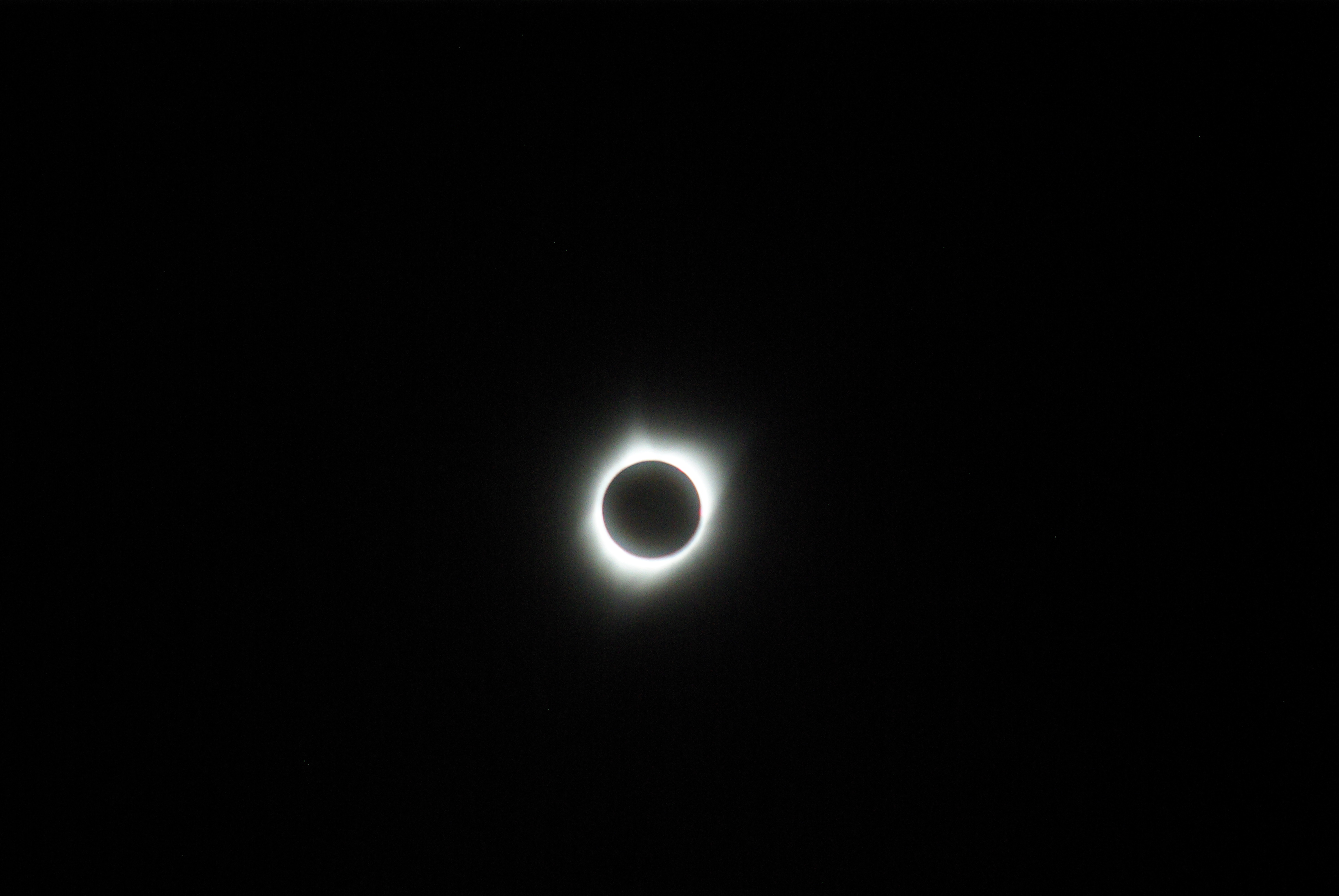
Totality of the 2017 solar eclipse, near Casper, Wyoming, on the North Platte River.
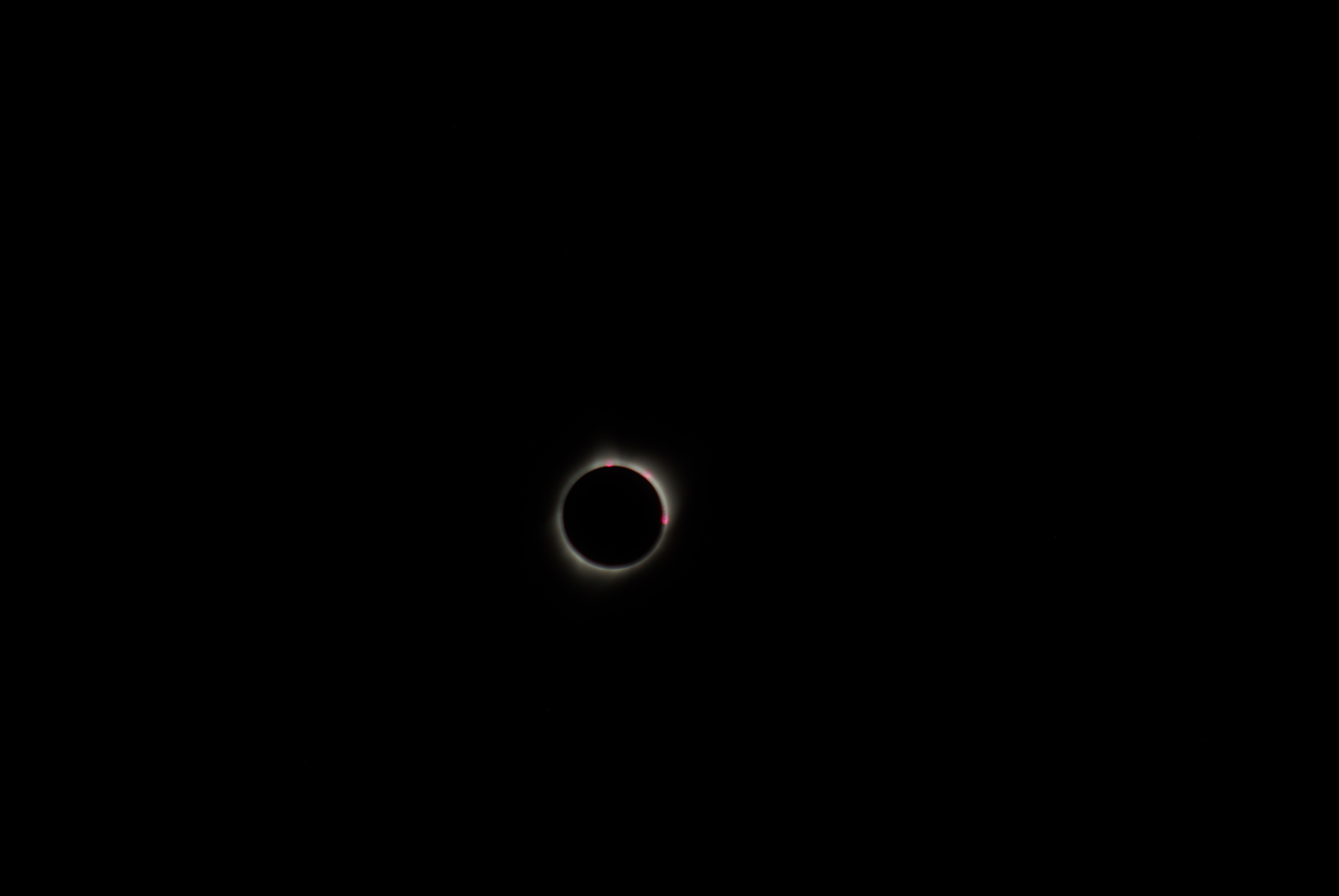
The most interesting thing to me was the brilliant red beads during totality, where (if I recall correctly) the Sun peeks through the mountains of the Moon. I did get a couple shots to show that.
Totality and red beads of the 2017 solar eclipse.
Photographs to remind us of the great experience of joining millions of other people to watch a spectacular astronomical event, brought to us by science.
Did anyone at your house go blind? Ready for 2024?
Did you stay at home for the eclipse? Did you travel? What did you see and hear?
Save
Spread the word; friends don't allow friends to repeat history.
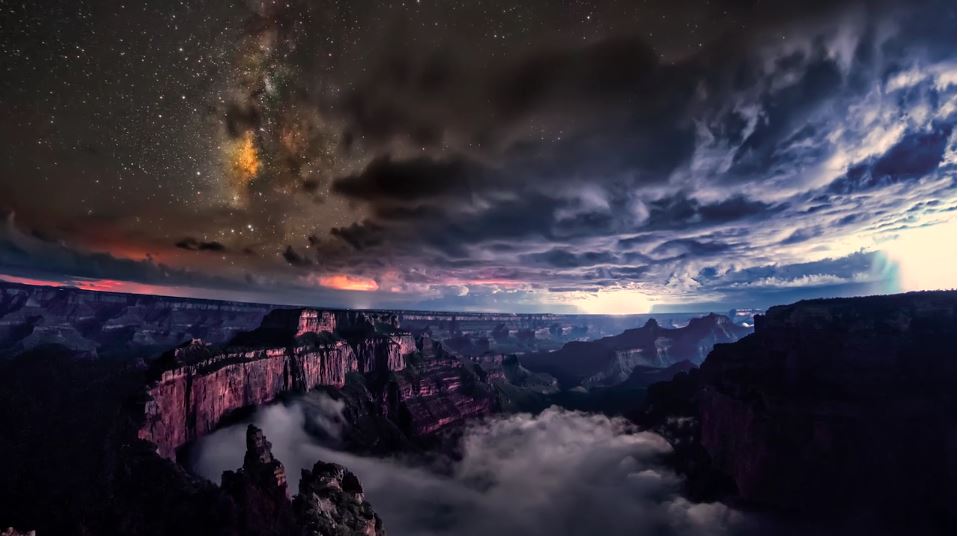
The creators of “SKYGLOW,” a crowd-funded project showing the impact of urban light pollution through time-lapse videos, photos and a book, have another stunning video to share. In “Kaibab Elegy,” filmmakers Gavin Heffernan and Harun Mehmedinović visit Grand Canyon National Park and capture a rare weather event.
In the mesmerizing video, clouds build inside the canyon almost like bubbling water filling a jacuzzi as the sun rises and sets in the background, creating the pinkest sky you’ve ever seen. Those clouds roll like waves in the ocean and crash against the cliffs. This phenomenon is called full cloud inversion, and it happens when cold air is trapped in the canyon and topped by a layer of warm air, which combines with moisture and condensation.
“We were extremely lucky to be there to capture it, and it’s a collection of unique footage not found anywhere else,” Mehmedinović says.
He and Heffernan, who journeyed 150,000 miles around the globe for their new book and video series, work with the International Dark-Sky Association, a nonprofit fighting to preserve the dark skies around the world.
The Earth is a very small stage in a vast cosmic arena. In our obscurity, in all this vastness, there is no hint that help will come from elsewhere to save us from ourselves. The Earth is the only world known so far to harbor life. There is no where else, at least in the near future, to which our species could migrate.
Like it or not, for the moment the Earth is where we make our stand. It underscores our responsibility to deal more kindly with one another and to preserve and cherish the only home we’ve ever known.
I wish I’d had this stuff when I was younger; so many beautiful places and people I must recall with only the images in memory!
Still life with traffic cone and fire hydrant. New York City. Photo creative commons copyright Ed Darrell; please use with attribution.
Taxi in from La Guardia. Along Prince Street in Manhattan, July afternoon sun combined with a serendipitous arrangement of fire hydrant and traffic cone.
It made me smile, so I clicked a photo.
Spread the word; friends don't allow friends to repeat history.
Jamelle Bouie found this in the neighborhood. No, I’m not sure which neighborhood, but clearly it’s got some great neighbors. Details: Camera: Leica M5 with Canon LTM 35mm f/2 lens. Fuji Provia 100f. Copyright by Bouie, hope he doesn’t mind my using it here.
A more interesting neighborhood, perhaps, than most of us have. Or maybe not.
What’s in your neighborhood? Have you recorded it on film (or electrons), just for history’s sake? Why not?
Spread the word; friends don't allow friends to repeat history.
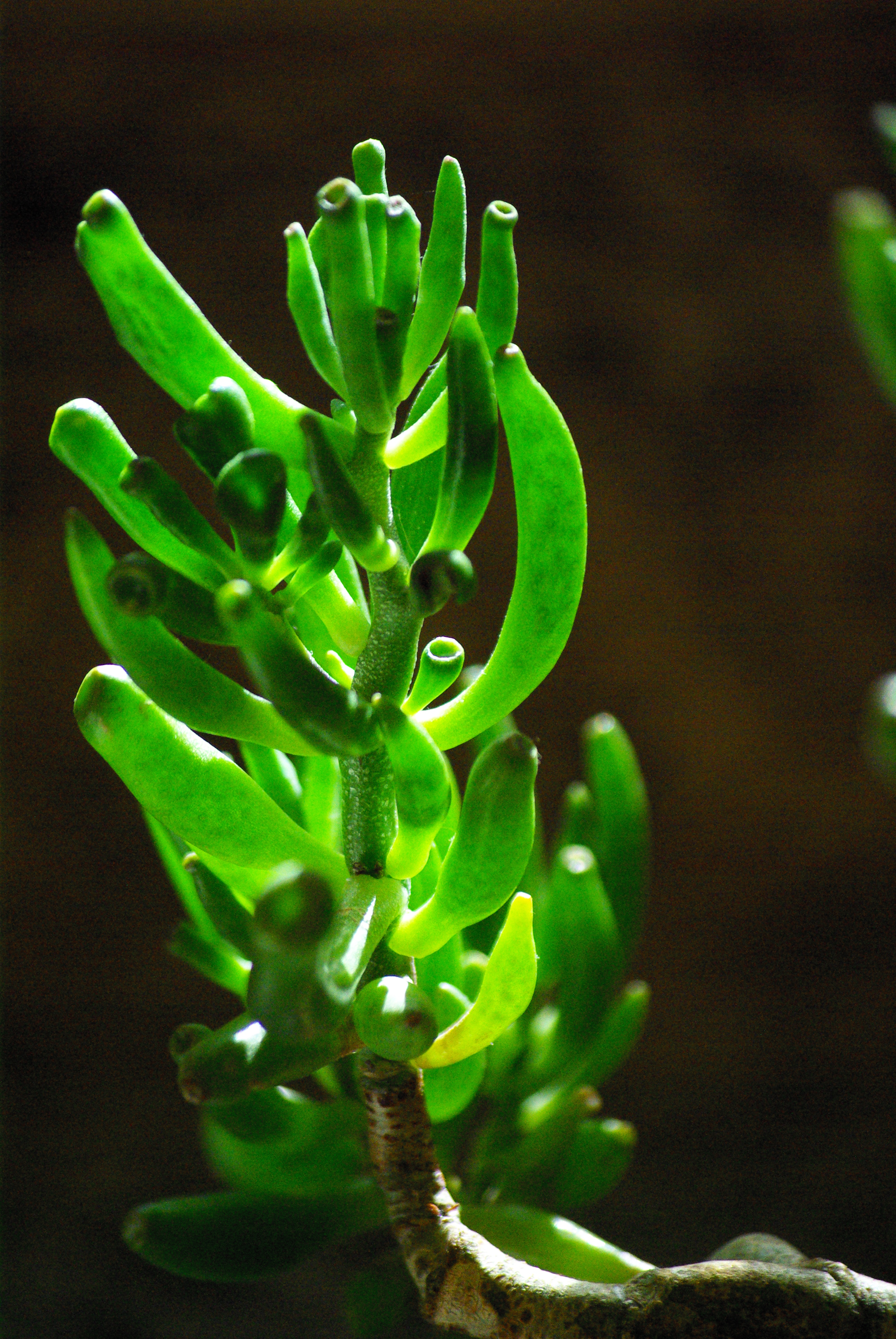
I know way too little about this thing, where it grows wild, why it evolved such unique leaves. But the sunlight passes over and through it as if they are old friends, and that gives me peace.
A single branch of Gollum jade. Photo by Ed Darrell, please share with attribution.
Sandia Peak on a frosty evening, from Mark Boslough
Living with a mountain provides myriad moments that cannot quite be captured on film, but must be filed away in memory to produce a smile at some future moment.
But, sometimes a camera can come close.
That last bit of sunlight at the top of the mountain, on a cold day, giving hope, or assurance, before it is snuffed out for a time by the rotation of the Earth.
The mountain will be there tomorrow. The Sun will return. The moment won’t be the same.
Spread the word; friends don't allow friends to repeat history.
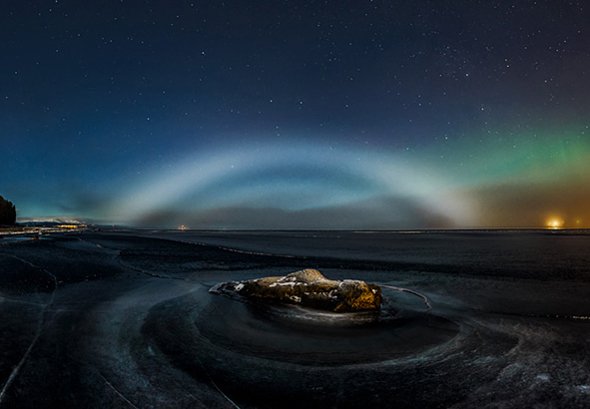
It’s not just a beautiful photograph. It’s a rather rare phenomenon beautifully captured by Göran Strand, and wonderfully explained by Plait at his blog at Slate:
And here he is once again: That photo above shows that’s quite uncommon sigh: a fogbow! But this being Strand, even that’s not unusual enough. For him, it had to be even more difficult to track down. That’s not just a fogbow, it’s a lunar fogbow!
Fogbows are similar to rainbows, in that they’re caused by water droplets, but in detail they’re very different. In a rainbow, sunlight is bent and reflected inside a raindrop, and sent off at an angle. The drops are big compared to the wavelength of light, so they act a bit like mirrors. Each color of sunlight, though, bends at a slightly different angle, separating them, creating the multihued rainbow.
Strand has photos to sell in various formats. I see in a lot of offices, “inspirational” posters with good photos and occasionally-pithy-but-often-banal sayings and platitudes, hoped by bosses to spur productivity on the cheap. Order up a sizable print from Strand, get the full description of the photo, and mount it in your office instead. You’re likely to discover than genuine natural beauty from awe-inspiring photos spurs creativity and productivity more than the stock photos and stock sayings.
Those photos are starting points for learning, too, teachers. Real photos, worthy of any history, economics, geography, astronomy, chemistry, physics, geological science or environmental science class.
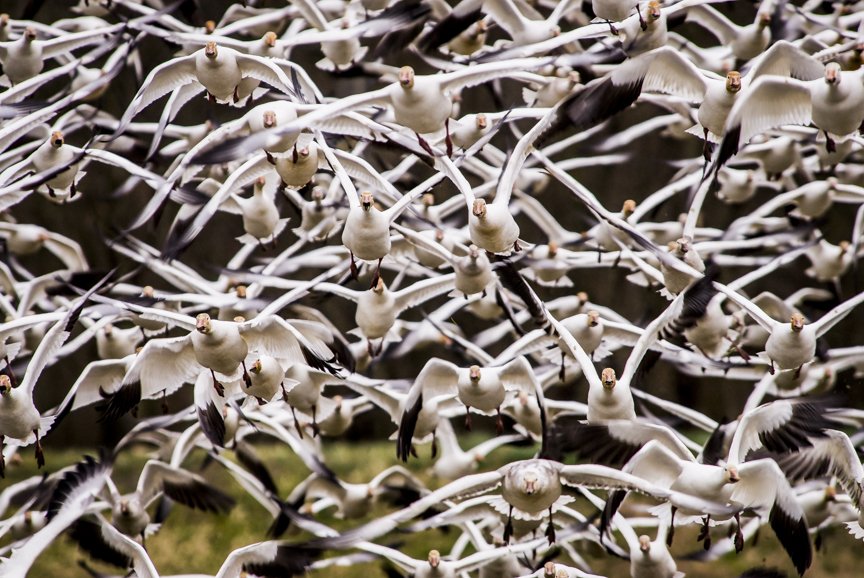
Wildlife photographer Nancy J. Warner caught a breathtaking view with dozens (hundreds?) of snow geese taking off, flying directly at her.
Nancy J. Wagner on Twitter: Seeing 1000s of #snow #geese flying towards me was breathtaking. Looks chaotic, but they take to the air very methodically. #Skagit #birding
I’m not familiar with Ms. Wagner’s work, but it seems we should be. Wagner shoots wildlife that would make nice adornments for your home and office walls, truly inspiring.
Spread the word; friends don't allow friends to repeat history.
Oh, there’s a little technical wizardry involved in this one, stitching it together.
But, wow!
White Pocket in the Vermilion Cliffs National Monument, Arizona. Brilliant photography and stitching by Dave Lane Astrophotography, via the U.S. Department of Interior.
A more full description from Interior’s Facebook page:
Located in a remote and unspoiled part of northern Arizona, Vermilion Cliffs National Monument is a geologic treasure. For those who can’t get a permit to places like The Wave, White Pocket is an equally stunning place to explore — day or night. Pictured here, the area’s unusual rock formation is crowned by the Milky Way with Saturn, Mars and the Rho Ophiuchus region all visible. Multi-image photo (42 images stitched together in a 6 x 7 matrix) courtesy of David Lane (Dave Lane Astrophotography).
Dave Lane’s work amazes, doesn’t it?
Tip of the old scrub brush to Kathryn Knowles.
Save
Spread the word; friends don't allow friends to repeat history.
Or, until that account is unsuspended by the forces supporting Donald Trump: Follow @FillmoreWhite, the account of the Millard Fillmore White House Library
We've been soaking in the Bathtub for several months, long enough that some of the links we've used have gone to the Great Internet in the Sky.
If you find a dead link, please leave a comment to that post, and tell us what link has expired.
Thanks!
Retired teacher of law, economics, history, AP government, psychology and science. Former speechwriter, press guy and legislative aide in U.S. Senate. Former Department of Education. Former airline real estate, telecom towers, Big 6 (that old!) consultant. Lab and field research in air pollution control.
My blog, Millard Fillmore's Bathtub, is a continuing experiment to test how to use blogs to improve and speed up learning processes for students, perhaps by making some of the courses actually interesting. It is a blog for teachers, to see if we can use blogs. It is for people interested in social studies and social studies education, to see if we can learn to get it right. It's a blog for science fans, to promote good science and good science policy. It's a blog for people interested in good government and how to achieve it.
BS in Mass Communication, University of Utah
Graduate study in Rhetoric and Speech Communication, University of Arizona
JD from the National Law Center, George Washington University


 Posted by Ed Darrell











 Millard Fillmore's Bathtub