Carnival of Fighting Malaria (and DDT)

October 8, 2008

It’s been about a year since the first, completely impromptu Carnival of DDT.  Last fall, in October and November, there was enough going on about DDT to merit something like a blog carnival, with a second in November.

My news searches today turned up a number of items of interest in DDT and fighting malaria — enough to merit another summary post, IMHO.  Here goes.

First, Tim Lambert at Deltoid sets straight the history of the policy of the World Health Organization (WHO) with regard to DDT use, and whether WHO caved in to pressures from environmentalists to completely ban DDT, as Roger Bate had earlier, erroneously said.  Tim has a number of well-researched, well-reasoned posts on DDT and health; people researching the issue should be sure to visit the archives of his blog.  But for today, make sure you read “Roger Bates’ false history.

Ornithologist Tom Cade holds a gyrfalcon, which is larger than the peregrine falcons he helped to preserve. Now working to aid the revival of the California condors, he will speak Friday at Hawk Mountain Sanctuary.  Allentown (Pennsylvania) Morning-Call

Ornithologist Tom Cade holds a gyrfalcon, which is larger than the peregrine falcons he helped to preserve. Now working to aid the revival of the California condors, he will speak Friday (October 10) at Hawk Mountain Sanctuary. Allentown (Pennsylvania) Morning-Call

(Photo above has gone missing; see photo below)

Ornithologist Tom Cade, with a falcon; photo by Kate Davis, from Cade's biography at Global Raptors

Ornithologist Tom Cade, with a falcon; photo by Kate Davis, from Cade’s biography at Global Raptors

This Friday the Hawk Mountain Sanctuary presents an award to Tom Cade, the Boise, Idaho guy credited with doing much to save the endangered peregrine falcon. You can read about it in the Allentown, Pennsylvania, Morning Call.

Cade played a major role in reviving the nearly extinct peregrine falcon in the 1970s. As a graduate student, he studied how a pesticide contributed to their sharp population decline. He eventually founded a conservation group, The Peregrine Fund, which reintroduced captivity-bred birds to the wild.

. . . The falcon’s revival is widely considered one of the most successful recoveries of an endangered species. The species teetered on the brink of extinction in 1970, when as few as 39 known pairs of nesting falcons existed. A 2003 survey puts the number of nesting pairs at more than 3,100.

On Thursday Cade will receive the Sarkis Acopian Award for Distinguished Achievement in Raptor Conservation.  According to The Morning Call, “The award is given infrequently by Hawk Mountain officials and is named after the Kempton-area bird sanctuary’s primary benefactor, a late philanthropist who studied engineering at Lafayette College.”

Also, see this story about the recovery of peregrines in Canada, from the Sudbury Star.

Bug Girl tells the story of a new documentary on the Michigan State University professor who documented the deaths of songbirds made famous in Rachel Carson’s book, Silent Spring. Dr. George J. Wallace’s work became the subject of an article in Environmental Journalism in 2005.  Students and faculty at MSU’s Knight Center for Environmental Journalism produced the movie, “Dying to Be Heard.”  Be sure to check out the comments at Bug Girl, for more information.

International health care expert César Chelala argues that the “War Against Malaria Can Be Won, Without DDT” at the on-line Epoch Times. Chelala reports on a project in Mexico — where DDT use has never stopped since 1946 — a project now extended to other places in Central America, demonstrating that the tried and true methods of preventing mosquitoes from breeding and avoiding contact work well to fight malaria.  Plus, he says, it’s cheaper than using DDT.  Doubt that it could work?  Chelala points out that the Panama Canal could not be dug without controlling mosquito-borne illnesses, and the Canal was opened in 1914, 25 years before DDT was demonstrated to be deadly to insects, more than 30 years before widespread deployment of DDT.

Early detection and treatment is critical to eliminate the parasite carriers. An important aspect of this project has been the collaboration of voluntary community health workers who are taught to make an early diagnosis in situ and to administer complete courses of treatment not only to those affected but also to the patients’ immediate contacts.

The project was carried out in specific pilot areas called “demonstration areas” which had been selected due to their high levels of malaria transmission. In those areas, the number of malaria cases fell 63% from 2004 to 2007. In several demonstration areas I visited in Honduras and Mexico as a consultant for the Pan American Health Organization malaria had practically been eliminated. Plans are underway to expand the project to other regions where malaria remains a serious threat.

One of the advantages of not using DDT (besides avoiding its toxic effects) is the enormous savings realized from discontinuing its routine use. These savings can now be put to good use with other diseases.

You might also want to view Chelala’s description of solutions for public health crises in Africa, at The Globalist.

Chelala’s cool, clear and accurate reporting sadly contrasts with the hysteric and wrong reporting at Newsbusters and other polemical outlets on the web, seemingly bent on perpetration of the hoax that DDT is harmless and Rachel Carson was wrong.

Liz Rothchild’s one-woman play about Rachel Carson, “Another Kind of Silence,” got good reviews upon opening at the Warehouse Theatre, in Croydon, England.

Meanwhile, from Uganda comes news that DDT spraying failed to reduce malaria in spraying done in that nation. Proponents expected a sharp and steep decline in malaria, but numbers are not greatly reduced.  Even after taking account for the legal difficulties of spraying, after conservative businessmen sought an injunction to stop DDT use, the results do not speak well for DDT’s effectiveness.

Contrary to expectations, data collected by health departments in Apac and Oyam districts, which record the highest malaria incidence in the world, do not reflect significant improvements since DDT spraying ended prematurely. From May to July 2008, which is the period immediately following the spraying, between 400 and 600 clinical malaria cases per 100,000 of the population were reported per week in Oyam; and 600 to 800 such cases in Apac for the same period. These are almost exactly the same as the number of cases reported between January and April 2008.

Getting news out of Africa is not always easy.  Reading reports from Ugandan papers, it becomes clear that reporting standards differ greatly from the U.S. to Uganda.  Still, the saga from Uganda demonstrates that DDT is no panacea.  Uganda is a nation that had not used DDT extensively prior to the mid-1960s.  Resistance to use now comes from tobacco and cotton interests who speciously claim that potential DDT contamination of crops would result in the European Union banning vital Ugandan exports.  The legal issues all alone assume Shakespearean tragedy dimensions.  Or, perhaps more accurately, we could call the story Kafkaesque.

See also:

Happily, we have evidence that younger people show concern about DDT pollution, in a story about the stuff in Teen Ink magazine.

A study in the UK finds DDT present in colostrum, the vital pre-milk substance newly-lactating mothers create for their babies, as well as in later breast milk.

Bed bugs continue their own surge on Americans, and knee-jerk writers editorialize for the return of DDT, completely unaware that bed bugs are among those critters most resistant to DDT, and unaware that there are other, more effective solutions.

James McWilliams writes in The Texas Observer that most of us are ecological illiterates, which makes control of pollution more difficult, in a review of a new book, The Gulf Stream. Canny readers will recognize McWilliams as the author of the recently-published book, American Pests: Our Losing War on Insects from Colonial Times to DDT.

Sandra Steingraber will lecture on November 11 in Philadelphia on “The Many Faces of DDT,” part of a series of lectures sponsored by the Chemical Heritage Foundation, “Molecules That Matter.”  Steingraber is the author of Living Downstream:  An ecologist looks at cancer and the environment.

Canada’s Leader-Post reports that Chinese food processors have been caught using DDT in food to reduce insect infestations.  The cycle starts all over again.

Time for this carnival’s midway to shut down for the night.  Don’t let the bed bugs bite.


Dallas shows off dinosaurs on ice

October 7, 2008

Viewers of NOVA tonight get to see some of the pride of Dallas on display.  “Arctic Dinosaurs” documents the work of a paleontologist from the Dallas Museum of Nature and Science digging dinosaurs in or near the Arctic Circle.

NOVA takes viewers on an exciting Arctic trek as one team of paleontologists attempts a radical “dig” in northern Alaska, using explosives to bore a 60-foot tunnel into the permafrost in search of fossil bones. Both the scientists and the filmmakers face many challenges while on location, including plummeting temperatures and eroding cliffs prone to sudden collapse. Meanwhile, a second team of scientists works high atop a treacherous cliff to unearth a massive skull, all the while battling time, temperature, and voracious mosquitoes.

The hardy scientists shadowed in “Arctic Dinosaurs” persevere because they are driven by a compelling riddle: How did dinosaurs—long believed to be cold-blooded animals—endure the bleak polar environment and navigate in near-total darkness during the long winter months? Did they migrate over hundreds of miles of rough terrain like modern-day herds of caribou in search of food? Or did they enter a dormant state of hibernation, like bears? Could they have been warm-blooded, like birds and mammals? Top researchers from Texas, Australia, and the United Kingdom converge on the freezing tundra to unearth some startling new answers.

Tony Fiorillo, curator of earth sciences at the Dallas museum, is one of the scientists featured in the NOVA production.  The film highlights the museum’s efforts to push science work as well as displays for the public.

Previously, the museum had relied on Texas volunteers to help unearth and mount displays on prehistoric creatures from Texas, under the direction of Charles Finsley, a venerable Texas geologist.  One one hand, it’s good to see the level of science kicked up a notch or two.  On the other hand, it was great to have such a high level outlet for amateur and future, volunteer scientists at a major  museum.

In any case, the PBS program demonstrates that science goes on in Texas despite foolish creationist eruptions from the State Board of Education.  Every piece of accurate information helps eclipse the anti-science leanings of education officials.

Resources:

_______________________________

Update:  Wonderful program.  There’s a lot of good science, and a good deal of geography in the program.  Geography teachers may want to think about using this as supplement to anything dealing with Alaska, or the Arctic.


DDT results disappointing in Uganda

October 3, 2008

October 2008 — Uganda is nearing the end of the season when the national health service sprays DDT inside homes to discourage mosquitoes from biting, and spreading malaria.  Results from DDT use this year show no improvement over the previous year, and in some cases malaria rates are higher.

BBC map of Uganda, showing Apac Province. Apac is victim to terrorism by the

BBC map of Uganda, showing Apac Province. Apac is victim to terrorism by the “Lord’s Resistance Army” and other armed bandits, as well as being the most malaria-ridden area of the world.

The story from The Observer in Kampala, via All-Africa.com news, provides some of the details, but little analysis to be debated.  Is the failure of the program due to partial implementation, since implementation was resisted by businesses and cotton farmers?  Or is DDT simply ineffective?  It’s nearly impossible to tell from data available so far.

Below the fold, the story in its entirety.

Read the rest of this entry »


Michael Crichton’s errors worshipped by warming deniers

September 28, 2008

The Millard Fillmore soap-on-a-rope* started spinning in the shower this morning.  I knew some mischief was afoot.

Sure enough, as soon as we turned the gas on to the computer and the screen warmed up, what should pop up but a group claiming to be opposed to junk science and arrogant ignorance, but arrogantly spreading the ignorance of junk science:  Climate Change Fraud, “The Crichtonian Green.”

I caught the site with a news reader that looks for idiocy about DDT.  This is the line the automoton caught:

“DDT is not a carcinogen…the DDT ban has caused the deaths of tens of millions of poor people…”

We’ve washed out the dirt from Crichton’s claims before in the Bathtub, in “Michael Crichton hysterical for DDT.”  Go read his errors there (there’s a YouTube video of his assaulting innocent school children with his hysteric errors, too, in case you think I’m joking).

Among the anti-science crowds, this stuff is holy writ.  Dogma insists that scientists are craven political creatures driven to silly programs that waste money and hurt poor people.  Never mind the facts.  They believe it religiously — and they treat efforts to educate them as assaults on their faith.

DDT is a well-established carcinogen in animals, including mammals, and every cancer-fighting agency on Earth lists DDT as a probable human carcinogen.  The various “bans” on DDT all allow DDT to be used to protect poor people against disease, but DDT’s overuse by its advocates led to rapid evolution of resistance and immunity in insects targeted by DDT — DDT use was stopped when it stopped being effective.  Inaction on the part of DDT advocates, and their unwillingness to use other methods to fight malaria, have been culprits in the too-slow program to reduce malaria among poor people.   Spraying DDT advocates with DDT will do absolutely nothing to get them off their butts to act.

(Go to the search feature on this blog, search for “DDT.”  The truth is out there.)

Oy.  This is how the week starts?

__________

No, I never did get a Millard Fillmore soap-on-a-rope; but it makes a good gambit to open a post, don’t you think?

Lookin’ good, for 4.28 billion years old

September 25, 2008

New candidate for “oldest rocks on Earth,” from Canada.  They come in perhaps as old as 4.28 billion years.

They’re older than John McCain!


Let your students blog

September 22, 2008

One way to get better use out of technology is to let your students use it.  How about having students make posts to a blog, for credit?  They learn how to write, they learn technology, and they learn the class material.

Here’s a great example of a classroom-driven blog, where the students do most of the work: Extreme Biology. Miss Baker’s Biology Class holds forth from a school in the northeast, with 9th grade and AP biology students doing most of the work.

Here’s another good example, from another biology class (in Appleton, Wisconsin — close to you, James!):  Endless Forms Most Beautiful (every biologist will recognize the title from biology literature).

The idea is attracting some attention in science circles, especially with an idea that working scientists ought to drop by from time to time to discuss things with students.

How do your students use technology to boost their learning?


Disaster in Yellowstone Park: 20 years after the fires, it’s healing

September 17, 2008

High school students weren’t alive when Yellowstone burned in 1988. Do you remember?

NASA infrared satellite photograph of Yellowstone fires in 1988

NASA infrared satellite photograph of Yellowstone fires in 1988

It was a conflagration that made hell look like good picnicking. 1988 was a particularly dry summer, and hot. Lightning and human carelessness ignited fires across western North America. Five huge fires raged out of control, and burned huge swaths out of forests in Yellowstone National Park that probably hadn’t seen fire in 80 years, maybe longer.

The Salt Lake Tribune featured several stories about the fires and Yellowstone’s recovery today, “Yellowstone: Back from the ashes,” how wildland firefighting changed, a great chart on fire succession stages, and another chart on the effects of the fire on larger animals in the Yellowstone system.

Old Faithfull erupts against background of smoke from 1988 fires - NPS photo by Deanna Marie Dulen

Old Faithfull erupts against background of smoke from 1988 fires - NPS photo by Deanna Marie Dulen

The 1988 fires made history in several ways; it was the first time so many fires had burned simultaneously. Ultimately some of the fires merged into even greater conflagrations. The fires forced the shutdown of tourism and other activities in the Park. Inadequacies in fire fighting equipment, staffing and policies were highlighted and displayed in newspapers and on television for weeks, forcing changes in policies by cities, states and the federal government.

Some good came out of the fires. Much undergrowth and dead wood had choked off plant diversity in some places in the Park. The fires opened new meadows and offered opportunities for some species to expand their ranges.

Scientifically, a lot of information came out of the fires. The mystery of when aspen would seed out was solved — new aspen seedlings appeared in areas where the fires had sterilized the ground with extremely high temperatures that seemed to trigger the seeds to germinate.

Our visits in 1989 offered a lot of opportunities to look at very bleak landscapes.

Yellowstone National Park in 1989, a year after the big fires - Copyright 1989 and 2008, Ed Darrell

Yellowstone National Park in 1989, a year after the big fires - Copyright 1989 and 2008, Ed Darrell

Recover of the forested areas began rather quickly, but will take time to cover over all the scars of the fires.

Other resources:


Hope is the things with feathers

September 11, 2008

The Singing Cricket noticed that, with DDT use in decline, a lot of birds can be seen that we didn’t see for a long time. She takes hope at that thought.

Nice photos, too.

Apologies to Emily Dickinson, of course.

Read the rest of this entry »


Why science matters in the campaign

September 7, 2008

Dr. Art Hunt at The RNA Underworld explains why Obama’s plan to double NIH research funding is a good idea.

Big bang for the buck:  Hunt’s analysis suggests doubling the research budgets might drive as much as a trillion dollar increase in our economy. Sure it’s optimistic — but read what he says.  And then consider:  Which platform offers the greatest hope of cures or treatments for cancers?  Which platform offers the best hope for a cure or treatments for Alzheimer’s disease?

The two industries I mention here – pharma and biotech – are intimately interwoven with the basic biomedical research enterprise, and a significant amount of the innovation that drives these industries originates (or originated) in the NIH-funded biomedical research laboratory. In this respect, the NIH budget is an investment, and a wildly-successful one. Even if we don’t take the face-value numbers I have pulled from Wiki here (that show an annual return of some 1000%, and more than 750,000 high-paying jobs the tax receipts from which would probably pay much of the NIH tab by themselves), and instead factor in that some of these receipts and jobs are not American, it is still easy to see that basic biomedical research returns considerably more than the investment made by the government. (And this doesn’t begin to weigh the intangibles, the ways that the research enterprise gives back to society as a whole.)

Science bloggers have been not so noisy as this issue might need:  The closest John McCain came to supporting science, the driver of our economy, was when he offered to assault education, and that’s the opposite of supporting science. Obama’s mentions are encouraging, but not frequent enough nor strident enough.

Think of just three of the issues that are affected by basic science research, that will be yelled about during the campaign:

The silence on science should make us very, very concerned.

Have you read Obama’s response to the 14 big questions on science policy?  McCain has not answered.

Other reading:


McCain picked the wrong woman

September 3, 2008

We need judgment and wisdom in a vice president of the U.S., as well as in a president.

Judging from this open letter to Gov. Sarah Palin, Sen. John McCain picked the wrong woman.

So we do get to talk about your policies. And we do get to talk about hypocrisy. You asked us to repect your family’s privacy, but you won’t respect my family’s privacy to make our own decisions!

“Our beautiful daughter Bristol came to us with news that, as parents, we knew would make her grow up faster than we had ever planned,” said Palin, 44, and her husband. “We’re proud of Bristol’s decision to have her baby and even prouder to become grandparents.” They asked the media to respect their child’s privacy.

How come she gets to make a decision but the rest of the girls and women in America don’t! You won’t even let me learn in school about all the decisions I might need to make!

McCain could have used a woman like FrecklesCassie. Alas for McCain, she’s about 20 years too young.

Maybe he should have waited. At a minimum, he should have shopped around for someone with more common sense.


Rapping physics in the Bathtub

September 3, 2008

Now it’s gone big time, with NPR’s Morning Edition and Pharyngula on the bandwagon, remember you saw the Large Hadron Collider Rap second here at Millard Fillmore’s Bathtub.

You saw it first at Tommaso Dorigo’s A Quantum Diaries Survivor.

Geography teachers, have you figured out how to use this in your classrooms yet?

Related NPR stories:


“Big LASERS are cool”

September 3, 2008

Scientists at the University of Texas at Austin showed off their petawatt LASER last week (alas, couldn’t make the open house myself).

LASER project manager Todd Ditmire summed it up:  “Big LASERs are cool.”

The $15 million laser creates a beam that is brighter than the surface of the sun. The pulses of light can reach 1 quadrillion watts (a petawatt) but last just one-tenth of a trillionth of a second.

Scientists such as Todd Ditmire, a UT physics researcher, will use the laser to heat substances to incredibly high temperatures for incredibly short periods of time, approximating the conditions at the center of a star. It’s also expected to help the U.S. Department of Energy in its ambitious research effort to create a laser-based controlled fusion energy source, which might one day be the ultimate clean energy source for the country.

With such pride showing, it might be a good time to note that this project is the result of pure science research funding with federal assistance.  If we could have a science debate among presidential candidates, the Texas Petawatt LASER should be front and center evidence for the value and fun of expanding federal support for science.  Texas’s U.S. Sen. Kay Bailey Hutchison participated in the dedication ceremony.  Maybe she noticed.

Congratulations, UT.  Don’t point that thing this way!

Read about it here:


Moth image not Jesus, but juggling elf!

September 1, 2008

Thermopsis pointed the way from Bug Girl’s Blog — it’s not Jesus we see on the moth, but a juggling elf!

What do you think?


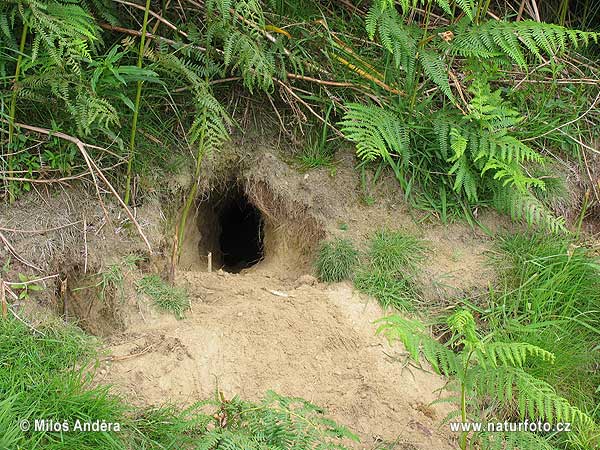
What’s the difference between a burro and a burrow?

August 30, 2008

Burro:

Burro

Burro

Burrow:

Rabbit burrow, Nature photos CZ

If you can click to this site, you should know the difference.  Do you?

Read the rest of this entry »


Jesus and the lamp unto my porch

August 29, 2008

Bug Girl has the story — and go see it at her site, and look at the photograph.

Friend, do you see Jesus? (I didn’t.)

Oh, sure.   It’s from Texas.  Maybe a trailer park.

On the plus side, there’s a poll you can crash: Do you see Jesus, someone else, or nothing at all?  (“Moth” is not one of the choices.)  The poll is by KLTV Channel 7 out in the Longview-Tyler area.

“I immediately thought it looked like Jesus and that was what was so cool cause you’ve seen His face in grilled cheese sandwiches and windows and things but on a moth’s back…we thought that was pretty neat.”

As if the moth weren’t cool enough.  Feynman was right:  The scientist appreciates this stuff better.