It’s World Turtle Day!

May 23, 2015

World Turtle Day, Share the Roads!

Nice reminder, featuring an Eastern Box Tortoise (I think). Image from Conscious Companion.

A poster from 2013.  Still accurate for World Turtle Day 2015.

We’re off in the rain to look for turtles and tortoises and other adventures. Saw a lot of turtles last week at the flooded White Rock Lake. This week?

Have a great World Turtle Day!  Go do something nice for your neighborhood turtles and tortoises.

Other views:

From there, it’s turtles all the way down!


More:

Yes, this is mostly an encore post. Fighting ignorance requires patience.

Yes, this is mostly an encore post. Fighting ignorance requires patience, stamina, repetition, and love for turtles.


Powers of Ten – Charles and Ray Eames’ brilliant, before-its-time film

May 23, 2015

Images from

Images from “Powers of Ten,” 1977 edition. From IconEye

AMNH’s “The Known Universe” is a cool film. Putting up that last post on the film, I looked back and noted that when I had previously written about the brilliant predecessor films from Charles and Ray Eames, “Powers of Ten,” the Eames films were not freely available on line.

That’s been fixed.

I like to use films like this as warmups to a year of history, and as a reminder once we get into studying the history of space exploration, of just how far we’ve come in understanding the universe, and how big this place is.

Of course, that means wer are just small parts.

The Eames’s genius showed the scale of things, from a couple picnicking in a park, to the outer reaches of the universe, and then back, zooming into the innermost reaches of a human down to the sub-atomic level.

There’s a series of these films; this one, published on YouTube by the Eames Office, was done in 1977, one of the later versions.

How can you use this in class, teachers? (I recommend buying it on DVD, as I did; better sound and pictures, generally.)

Film information:

Uploaded on Aug 26, 2010

Powers of Ten takes us on an adventure in magnitudes. Starting at a picnic by the lakeside in Chicago, this famous film transports us to the outer edges of the universe. Every ten seconds we view the starting point from ten times farther out until our own galaxy is visible only a s a speck of light among many others. Returning to Earth with breathtaking speed, we move inward- into the hand of the sleeping picnicker- with ten times more magnification every ten seconds. Our journey ends inside a proton of a carbon atom within a DNA molecule in a white blood cell. POWERS OF TEN © 1977 EAMES OFFICE LLC (Available at http://www.eamesoffice.com)

At the Eames Office Youtube site, you may find the film in with Mandarin Chinese, German, and Japanese translations (no Spanish?).  If you’re unfamiliar with the work of this couple — you would recognize much of the stuff they designed, I’m sure — check out a short film on an exhibit on Ray Eames (which has concluded, sadly):

More:

The very recognizable, famous Eames Chair, from Herman Miller. Ideally, you can sit in your Eames Chair while watching

The very recognizable, famous Eames Chair and Ottoman, from Herman Miller. Ideally, you can sit in your Eames Chair while watching “Powers of Ten.” Herman Miller image.


The Known Universe – a film from the American Museum of Natural History

May 23, 2015

Where many journeys to the stars, start:

Where many journeys to the stars, start: “Hayden planetarium at night” by Alfred Gracombe – Own work. Licensed under CC BY 2.5 via Wikimedia Commons. The Hayden Planetarium is part of the American Museum of Natural History in New York City.

I’ve been known to answer a snarky question from a student, “where are we, really, in the universe, and how do we know the Sun doesn’t orbit the Earth?” with a showing of the Eames’s “Powers of Ten.”

But those films, great as they are, show some age.

Among other things, we know a lot more about the cosmos now, than we did then.

In 2009 the American Museum of Natural History showed this film, “The Known Universe,” for several months.

For visions of what happens when we leave Earth at faster-than-light speeds, it’s very good!

Information on “The Known Universe”:

Uploaded on Dec 15, 2009

The Known Universe takes viewers from the Himalayas through our atmosphere and the inky black of space to the afterglow of the Big Bang. Every star, planet, and quasar seen in the film is possible because of the world’s most complete four-dimensional map of the universe, the Digital Universe Atlas that is maintained and updated by astrophysicists at the American Museum of Natural History. The new film, created by the Museum, is part of an exhibition, Visions of the Cosmos: From the Milky Ocean to an Evolving Universe, at the Rubin Museum of Art in Manhattan through May 2010.

Data: Digital Universe, American Museum of Natural History
http://www.haydenplanetarium.org/univ…

Visualization Software: Uniview by SCISS

Director: Carter Emmart
Curator: Ben R. Oppenheimer
Producer: Michael Hoffman
Executive Producer: Ro Kinzler
Co-Executive Producer: Martin Brauen
Manager, Digital Universe Atlas: Brian Abbott

Music: Suke Cerulo

For more information visit http://www.amnh.org

Tip of the old scrub brush to Jack Mitcham at the Neil de Grasse Tyson group on Facebook.


109 years ago, May 22, 1906: Patent to Wright Bros. for “flying machine”

May 22, 2015

In a drawer in a file box in the U.S. Patent Office in Washington, D.C., is a study in black ink on white paper, lines that resemble those images most of us have of the first Wright Bros. flyer, usually dubbed “Kittyhawk” after the place it first took to the air.

Drawing 1 from patent granted to Orville Wright for a flying machine

Drawing 1 from patent granted to Orville Wright for a flying machine

The patent was issued on May 22, 1906, to Orville Wright, Patent No. 821393, for a “flying machine.”

It makes more sense if you turn the drawing on its side.

Wright Bros. flying machine, from patent drawing

Wright Bros. flying machine, from patent drawing

With the patent, the Wrights had legal means to protect their idea so they could commercially develop it.  Turns out, however, that the fight to get the patent, and subsequent fights to protect it, may have prevented them from fully realizing the commercial success they could have had.  Lawrence Goldstone, the author of that article, details the history at much greater length in his 2014 book, Birdmen: The Wright Brothers, Glenn Curtiss, and the Battle to Control the Skies. 

Why did it take three years to get the patent issued?

Below the fold, the rest of the patent.

Read the rest of this entry »


New Appalachian Wildlife Refuge protects very rare species: Mountain Bogs National Wildlife Refuge

May 15, 2015

A 39-acre donation from The Nature Conservancy and a lot of work by the Carolina Mountain Land Conservancy joined to birth a new National Wildlife Refuge in North Carolina.

Welcome the Mountain Bogs National Wildlife Refuge.

Jack-in-the-pulpit, one of the less rare of the rare plants protected by the creation of the Mountain Bogs National Wildlife Refuge in North Carolina. USFWS photo

Jack-in-the-pulpit, one of the less rare of the rare plants protected by the creation of the Mountain Bogs National Wildlife Refuge in North Carolina. USFWS photo

The April 22, 2015, press release from USFWS:

New National Wildlife Refuge Established to Protect Some of Appalachia’s Rarest Places

April 22, 2015

Trout lily blooming at Mountain Bogs National Wildlife Refuge. Credit: Gary Peeples, USFWS.

Trout lily blooming at Mountain Bogs National Wildlife Refuge. Credit: Gary Peeples, USFWS.

Asheville, N.C. – The Mountain Bogs National Wildlife Refuge became America’s 563rd refuge today.

U.S. Fish and Wildlife Service Deputy Director Jim Kurth visited Western North Carolina to announce the establishment of a new national wildlife refuge devoted to the conservation of southern Appalachian mountain bogs, one of the rarest and most imperiled habitats in the United States.  North Carolina is home to 11 refuges; Mountain Bogs Refuge is the first one west of Charlotte.

“The establishment of Mountain Bogs National Wildlife Refuge marks a turning point in the efforts of a number of dedicated partners in preserving this unique and threatened habitat,” said Kurth. “It will provide a focal point for mountain bog conservation in the area, and highlights the importance of our National Wildlife Refuge System in preserving our nation’s spectacular biodiversity for future generations of Americans.”

“While western North Carolina has beautiful swaths of conserved public lands, mountain bogs, which are home to several endangered species, are largely unprotected,” said Mike Oetker, Deputy Regional Director for the Service’s Southeast Region.  “People have worked for decades to conserve these bogs, and creating this refuge was an opportunity to build on that effort in a significant way.”

The Nature Conservancy donated an easement on a 39-acre parcel in Ashe County, the site of Kurth’s visit, which formally establishes the refuge.

“Today’s announcement is the culmination of years of work by conservation partners at the local, state and national level,” said The Nature Conservancy’s Fred Annand, who coordinates the Conservancy’s acquisition work. “Many people have worked together for years to make today a reality. Successful conservation depends on partnership, and that’s certainly the case today.”

Mountain bogs are typically small and widely scattered across the landscape, often isolated from other wetlands. Important to wildlife and plants, mountain bogs are home to five endangered species – bog turtles, green pitcher plant, mountain sweet pitcher plant, swamp pink (a lily), and bunched arrowhead. They also provide habitat for migratory birds and game animals, including mink, woodcock, ruffed grouse, turkey, and wood duck. Bogs are breeding habitat for many species of amphibians, especially salamanders, of which the Southern Appalachians have the greatest diversity in the nation. Bogs also provide key benefits to humans. They have a natural capacity for regulating water flow, holding floodwaters like giant sponges and slowly releasing water to nearby streams decreasing the impacts of floods and droughts.

In addition to The Nature Conservancy, Carolina Mountain Land Conservancy has long been active in bog conservation and has been supportive of establishing the new refuge.

“Southern Appalachian bogs are biodiversity hotspots,” said Kieran Roe, Executive Director at Carolina Mountain Land Conservancy. “But they are disappearing from our region at a rapid rate. Less than 20 percent of the mountain bogs that once existed still remain, so their protection is critical.”

The refuge may eventually grow to 23,000 acres, depending on the willingness of landowners to sell and the availability of funds to purchase those lands. To guide acquisition, and bog conservation in general, the Service has identified 30 sites, or Conservation Partnership Areas, containing bogs and surrounding lands. These sites are scattered across Alleghany, Ashe, Avery, Clay, Graham, Henderson, Jackson, Macon, Transylvania, Wilkes and Watauga counties in North Carolina, and Carter and Johnson counties in Tennessee. The Service will look primarily within these Conservation Partnership Areas to acquire land and/or easements. For those acres that won’t be acquired, the Service will work to support private landowners in their stewardship activities. Funding to acquire land and easements would likely come from the Land and Water Conservation Fund, funded by fees collected from the sale of publicly-owned offshore oil and gas drilling leases.

While some parts of the refuge would likely be too fragile for recreation, the Service anticipates other parts could be open for wildlife-based recreation, including hunting, fishing, wildlife observation and photography, education, and interpretation.

The Service manages national wildlife refuges for the conservation of fish, wildlife and plants. In 1903 President Theodore Roosevelt created the first national wildlife refuge to protect brown pelican breeding grounds on the east coast of Florida. The Refuge System now includes 563 refuges across the nation, protecting more than 150 million acres. It’s the only system of federally-managed lands dedicated to wildlife. For more information, visit www.fws.gov/mountainbogs.

The National Wildlife Refuge System protects wildlife and wildlife habitat on more than 150 million acres of land and water from the Caribbean to the Pacific, Maine to Alaska. Refuges also improve human health, provide outdoor recreation and support local economies. Visit our home page at http://www.fws.gov/refuges. Follow us on Facebook and Twitter.

Our Dallas area trout lilies have all blossomed, weeks ago. Interesting that bog-bound trout lilies share so much in common with their drier land cousins a few thousand miles away.

More:


Feynman at the Nobel Awards Dinner

May 12, 2015

Photos tell a thousand stories.

Richard Feynman at the Nobel Awards dinner after receiving his prize in Physics.  Who is the woman to Feynman's right?

Richard Feynman at the Nobel Awards dinner after receiving his prize in Physics. Who is the woman to Feynman’s right? Found on Pinterest

Richard P. Feynman won his Nobel in Physics, in 1965, shared with Sin-Itiro Tomonaga and Julian Schwinger.

The Nobel Foundation said:

The Nobel Prize in Physics 1965 was awarded jointly to Sin-Itiro Tomonaga, Julian Schwinger and Richard P. Feynman “for their fundamental work in quantum electrodynamics, with deep-ploughing consequences for the physics of elementary particles”.

In its description of his award, the Foundation pointed to the now-famous Feynman Diagrams.

Introduced the Feynman Diagrams

Following the successes of the theory of relativity and quantum mechanics, a first relativistic theory was formulated for the interaction of charged particles with electromagnetic fields. However, in the work of reformulating the theory, Richard Feynman made contributions to a new quantum electrodynamics, in particular in 1948, he introduced so called Feynman diagrams, a graphical representation of interactions between different particles. These diagrams facilitate calculations of interaction probabilities.

Who is the woman next to Feynman?

More:

  • Yesterday, May 11, was Feynman Day; see why we need to mark our calendars for next year!

Ooops! Missed Feynman Day, May 11! How will we make it up?

May 12, 2015

Got busy, got distracted, fighting allergies . . . and I missed posting for Feynman Day!

Is it ever the wrong time to celebrate the interesting life and remarkable achievements of Richard Feynman?

Here’s the post I should have done yesterday, in Feynman’s honor, and for our enjoyment:

May 11 is the anniversary of the birth of Richard Feynman (born 1918, died 1988).

Richard Feynman

Richard Feynman. Borrowed from Luciano’s Tumblr, LikeaPhysicist

Feynman’s birthday falls on Statehood Day for Minnesota.  You can fly your flag for both causes, if you wish, Minnesota’s statehood AND Feynman’s birthday.  No proclamation will issue from the White House, but you can fly your flag any day.

Why Feynman Day?  To celebrate invention, physics, interesting characters, and that essential, American quality of je ne sais quoi.

In addition to his winning the Nobel Prize for Quantum Electrodynamics (QED), Feynman popularized the critique of science and other enterprises with what we now call Cargo Cult science, or education, or whatever, where people follow the dance steps, but without the rhythm and music.

Those two things alone would make him a remarkable man.  But, like a product offered for $19.95 as a good buy in a 2:00 a.m. infomercial, with Feynman, there’s more.  With Feynman, there is always more.

I got alerted to Feynman in the first days of the old Quality Paperback Book Club, when they featured his new memoir, Surely You’re Joking, Mr. Feynman!  QPBC was hot on the book, and with a title like that, how could I resist?  When I got the book a week or so later, I read it within two days, while attending law school and working full time.  I remember Feynman.

Norton published the book — and their description, alone, should make you want to read it:

A New York Times bestseller—the outrageous exploits of one of this century’s greatest scientific minds and a legendary American original.

In this phenomenal national bestseller, the Nobel Prize­-winning physicist Richard P. Feynman recounts in his inimitable voice his adventures trading ideas on atomic physics with Einstein and Bohr and ideas on gambling with Nick the Greek, painting a naked female toreador, accompanying a ballet on his bongo drums and much else of an eyebrow-raising and hilarious nature.

All true, and that’s not even the half of the outrageousness, all done with great good humor, about a life lived in great good humor through what should have been a memorable age, but often was just terrifying.

I think sometimes that Feynman’s calm, alone, borne of that great good humor and insatiable curiosity,  may have gotten us through the birth of the atomic age and the Cold War.

Feynman was a giant, and we don’t revere him enough.  Consider:

  • Feynman’s high school sweetheart, Arlene, came down with tuberculosis.  He married her, and took her with him to New Mexico to make the atom bombs.  The stories of her confinement to a hospital, and the laborious trekking he had to make between Los Alamos and her bedside in Santa Fe, are touching, and heartbreaking.  It is one of the great love stories of the 20th century, certainly, and perhaps for all time.  It also provided the title for his second memoir, What Do You Care What Other People Think?
  • Every single, college-age man should read Feynman’s stories of how to date, and how to seduce women.  His approach was unique, and endeared him to women — in legend, to many women.  Feynman’s dating must have been part of the inspiration for the comedy series, “Big Bang Theory.”  Feynman’s stories are better.  (Heck, it’s even the subject of a popular, classic XKCD comic — probably only Feynman and Einstein among Nobel-winning physicists have made so much money for so many cartoonists.)
US postage stamp featuring Richard Feynman

US postage stamp featuring Richard Feynman

  • Yeah, he’s already been featured on a postage stamp, see at right.  That’s not good enough for Feynman, though — the U.S. Postal Service created a special cancellation stamp for Feynman, featuring a version of his Feynman Diagrams.

    A special postal cancel was authorized by the USPS (United States Postal Service) to honor the 80th birthday of Richard Feynman. This cancel was used in Lake Worth, Florida. For this special day the post office was renamed “Feynman Station.”

    Feynman Commemorative Cancel Feynman Diagram

    The Feynman Diagram used for the postal cancel on this envelope depicts what is known as a “bubble process.” It shows a high energy particle, for example, a cosmic ray (a) from a distant supernova, which emits a high energy photon, for example, a gamma ray (b). The photon, in turn, creates a particle (c) and an anti-particle (d) that exists for a brief moment and then recombines.

    As Feynman liked to point out, an anti-particle is the same thing as a particle with negative energy traveling backward in time (which is why the arrow at (d) points backwards, i.e. to the left). So you could say the photon created only one particle that, at first, traveled forward in time (the bottom semi-circle) and then reversed and went back in time (the top semi-circle) and annihilated itself! By inventing diagrams like this, Richard Feynman made it much easier to understand what is going on in the interactions between sub-atomic particles without getting lost in tremendous amounts of tedious math

  • Working at Los Alamos on the Manhattan Project, Feynman developed a keen appreciation for bureaucracy and all its follies.  His vexations for the security managers are also legendary.  Here’s a quick version of one story — he asked friends and family to write to him in code, but to not include a key to the code, so he’d have to crack the code to read the letter.  Feynman could do it, but the security people couldn’t.  Hilarity ensued.
  • Feynman developed a love for the still-relatively unknown, landlocked Asian nation of Tannu Tuva.  It’s just the sort of place to appeal to a character like Feynman — so obscure most atlases didn’t, and don’t, show it at all — seemingly consumed by the Soviet Union, but held in a special status.  Home of throat singing — and almost impossible to get to.  During the Cold War, Feynman struck up correspondence with people in Tuva, to the concern of Soviet and American intelligence agencies, who seemed not to understand someone might do such thing out of curiosity.  Feynman hoped to travel there to visit new friends, but his final bouts of cancer took him before it was possible.  Tuva, famous among philatelists only, perhaps, honored Feynman with postage stamps and postcards.
  • Just try to find a photo of Feynman not smiling. The man was a joy to be around, for most people, most of the time.
  • Quantum electro dynamics?  No, I can’t explain it, either — but his work had a lot to do with how particles wobble.  I remember that because, according to Feynman, he got the inspiration for the work for which he won the Nobel while spinning plates, like a Chinese acrobat on the Ed Sullivan Show, to the delight of students in the Cornell University cafeteria, and the shock and horror of the food service people.  Who else has yet confessed to such an inspiration for a Nobel?

There’s more — a lot more.  Feynman outlined our current generation of computer memory devices — in 1959.  No, he didn’t patent the idea.  He did patent an idea for a nuclear-powered spacecraft.  Another delightful story.

Feynman in an Apple ad

Feynman was featured in print and broadcast ads for Apple — not one, but two (did anyone else get that honor from Apple?). “Think Different.” This is one of Apple Computer’s most successful advertising campaigns. The theme of the campaign is one that celebrates figures in history who changed the world by thinking differently. Richard Feynman was among the chosen figures.

Feynman served on the board that approved science books for the California school system — his stories of that work will shock some, but it will make others shake their heads as they recognize the current crop of cargo-cultists and political bullies who dominate textbook approval processes, knowing nothing at all about what they are doing, or why.

No, I didn’t forget his brilliant work on the commission that studied the Challenger disaster, for NASA. There’s so much stuff to glorify!

In history, Feynman should be remembered much as we remember Thomas Jefferson, as a renaissance man in his time, a man who put great intellect to great work for his nation and all humanity.

Feynman's second Apple ad

The second Apple ad featuring Richard Feynman. An excerpt from Apple Computer’s campaign commercial: “Here’s to the crazy ones, the misfits, the rebels, the troublemakers, the round pegs in the square holes, the ones who see things differently. They’re not fond of rules and they have no respect for the status quo. You can quote them, disagree with them, glorify or vilify them… about the only thing you can’t do is ignore them, because they change things, they push the human race forward; and while some may see them as the crazy ones, we see genius, because the people who are crazy enough to think they can change the world are the ones who do.”

The sages say we shouldn’t have regrets, but I do have one.  When the Challenger Commission was meeting in Washington, D.C., I was working on another commission up the street.  I knew Feynman was ill, but our work was important, and we’d heard his disease was in remission.  I didn’t goof off a day and go to any of the hearings to see him, to get an autograph, to meet the man.  I though I’d have other opportunities to do that.  Now I regret not having met him in person.

In print, and in film, I know him well.  In our family, reading Feynman is something everybody does.  Feynman’s memoir was one of the last books I read to our son, Kenny, as he was growing up, and growing into reading on his own.  Even reading about Feynman, together, was an adventure.  Our son, James, took us into the real physics of Feynman, and though I struggle with it more than James, we still read Feynman, for humor, and physics.

What would be appropriate ways to mark Feynman’s birth?  At some future date, I hope we’ll have public readings of his books, showings of the documentaries about him, recreations of his lectures, perhaps.  And then everyone can get in a circle, beating drums and singing about getting some orange juice, before sending postcards to our friends in Tuva.

Richard Feynman, we still need you, and miss you dearly.

Tannu Tuva

Tuva’s capital is the delightfully-named Kyzyl. From this map, can you figure out where Tuva is, or how to get there — without Google, or Bing?

Tuva postcard honoring Richard Feynman

Tuva postcard, in honor of Richard Feynman — who loved to drum.

There will always be “More” about Richard Feynman, if we’re lucky:

Have a great Feynman Day!

Much of this is an encore post.


Letter to IVCC: Please correct history of DDT

May 11, 2015

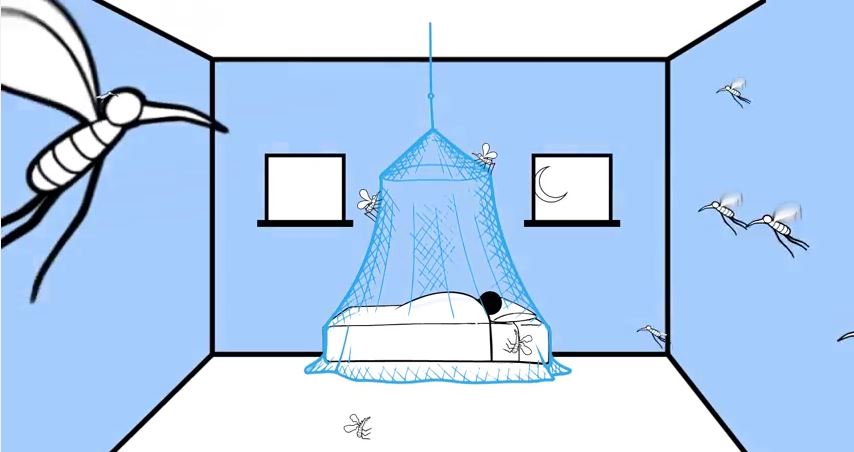
Screen capture of IVCC's introductory film, explaining benefits of mosquito bednets and the need for new pesticides to replace those now in use, to which mosquitoes have developed resistance and immunity.

Screen capture of IVCC’s introductory film, explaining benefits of mosquito bednets and the need for new pesticides to replace those now in use, to which mosquitoes have developed resistance and immunity.

Text of an e-mail I sent to the non-profit vector control group IVCC at the Liverpool School of Tropical Medicine.  “Vector” is the fancy name for “disease-carrying arthropod,” usually an insect.

Dear IVCC,

Generally your website is very useful.  I am happy to recommend it for most people, for most purposes.

However, I’ve discovered errors in history you need to correct. On this page: Highlights of vector-borne disease history | IVCC

You say:

1962: Rachel Carson publishes Silent Spring; a powerfully written book arguing that DDT is not safe. The reaction is immediate in several US states: DDT is banned. A nation-wide ban follows ten years later.

When Rachel Carson’s book Silent Spring hit the shelves, it caused outrage.

Carson’s engaging and populist style meant the book appealed to many ordinary people, not just scientists. Carson used the scientific evidence of many researchers to argue that DDT can kill animals, cause bird populations to decline and lead certain pests to proliferate. Workers who handled the chemical suffer health problems and exposed fish got liver cancer. She also found evidence of DDT in mother’s breast milk and in the bodies of babies. Several US states immediately banned the use of DDT as a pesticide and for crops. In 1972, the USA banned it outright.

But there was a problem. DDT was and is the most effective means of reducing malaria incidences, particularly in developing countries. DDT is cheap, effective, easily stored and transported and relatively safe for the person spraying. It does not have to be applied very often and provides the best means of protection possible. But how could the USA promote DDT through its aid programmes if DDT was a banned chemical at home?

In 2000, a worldwide ban on DDT nearly ensued but it was stopped at the last minute. Today, DDT is still produced in China and India and available globally for use uniquely in anti-malarial efforts.

I find that to be an inaccurate history, and one that falsely contributes to the idea that scientists, the World Health Organization, and African malaria fighters are fools.

In 1972, the U.S. Environmental Protection Agency issued an order banning DDT from use on crops. The order specifically worked around then-current U.S. law which would have required an absolute ban on DTT, or “outright” as you call it.  But the U.S. action was not “outright.”

EPA Administrator William Ruckelshaus fully appreciated the utility of DDT for fighting insect vectors of disease. The regulation banned ONLY crop use, and specifically exempted from ban the use of DDT to fight insect vectors — in the U.S., as well as world wide.  See this article, and follow the links for the actual text of the regulation:  Oh, look: EPA ordered DDT to be used to fight malaria in 1972!

You can see EPA’s action also did not ban manufacturing in the U.S.  Many scientists in the U.S. saw this as a bow to chemical manufacturers who would have lost money invested in manufacturing plants.  Production of DDT in the U.S. continued, almost exclusively for export, until 1984.  In 1984, there were exports of 300 tons of DDT from the U.S.

DDT remains a deadly toxin, one that kills indiscriminately in the wild.  It is not at all clear to me that the POPs Treaty negotiations were speeding to a complete ban on the stuff — but in any case, a special carve out was created to allow DDT use to continue, to fight disease.   That amendment was proposed first in early negotiations — not a “last-minute” change of mind.

DDT was never “the most effective means of reducing malaria incidences;” it was a key part of WHO’s eradication program, precisely because it is so toxic, and precisely because it is long-lasting, the two key features that make it a “persistent organic pollutant.” DDT only works when coupled with a program of medical care to cure humans of the disease while mosquito populations are temporarily knocked down — a point you recognize at other places on your website.  Alone, DDT sets a stage for malaria to come roaring back, as soon as the DDT effectiveness wears off due to wall washing, painting or time, and when the mosquitoes come roaring back resistant to DDT, they will spread any malaria left in the population of humans.

I hope you can make corrections.  There is a widespread, well-funded effort to claim DDT is perfectly harmless to humans, that evil scientists and environmentalists prevailed on WHO and nations to stop using DDT, that the complete cessation of DDT use led to a massive expansion of malaria, and that therefore we should ignore scientists, environmentalists, NGOs and anyone else like the Liverpool School of Tropical Medicine, who advocate doing anything other than massive DDT spraying campaigns to fight malaria.

Please don’t contribute to that political and science hoax campaign.

Sincerely,

Ed Darrell
Dallas, Texas

We’ll see whether anyone is awake and tending the message box at IVCC in Liverpool.  I hope the project is not dormant.

Fighting malaria requires accurate information if malaria fighters are to be able to outsmart malaria, which has outsmarted humans for a half-million years.

IVCC’s film of introduction:

More:

[Not sure why WordPress wants this post to show up on May 11’s schedule, when I posted in on May 21.  Haven’t figured out how to fix it; so I’ve reposted this closer to when it was written.  FYI.]


Red-breasted sapsucker in Yosemite

May 6, 2015

I really like this close-up of a woodpecker; from Twitter.

Wonder how long birds live? Red-breasted sapsuckers can live at least 7 years! Photo by Ann & Rob Simpson #Yosemite

Wonder how long birds live? Red-breasted sapsuckers can live at least 7 years! Photo by Ann & Rob Simpson #Yosemite


Do something to fight malaria today: April 25, 2015, is World Malaria Day

April 25, 2015

Photo from the World Health Organization (WHO), the lead agency in fighting malaria.

Photo from the World Health Organization (WHO), the lead agency in fighting malaria. “A child dies every minute from #malaria in Africa http://goo.gl/46QhJq #WorldMalariaDay”

One day dedicated to education and spurs to action to beat malaria.

Amazingly, there are ways to get it wrong. Please avoid them.

Don’t claim that all we need to do to beat this nasty disease is shoot environmentalists and poison the world with DDT.  Don’t claim that health workers who risk their lives to prevent malaria with bednets, are misguided. No, Rachel Carson didn’t kill millions with false claims against DDT (in fact, she tried to keep DDT viable as a key tool to fight malaria, but we failed to listen to her in time).

You might kick in $10 to Nothing But Nets, and save a life in the most effective anti-malaria campaign in the last 50 years. In fact, I recommend it.

Have a thoughtful World Malaria Day.

http://twitter.com/bbbrieger/status/588795413387423744


No, Earth Day does not celebrate Lenin, who was anti-environmentalist – 2015 debunking of the annual Earth Day/Lenin hoax

April 20, 2015

This is mostly an encore post, repeated each year on April 22 and Earth Day — sad that it needs repeating; anti-environmentalists don’t appear to learn much, year to year.  (Yes, some of the links may be dated; if you find one not working, please let me know in comments.)

You could write it off to pareidolia, once.

Like faces in clouds, some people claimed to see a link. The first Earth Day, on April 22, 1970, coincided with Lenin’s birthday. There was no link — Earth Day was scheduled for a spring Wednesday, when the greatest number of college students would be on campus.

Link to permanent Earth Day site, at EarthDay.org

Link to permanent Earth Day site, at EarthDay.org

Now, years later, with almost-annual repeats of the claim from the braying right wing, it’s just a cruel hoax.  It’s as much a hoax on the ill-informed of the right, as anyone else. Many of them believe it.

No, there’s no link between Earth Day and the birthday of V. I. Lenin:

One surefire way to tell an Earth Day post is done by an Earth Day denialist: They’ll note that the first Earth Day, on April 22, 1970, was an anniversary of the birth of Lenin.

Coincidentally, yes, Lenin was born on April 22 (new style calendar; it was April 10 on the calendar when he was born — one might accurately note that Lenin’s mother always said he was born on April 10).

It’s a hoax. There is no meaning to the first Earth Day’s falling on Lenin’s birthday — Lenin was not prescient enough to plan his birthday to fall in the middle of Earth Week, a hundred years before Earth Week was even planned.

About.com explains why the idea of a link between Earth Day and Lenin is silly:

Does Earth Day Promote Communism?
Earth Day 1970 was initially conceived as a teach-in, modeled on the teach-ins used successfully by Vietnam War protesters to spread their message and generate support on U.S. college campuses. It is generally believed that April 22 was chosen for Earth Day because it was a Wednesday that fell between spring break and final exams—a day when a majority of college students would be able to participate.

U.S. Sen. Gaylord Nelson, the guy who dreamed up the nationwide teach-in that became Earth Day, once tried to put the whole “Earth Day as communist plot” idea into perspective.

“On any given day, a lot of both good and bad people were born,” Nelson said. “A person many consider the world’s first environmentalist, Saint Francis of Assisi, was born on April 22. So was Queen Isabella. More importantly, so was my Aunt Tillie.”

April 22 is also the birthday of J. Sterling Morton, the Nebraska newspaper editor who founded Arbor Day (a national holiday devoted to planting trees) on April 22, 1872, when Lenin was still in diapers. Maybe April 22 was chosen to honor Morton and nobody knew. Maybe environmentalists were trying to send a subliminal message to the national subconscious that would transform people into tree-planting zombies. One birthday “plot” seems just about as likely as the other. What’s the chance that one person in a thousand could tell you when either of these guys were born.

My guess is that only a few really wacko conservatives know that April 22 is Lenin’s birthday (was it ever celebrated in the Soviet Union?). No one else bothers to think about it, or say anything about it, nor especially, to celebrate it.

Certainly, the Soviet Union never celebrated Earth Day. Nor was Lenin any great friend of the environment.  He stood instead with the oil-drillers-without-clean-up, with the strip-miners-without-reclamation, with the dirty-smokestack guys.  You’d think someone with a bit of logic and a rudimentary knowledge of history could put that together.

Gaylord Nelson, Living Green image

Inventor of Earth Day teach-ins, former Wisconsin Governor and U.S. Senator Gaylord Nelson

The REAL founder of Earth Day, Wisconsin’s U.S. Sen. Gaylord Nelson, usually recognized as the founder and father of Earth Day, told how and why the organizers came to pick April 22:

Senator Nelson chose the date in order to maximize participation on college campuses for what he conceived as an “environmental teach-in.” He determined the week of April 19–25 was the best bet; it did not fall during exams or spring breaks, did not conflict with religious holidays such as Easter or Passover, and was late enough in spring to have decent weather. More students were likely to be in class, and there would be less competition with other mid-week events—so he chose Wednesday, April 22.

In his own words, Nelson spoke of what he was trying to do:

After President Kennedy’s [conservation] tour, I still hoped for some idea that would thrust the environment into the political mainstream. Six years would pass before the idea that became Earth Day occurred to me while on a conservation speaking tour out West in the summer of 1969. At the time, anti-Vietnam War demonstrations, called “teach-ins,” had spread to college campuses all across the nation. Suddenly, the idea occurred to me – why not organize a huge grassroots protest over what was happening to our environment?

I was satisfied that if we could tap into the environmental concerns of the general public and infuse the student anti-war energy into the environmental cause, we could generate a demonstration that would force this issue onto the political agenda. It was a big gamble, but worth a try.

At a conference in Seattle in September 1969, I announced that in the spring of 1970 there would be a nationwide grassroots demonstration on behalf of the environment and invited everyone to participate. The wire services carried the story from coast to coast. The response was electric. It took off like gangbusters. Telegrams, letters, and telephone inquiries poured in from all across the country. The American people finally had a forum to express its concern about what was happening to the land, rivers, lakes, and air – and they did so with spectacular exuberance. For the next four months, two members of my Senate staff, Linda Billings and John Heritage, managed Earth Day affairs out of my Senate office.

Five months before Earth Day, on Sunday, November 30, 1969, The New York Times carried a lengthy article by Gladwin Hill reporting on the astonishing proliferation of environmental events:

“Rising concern about the environmental crisis is sweeping the nation’s campuses with an intensity that may be on its way to eclipsing student discontent over the war in Vietnam…a national day of observance of environmental problems…is being planned for next spring…when a nationwide environmental ‘teach-in’…coordinated from the office of Senator Gaylord Nelson is planned….”

Nelson, a veteran of the U.S. armed services (Okinawa campaign), flag-waving ex-governor of Wisconsin (Sen. Joe McCarthy’s home state, but also the home of Aldo Leopold and birthplace of John Muir), was working to raise America’s consciousness and conscience about environmental issues.

Lenin on the environment? Think of the Aral Sea disaster, the horrible pollution from Soviet mines and mills, and the dreadful record of the Soviet Union on protecting any resource. Lenin believed in exploiting resources and leaving the spoils to rot in the sun, not conservation; in practice there was no environmental protection, but instead a war on nature, in the Soviet Union.

So, why are all these conservative denialists claiming, against history and politics, that Lenin’s birthday has anything to do with Earth Day?

Can you say “propaganda?” Can you say “political smear?”

2015 Resources and Good News:

2014 Resources and Good News:

2013 Resources and Good News:

Good information for 2012:

Good information from 2011:

Good information from 2010:

2014’s Wall of Shame:

2013 Wall of Shame:

Wall of Lenin’s Birthday Propaganda Shame from 2012:

Wall of Lenin’s Birthday Propaganda Shame from 2011:

Wall of Lenin’s Birthday Propaganda Shame from 2010:

Spread the word. Have you found someone spreading the hoax, claiming Earth Day honors Lenin instead? Give us the link in comments.


Happy birthday, Albert Einstein! 136 years, today

March 14, 2015

How many ways can we say happy birthday to a great scientist born on Pi Day?  So, an encore post.
E=mcc - logo from AIP

E=energy; m=mass; c=speed of light

Happy Einstein Day! to us.  Albert’s been dead since 1955 — sadly for us.  Our celebrations now are more for our own satisfaction and curiosity, and to honor the great man — he’s beyond caring.

Almost fitting that he was born on π Day, no? I mean, is there an E=mc² Day?

Albert Einstein was born on March 14, 1879, in Ulm, Germany, to Hermann and Pauline Einstein.

26 years later, three days after his birthday, he sent off the paper on the photo-electric effect; that paper would win him the Nobel Prize in Physics in another five years, in 1921.

In that same year of 1905, he published three other papers, solving the mystery of Brownian motion, describing what became known as the Special Theory of Relativity and solving the mystery of why measurements of the light did not show any effects of motion as Maxwell had predicted, and a final paper that noted a particle emitting light energy loses mass. This final paper amused Einstein because it seemed so ludicrous in its logical extension that energy and matter are really the same stuff at some fundamental point, as expressed in the equation demonstrating an enormous amount of energy stored in atoms, E=mc².

Albert Einstein as a younger man - Nobel Foundation image

Albert Einstein as a younger man – Nobel Foundation image

Any one of the papers would have been a career-capper for any physicist. Einstein dashed them off in just a few months, forever changing the fields of physics. And, you noticed: Einstein did not win a Nobel for the Special Theory of Relativity, nor for E=mc². He won it for the photo electric effect. Irony in history.

106 years later Einstein’s work affects us every day. Relativity theory at some level I don’t understand makes possible the use Global Positioning Systems (GPS), which revolutionized navigation and mundane things like land surveying and microwave dish placement. Development of nuclear power both gives us hope for an energy-rich future, and gives us fear of nuclear war. Sometimes, even the hope of the energy rich future gives us fear, as we watch and hope nuclear engineers can control the piles in nuclear power plants damaged by earthquakes and tsunami in Japan.

English: Albert Einstein on a 1966 US stamp

Albert Einstein on a 1966 US stamp (Photo credit: Wikipedia)

If Albert Einstein was a genius at physics, he was more dedicated to pacifism. He resigned his German citizenship to avoid military conscription. His pacifism made the German Nazis nervous; Einstein fled Germany in the 1930s, eventually settling in the United States. In the U.S., he was persuaded by Leo Szilard to write to President Franklin Roosevelt to suggest the U.S. start a program to develop an atomic weapon, because Germany most certainly was doing exactly that. But while urging FDR to keep up with the Germans, Einstein refused to participate in the program himself, sticking to his pacifist views. Others could, and would, design and build atomic bombs. (Maybe it’s a virus among nuclear physicists — several of those working on the Manhattan Project were pacifists, and had great difficulty reconciling the idea that the weapon they worked on to beat Germany, was deployed on Japan, which did not have a nuclear weapons program.)

English: USSR stamp dedicated to Albert Einste...

Everybody wanted to claim, and honor Einstein; USSR issued this stamp dedicated to Albert Einstein Русский: Почтовая марка СССР, посвящённая Альберту Эйнштейну (Photo credit: Wikipedia)

Einstein was a not-great father, and probably not a terribly faithful husband at first — though he did think to give his first wife, in the divorce settlement, a share of a Nobel Prize should he win it. Einstein was a good violinist, a competent sailor, an incompetent dresser, and a great character. His sister suffered a paralyzing stroke. For many months Albert spent hours a day reading to her the newspapers and books of the day, convinced that though mute and appearing unconscious, she would benefit from hearing the words. He said he did not hold to orthodox religions, but could there be a greater show of faith in human spirit?

Einstein in 1950, five years before his death

Einstein in 1950, five years before his death

When people hear clever sayings, but forget to whom the bon mots should be attributed, Einstein is one of about five candidates to whom all sorts of things are attributed, though he never said them. (Others include Lincoln, Jefferson, Mark Twain and Will Rogers). Einstein is the only scientist in that group. So, for example, we can be quite sure Einstein never claimed that compound interest was the best idea of the 20th century. This phenomenon is symbolic of the high regard people have for the man, even though so few understand what his work was, or meant.

A most interesting man. A most important body of work. He deserves more study and regard than he gets.

More, Resources:


Rachel Carson sketch

March 4, 2015

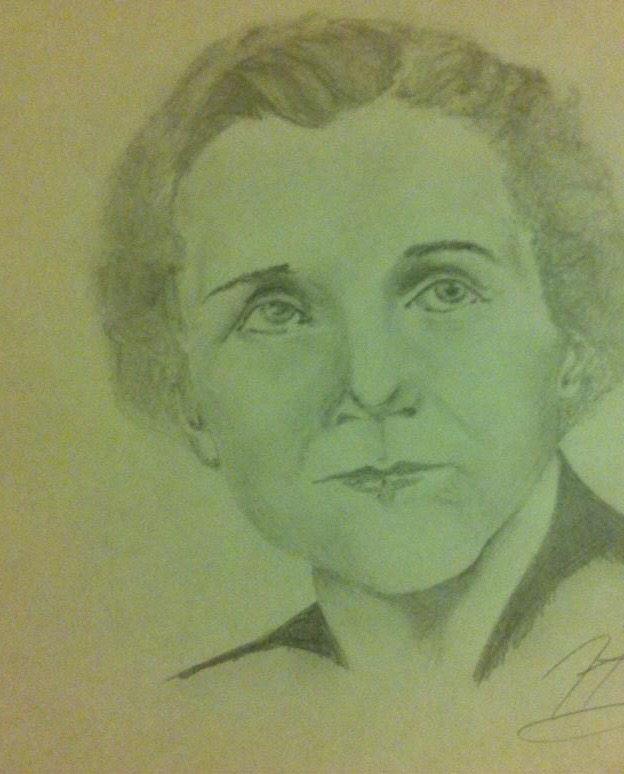
A Canadian artist posted a nice sketch of Rachel Carson on Twitter:

Rachel Carson sketch, by artist @moietymouse

Rachel Carson sketch, by artist @moietymouse

I’m often frustrated at how few good images of Ms. Carson exist on the internet, probably because I see them over and over again in working to stamp out the hoax claims about Carson, DDT and malaria, and environmental protection.

Maybe we can get @moietymouse to make some more? Check out her Twitter feed; maybe she’s got images for sale, and you can encourage her while improving the look of your walls.

Read the rest of this entry »


How is DDT used to fight malaria?

February 20, 2015

Can we dispel common misapprehensions about fighting malaria?

In fighting malaria, DDT is not used outdoors.  Spraying swamps with insecticide does little to combat malaria because malaria-carrying mosquitoes don’t usually breed or rest there, and collateral damage from DDT reduces mosquito predators.

USAID-paid workers conducting Indoor Residual Spraying (IRS) campaign. (Where? When?) USAID photo, via Stanford University, Human Biology 153

USAID-paid workers conducting Indoor Residual Spraying (IRS) campaign. (Where? When?) USAID photo, via Stanford University, Human Biology 153

DDT’s utility in fighting malaria comes from its persistence when used close by humans bitten by those species of mosquito that carry malaria. Malaria is a parasitic disease.  Malaria parasites complete their life cycle in a human host (victim), and any insect taking blood from an infected human gets some of those parasites.  The parasite completes another phase of its life cycle in certain species of mosquito — not flies nor other biting insects — and after about two weeks, mosquitoes can infect humans with newly-ready parasites.

Those species that carry malaria are usually active from about dusk until after midnight.  Consequently, they bite people usually as they sleep.  Because the “blood meal” is heavy, newly-fed mosquitoes usually fly to a nearby wall of the home to excrete water from the meal, so they fly with a lighter load.  If DDT, or some other pesticide, coats that wall, the mosquito will die before being able to pass new parasites on to new victims.

DDT is NOT used to spray outdoors, to fight malaria.  Among other things, outdoor spraying threatens domestic animals and any creature that preys on the malaria-carrying mosquito; as a pragmatic matter, outdoor use affects only a tiny percentage of malaria-carrying mosquitoes. Malaria-carriers tend to breed in small, temporary pools of water from rain; this transience makes outdoor fighting difficult.  Many people fail to understand this crucial point: DDT outdoors doesn’t help in the fight against malaria.  (Other outdoor campaigns can provide relief, such as elimination of old tires, filling potholes in roads, draining raingutters, and generally eliminating the mosquito breeding areas close to human homes, since mosquitoes rarely move more than about 50 yards in their lifetime.)

It’s important to realize that DDT in IRS allows a mosquito a free first bite.  The hope is that bite is from an uninfected mosquito, who will then land on the treated wall of the home and get a fatal dose of pesticide, so that spreading malaria it may have picked up from its victim, is stopped.  Bednets, which form a physical barrier, prevent even the first bite.  Bednets gain effectiveness from treatment with impregnated insecticides.

The U.S. Centers for Disease Control, the lead agency in the campaign to eradicate malaria from the U.S. after World War II, explains this use of DDT in Indoor Residual Spraying, or IRS:

Indoor Residual Spraying

Many malaria vectors are considered “endophilic”; that is, the mosquito vectors rest inside houses after taking a blood meal. These mosquitoes are particularly susceptible to control through indoor residual spraying (IRS).

What Is Indoor Residual Spraying?

As its name implies, IRS involves coating the walls and other surfaces of a house with a residual insecticide. For several months, the insecticide will kill mosquitoes and other insects that come in contact with these surfaces. IRS does not directly prevent people from being bitten by mosquitoes. Rather, it usually kills mosquitoes after they have fed if they come to rest on the sprayed surface. IRS thus prevents transmission of infection to other persons. To be effective, IRS must be applied to a very high proportion of households in an area (usually >80%).

Health workers sparying insecticide on the walls of a wood and adobe dwelling.

Health worker spraying insecticide on the walls of a wood and adobe dwelling, in Indoor Residual Spraying (IRS). CDC image

History of IRS

IRS with DDT was the primary malaria control method used during the Global Malaria Eradication Campaign (1955-1969). The campaign did not achieve its stated objective but it did eliminate malaria from several areas and sharply reduced the burden of malaria disease in others.

Concern over the environmental impact of DDT led to the introduction of other, more expensive insecticides. As the eradication campaign wore on, the responsibility for maintaining it was shifted to endemic countries that were not able to shoulder the financial burden. The campaign collapsed and in many areas, malaria soon returned to pre-campaign levels.

As a result of the cost of IRS, the negative publicity due to the failure of the Malaria Eradication Campaign, and environmental concerns about residual insecticides, IRS programs were largely disbanded other than in a few countries with resources to continue them. However, the recent success of IRS in reducing malaria cases in South Africa by more than 80% has revived interest in this malaria prevention tool.

Rachel Carson understood this use of DDT, and she understood that outdoor use of DDT, such as crop spraying, or fighting insects affecting trees, could induce insects to evolve resistance and immunity to DDT.  In Silent Spring Carson warned that unless outdoor uses were greatly curtailed, DDT would be rendered ineffective to fight diseases.  Fred Soper, the super-mosquito killer from the Rockefeller Foundation who organized and led the UN’s malaria eradication effort, also understood the race against evolution of DDT resistance.  He had hoped resistance would not show up in tropical areas until the 1970s — malaria campaigns around the Mediterranean produced DDT resistance as early as 1948.  Sadly, resistance to DDT was already established in many mosquito populations in tropical Africa before Soper could take the UN’s program to them.  The UN had to abandon the campaign, as CDC’s explanation indicates.

Today, every mosquito on Earth carries some of the alleles of resistance to DDT, and many are immune to it.


Malaria fight, February 2015

February 20, 2015

Timely infographic from Agence France Presse.

Some background:  The newly-formed World Health Organization (WHO) estimated worldwide malaria deaths at more than 5 million per year, when it kicked off the ambitious but ultimately unsuccessful malaria eradication program in 1955.  Eradication hopes hung on the use of DDT, sprayed on the walls of homes in affected areas (Indoor Residual Spraying, or IRS), to temporarily knock down mosquito populations so that humans infected with malaria could be cured.  After early successes in temperate zones, malaria fighters took the fight to tropical Africa in 1963.  There they discovered that overuse and abuse of DDT had already bred mosquitoes resistant to the pesticide.  With no substitute for DDT available, WHO wound down the campaign on the ground by 1965, and officially abandoned it in 1969.

Nations who had pledged money for the fight early, cut back when DDT failed.  In 1963, about 4 million people died from malaria, worldwide.

Despite the lack of an international, worldwide fight against malaria, malaria fighters soldiered on.  Better housing and better medicines made gains.  By the time the U.S. banned DDT use on crops in 1972, pledging all U.S. production of DDT to fight disease elsewhere, annual malaria deaths had fallen to just over 2 million per year. By 1990, the annual death toll was cut to about a million per year.  Through the 1980s, malaria parasites themselves developed resistance to the main pharmaceuticals used to cure humans.

By the end of the 1990s, international agencies and especially NGOs like the Bill and Melinda Gates Foundation brought new funding and new urgency to the fight against malaria.  Expansion of production of artemisinin-based pharmaceuticals provided a new tool for health workers.  Funding from the U.S., through the President’s Malaria Initiative, helped a lot.  In 2000, about a million people died from malaria.  By 2014, malaria deaths fell to under 600,000.

Parasite resistance to the new pharmaceuticals poses a new threat to continued progress.  Funding is still far short of what experts estimate to be needed, and short of pledges from developed nations.  Mosquitoes that carry malaria parasites from human to human (after a step of the life cycle in infected mosquitoes) quickly evolve resistance to pesticides; malaria parasites develop resistance to pharmaceuticals used to treat humans.  Funding to rotate pesticides and drugs falls short, causing improper use of both, and quicker evolution of resistance in mosquitoes, and parasites.

Infgraphic from Agence France Presse, on the fight against malaria, February 2015.

Infgraphic from Agence France Presse, on the fight against malaria, February 2015.