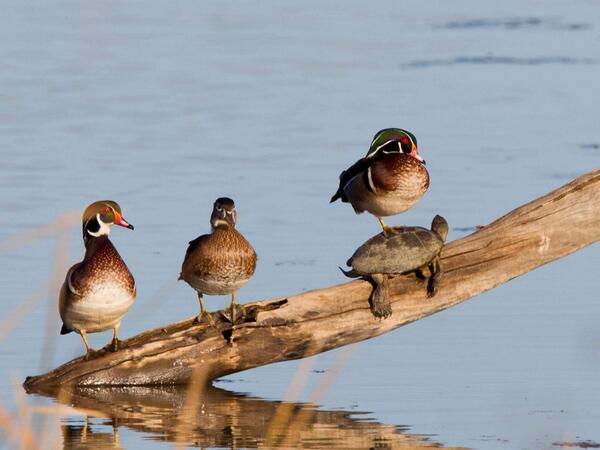
From the U.S. Department of Interior: Friends come in all shapes & sizes in the Sacramento National Wildlife Refuge. #California #nature pic.twitter.com/CvUkY6HoxF
Watching the wildlife can be endlessly entertaining.
From the U.S. Department of Interior: Friends come in all shapes & sizes in the Sacramento National Wildlife Refuge. #California #nature pic.twitter.com/CvUkY6HoxF
Watching the wildlife can be endlessly entertaining.
 Leave a Comment » |
  National Wildlife Refuge, Nature, Travel, Wildlife | Tagged: Department of Interior, Nature, Sacramento NWR, Travel, Wildlife |
  Permalink
 Posted by Ed Darrell
Nice photo from the Great Smoky Mountains National Park:

Caption from the Tumblr of the Department of Interior: Sunset over Great Smoky Mountains National Park in Tennessee. Photo: Austin Leih (www.sharetheexperience.org)
Beautiful place, nice photographic capture.
Then I look, and I see a lot of necrotic tree tops. Acid Rain? Warming? Pine borers or some other insect?
Sometimes, Mark Twain’s lament is right. Sometimes you know too much to just sit back in awe. Feynman was right, too.
More:
Leave a Comment » | Invasive Species, National Parks, Nature, Travel, trees | Tagged: Great Smoky Mountains National Park, Invasive Species, Nature, Tennessee, Travel, trees, Wolly Hemlock Adelgid | Permalink
Posted by Ed Darrell

Tweet from the Department of Interior: 142 years ago today, @YellowstoneNPS became America’s first national park. RT to wish them a very happy birthday! pic.twitter.com/drka6iq0Tc
Ken Burns called the National Parks probably the best idea America has had.
Certainly a great idea — really born on this day, 142 years ago, with the designation of Yellowstone National Park.
Yellowstone NP contains the world’s largest collection of geysers. It is the heart of the largest, nearly-intact temperate zone ecosystem on Earth as well, contained in 3,468 square miles (8,983 km²), a laboratory and playground for geologists, geographers, botanists, zoologists, and almost anyone else who loves the nature and the wild.
Only 142 years old? In the U.S., we have more than 300 units in the National Park System, now, including National Historic Places as well as the best of the wild. Around the world, how much land has been saved, for the benefit of humanity, by this idea? Not enough.
What’s your favorite memory of Yellowstone? What’s your favorite feature?
More:

From National Geographic: Great Fountain Geyser in Yellowstone, the first U.S. national park, erupts every 9 to 15 hours, shooting water up to 220 feet high. Photograph by Michael Melford
3 Comments | Conservation, History, National Parks, Nature, Travel, Yellowstone | Tagged: Conservation, History, Nature, Travel, Yellowstone National Park | Permalink
Posted by Ed Darrell

Department of Interior caption: Everglades National Park — This Alligator decided he wanted to stand out from all the others along the Anhinga Trail! (SD)
2 Comments | Geography - Physical, National Parks, Travel, Wildlife | Tagged: Everglades National Park, Florida, geography, Travel, Wildlife | Permalink
Posted by Ed Darrell

Lightning strikes in Monument Valley, on the Navajo Reservation, Utah. Photography by Carolyn Slay (Oak Ridge, TN); Monument Valley, UT Feb. 20 2014 Via smithsonianmag.com.
Lightning strike in Monument Valley, photo by Carolyn Slay of Oak Ridge, Tennessee; Smithsonian Magazine Tumblr Photo of the Day, February 20, 2014.
Rocks on the right can also be seen in this photo; can you help pinpoint the location of the photographer, and names of any of the other formations?
Leave a Comment » | Geography - Physical, geology, Navajo, Travel, Utah | Tagged: geography, geology, Monument Valley Navajo Tribal Park, Travel, Utah | Permalink
Posted by Ed Darrell
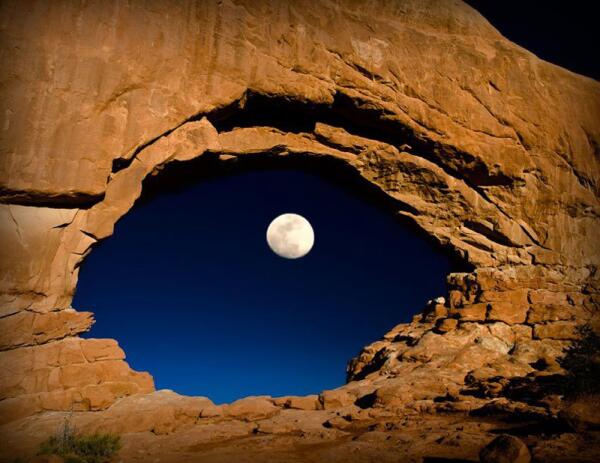
Photo by Lynn Sessions; “THE EYE OF THE #MOON: North Window arch at Arches National Park in #Utah. #NatGeo pic.twitter.com/XwHfdWK5Ft
It’s just a click of the shutter? Ha!
I’m assuming not a lot of post-photo processing on this. Lynn Sessions had to figure out when the Moon would be in the North Window Arch, calculate exposure, and shoot off enough of them to get a decent shot before the Moon moved. I suspect the rocks were “painted” with a flashlight during the exposure.
(Haven’t yet found the technical details of the shot. But I did find this about the photographer:
I’m a frustrated amateur photographer who is trying to visit every corner in Utah as well as hike/photograph every canyon in southern Utah. More at http://www.DreamBreeze.com )
Patience, planning, creativity — then just push the button.
More:
2 Comments | National Parks, Nature, photography, Travel, Utah | Tagged: Arches National Park, Astronomy, Nature, North Window Arch, photography, Utah | Permalink
Posted by Ed Darrell
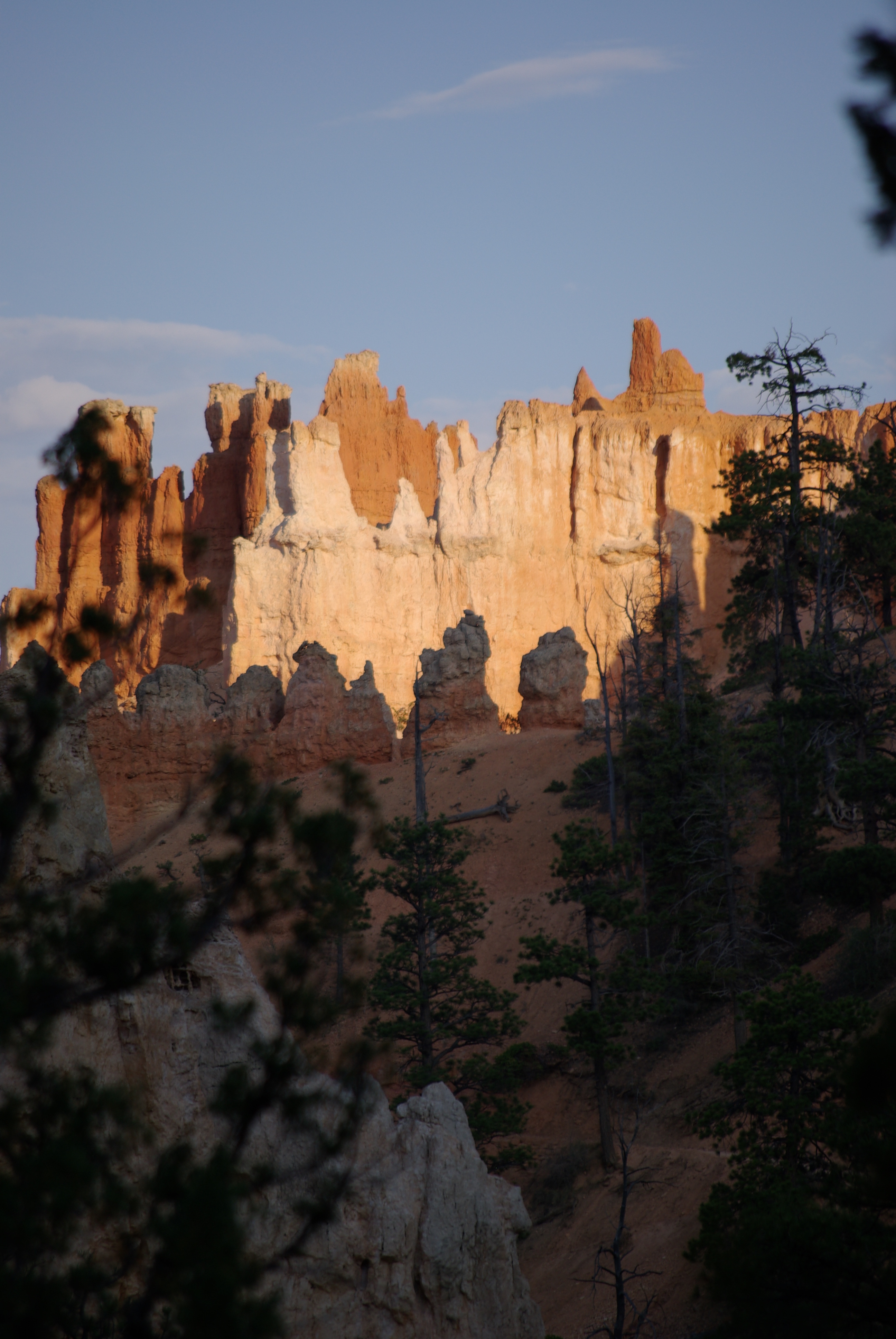
Hiking Bryce Canyon at sundown, one may see rocks in a new way, spotlighted from 93 million miles away. Photo from 2008, by Ed Darrell
Leave a Comment » | Hiking, National Parks, Travel, Utah | Tagged: Bryce Canyon National Park, Hiking, National Parks, Travel, Utah | Permalink
Posted by Ed Darrell

Sundown shadows of hoodoos on pinnacles, Bryce Canyon National Park, 2008. Photo by Ed Darrell
Leave a Comment » | Hiking, National Parks, Travel, Utah | Tagged: Bryce Canyon National Park, Hiking, National Parks, Travel, Utah | Permalink
Posted by Ed Darrell
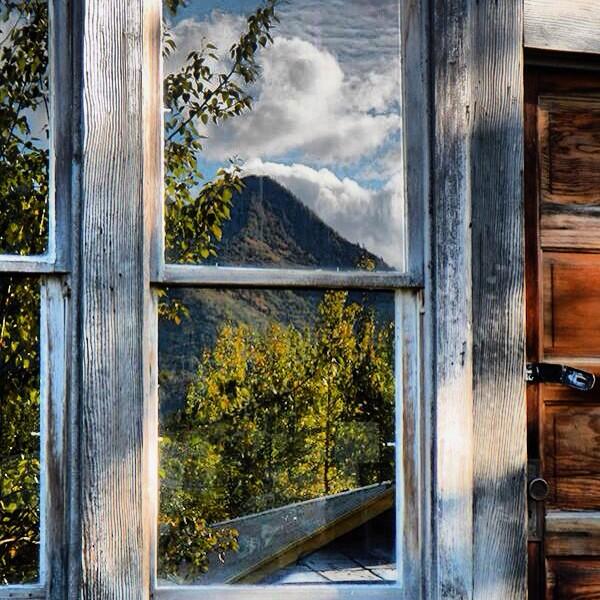
From the U.S. Department of Interior: Really cool reflection photo from America’s largest national park: @WrangellStENPS in #Alaska. pic.twitter.com/WHUYkgJNTH
Wrangell-St. Elias is our largest National Park? At 20,587 square miles, it’s about 80% as large as West Virginia, and larger than nine other states.
Wrangell–St. Elias National Park and Preserve is a United States national park and national preserve managed by the National Park Service in south central Alaska. The park and preserve was established in 1980 by the Alaska National Interest Lands Conservation Act.[3] This protected area is included in an International Biosphere Reserve and is part of the Kluane/Wrangell-St. Elias/Glacier Bay/Tatshenshini-Alsek UNESCO World Heritage Site. The park and preserve form the largest area managed by the National Park Service in the United States by area with a total of 13,175,799 acres (20,587.19 sq mi; 53,320.57 km2). The park includes a large portion of the Saint Elias Mountains, which include most of the highest peaks in the United States and Canada, yet are within 10 miles (16 km) of tidewater, one of the highest reliefs in the world. Wrangell-St. Elias borders on Canada’s Kluane National Park and Reserve to the east and approaches the U.S. Glacier Bay National Park to the south. The chief distinction between park and preserve lands is that sport hunting is prohibited in the park and permitted in the preserve. In addition, 9,078,675 acres (3,674,009 ha) of the park are designated as the largest single wilderness in the United States.
Wrangell-St. Elias National Monument was initially designated on December 1, 1978 by President Jimmy Carter using the Antiquities Act, pending final legislation to resolve the allotment of public lands in Alaska. Establishment as a national park and preserve followed the passage of the Alaska National Interest Lands Conservation Act in 1980. The park, which is bigger than the nation of Switzerland, has long, extremely cold winters and a short summer season. It supports a variety of large mammals in an environment defined by relative land elevation. Plate tectonics are responsible for the uplift of the mountain ranges that cross the park. The park’s extreme high point is Mount St. Elias at 18,008 feet (5,489 m), the second tallest mountain in both the United States and Canada. The park has been shaped by the competing forces of volcanism and glaciation. Mount Wrangell is an active volcano, one of several volcanoes in the western Wrangell Mountains. In the St. Elias Range Mount Churchill has erupted explosively within the past 2000 years. The park’s glacial features include Malaspina Glacier, the largest piedmont glacier in North America, Hubbard Glacier, the longest tidewater glacier in Alaska, and Nabesna Glacier, the world’s longest valley glacier. The Bagley Icefield covers much of the park’s interior, which includes 60% of the permanently ice-covered terrain in Alaska. At the center of the park, the boomtown of Kennecott exploited one of the world’s richest deposits of copper from 1903 to 1938, exposed by and in part incorporated into Kennicott Glacier. The mine buildings and mills, now abandoned, compose a National Historic Landmark district.
More:
Leave a Comment » | Alaska, National Parks, photography, Travel | Tagged: Alaska, geography, photography, Travel, Wrangell-St. Elias National Park | Permalink
Posted by Ed Darrell
This one NOT taken by the Hubble Space Telescope, though I suspect a telephoto lens was involved.

“An amazing photo of a full moon over the Lincoln Memorial.” Photo: NASA
Another photo from the Department of Interior’s Great American Outdoors Tumblr site.
It’s a rising Moon, with the photo taken from the west side of the Lincoln Memorial, perhaps from the Virginia side of the Potomac River. The Lincoln Memorial is now part of the National Park Service’s portfolio of properties around our national capital.
Update: Jude Crook points out in comments (below) that this was a NASA Photo of the Day, originally; two federal agencies cooperating in the interest of photographic excellence . . .
Super Perigee Moon
The full moon is seen as it rises near the Lincoln Memorial, Saturday, March 19, 2011, in Washington. The full moon tonight is called a super perigee moon since it is at its closest to Earth in 2011. The last full moon so big and close to Earth occurred in March 1993.
Image Credit: NASA/Bill Ingalls
3 Comments | Geography - Physical, Landmarks, Moon, NASA, National Parks, Travel | Tagged: geography, Landmarks, Lincoln Memorial, NASA, National Parks, Travel, Washington D.C. | Permalink
Posted by Ed Darrell
A long exposure, you can tell by the airplane streaks near the horizon. Walking that fine photography edge of long enough to get the exposure, but short enough not to distort the stars too much.

Long exposure of a Joshua tree, in Joshua Tree National Park. Photo: Sarah Chah (www.sharetheexperience.org)
Captioned at America’s Great Outdoors Tumblr, by the U.S. Department of Interior:
Viewed from the road, this desert park only hints at its vitality. Closer examination reveals a fascinating variety of plants and animals that make their home in this land shaped by strong winds, unpredictable torrents of rain, and climatic extremes. Dark night skies, a rich cultural history, and surreal geologic features add to the attraction of this place. Come see Joshua Tree National Park for yourself!
Photo: Sarah Chah (www.sharetheexperience.org)
Leave a Comment » | Geography - Physical, National Parks, Outdoor Recreation, Travel | Tagged: California, geography, Joshua Tree National Park, National Parks, Outdoor Recreation, photography, Travel | Permalink
Posted by Ed Darrell
And from what was this shot, if it’s a photo?
With everyone else,
But I wonder what brain bending goes on in this image. From Fascinating Pics:

Paris at Sunset, France pic.twitter.com/QnhtkUPKLn Photo by Coolbiere.
What do you think? Painting? Photo? Manipulated photo?
Update: J.A. Higginbotham tracked down the original Flickr photo, by a Coolbiere. Nikon D-800, 70-200 zoom telephoto, at 122mm; claims to have taken it from Mount Parnasse. Luck and preparedness. Wow.
5 Comments | Geography - Physical, Landmarks, photography, Travel | Tagged: geography, Landmarks, Paris, photography, Travel | Permalink
Posted by Ed Darrell

A Grizzly Bear crossing the Snake River at sunrise in the Grand Teton National Park. Photo: Donald Higgs (www.sharetheexperience.org)
From the U.S. Department of Interior’s Great American Outdoors Tumblr:
A Grizzly Bear crossing the Snake River at sunrise in the Grand Teton National Park.
Photo: Donald Higgs (www.sharetheexperience.org)
I was born on the Snake River, farther south and west, in Burley, Idaho. It’s a grand river, not so much in the water it moves as the way it moves through the landscape and becomes a part of grander parts of the American west. Kathryn and I honeymooned in Yellowstone, and stayed in Grand Teton on the way out.
There is nothing grander on Earth than a sunrise in the Tetons. Do you think a grizzly appreciates that?
Yeah, gotta get back there.
2 Comments | Geography - Physical, National Parks, Nature, Rivers, Travel, Wildlife | Tagged: Department of Interior, geography, Grant Teton National Park, National Parks, Snake River, Travel, Wildlife | Permalink
Posted by Ed Darrell
Here’s why, another video from the good people at Yosemite National Park:
Any of the National Parks is special, in winter. What is your snow and cold experience in them?
More:

Winter photo of the Yosemite Valley, by Q T Luong — a key photo used by the Ken Burns group in their series of films on the National Parks.
4 Comments | Geography - Physical, National Parks, Outdoor Recreation, Travel, Yosemite | Tagged: geography, Nature, Outdoor Recreation, Travel, Winter, Yosemite National Park | Permalink
Posted by Ed Darrell
I love the poetic descriptions, from geologists!
From Yosemite National Park’s “Nature Notes”:
Uploaded on Dec 7, 2009
Yosemite Falls is the tallest waterfall in North America, and is a powerful presence in Yosemite Valley. From winter ice to spring flood to autumn dryness, this magnificent waterfall is a dynamic force of nature.
There’s even a resurrection story for the falls. Maybe Emily Dickinson was on to something about finding religion in nature.
More:

National Park Service photo of Upper Yosemite Falls

U.S. President Theodore Roosevelt (left) and nature preservationist John Muir, founder of the Sierra Club , on Glacier Point in Yosemite National Park in 1903. In the background: Upper and lower Yosemite Falls. (Photo credit: Wikipedia)
1 Comment | Geography - Physical, National Parks, Nature, Travel | Tagged: California, geography, National Parks, Travel and Tourism, Yosemite Falls, Yosemite National Park | Permalink
Posted by Ed Darrell
You are currently browsing the archives for the Travel category.


Ed Darrell on Texas's Colorado River


Come on in, the water's fine. Come often: Cleanliness is next to godliness.


 Millard Fillmore's Bathtub