Darwin on toast? Evolution must be true, then

January 14, 2015

@jesusintoast Tweeted: If evolution isn't true, explain why this came out of my toaster today. #darwin #profilesintoast

@jesusintoast Tweeted: If evolution isn’t true, explain why this came out of my toaster today. #darwin #profilesintoast

The kind of logic only a creationism can understand?

Rather irrefutable evidence though, don’t you think?

Um, yeah. It’s evidence; but evidence of what?

More:


Climbing the Dawn Wall in Yosemite — a little spot of light

January 13, 2015

NBC News correspondent Hallie Jackson posted this photo on her Twitter feed, a shot from NBC photographer Scot Kilian:

@HallieJackson:  Incredible shot from NBC's Scott Kilian: that tiny dot of light on side of #DawnWall is where the climbers slept.

@HallieJackson: Incredible shot from NBC’s Scott Kilian: that tiny dot of light on side of #DawnWall is where the climbers slept.

It’s a long exposure, enough that the stars brighten the black sky, but not quite so much that the stars become streaks on the photo.  Long enough that the lights used by Tommy Caldwell and Kevin Jorgeson register on the CMOS (I’m assuming no film here).

Incredibly, their tents are pitched upon the rock, where mountain goats and cliff-dwelling birds fear to tread. It’s very much a vertical sheet of almost smooth rock.

And it’s a great photo.  In these particularly troubled times, any light shining on human cooperation to achieve great things becomes a beacon.

More: 


Yosemite Nature Notes: Ghost towns

January 13, 2015

Up on the Tioga Pass, Dana Village, Bennettville and the abandoned Golden Crown Mine tell part of the story of the 1890s gold rush in the Sierra Nevada.

Mining in California, okay. Mining at 11,000 feet in the Sierra Nevada, and staying there all winter?

Great history, geography, and explanation that every U.S. history student should know, about gold rushes, about boom towns, about mining entrepreneurs and investors, about failed enterprises and about the aftermath.

Published on Nov 19, 2014

Sitting on the crest of the Sierra Nevada, Tioga Pass is a gateway to Yosemite’s past. In 1880, a gold and silver rush erupted here, and miners flocked to Tioga Hill in droves.

Today, the ghosts of these miners work can be seen in the stone walls of Dana Village, rusty machinery at Bennettville, and the log cabins of the Golden Crown Mine. Even today’s popular Tioga Road was once a simple wagon road built to access the wealth of minerals that were never found.

It’s another great production by Steven Bumgardner, featuring two National Park Service rangers, Yenyen Chan and Greg Stock.

More:

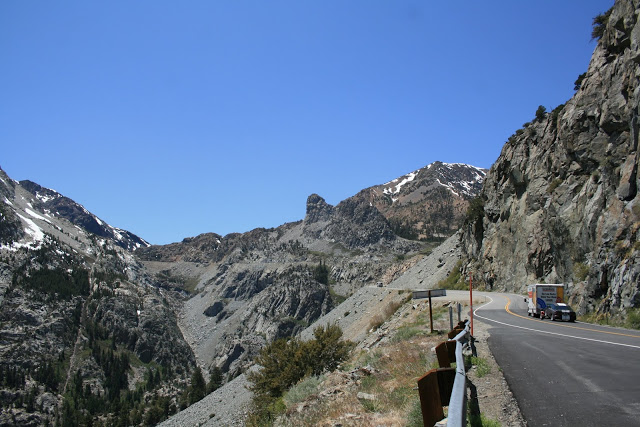
Tioga Road.  Travelers who took this photo made the drive in a large RV -- so you can do it, too.  Photo from stillhowlynntravels

Tioga Road. Travelers who took this photo made the drive in a large RV — so you can do it, too. Photo from stillhowlyntravels

Map showing how to get to Tioga Pass in Yosemite National Park (at the eastern end of the red line).  Map from Undiscovered-Yosemite.com.

Map showing how to get to Tioga Pass in Yosemite National Park (at the eastern end of the red line). Map from Undiscovered-Yosemite.com.


Bill Gates agrees: We can eliminate malaria in a generation

January 9, 2015

Do we have the will to do it?

More:

Gates Foundation image:  A nurse dispenses a malaria drug to treat an infected child in Tanzania.

Gates Foundation image: A nurse dispenses a malaria drug to treat an infected child in Tanzania.


Je suis Charlie!

January 8, 2015

If you follow my Tweets, or if you watch what I post on Facebook, you may have noticed I frequently credit editorial cartoonists with telling the truth.  Cartoonists fill a critical need.  I admire their work.

That’s not strong enough.  I find that political cartoons offer truths, in quickly grokable form, that would remain hidden in news and commentary otherwise.

Perhaps more importantly, cartoons lampoon those who desperately, bitterly need lampooning.

Why is that important?  Lampooning exposes crazy behaviors in our leaders, behaviors that if unchecked might lead a group to disaster.  Or a community.  Or a nation.  Or a planet.

Ancient sayings, properly and improperly attributed to various sources, over a period of 500 to 1,000 years point to the importance of lampooning in correcting actions of leaders and governments.  This version comes from a Sophocles play, Antigone (620-3):

For cunningly of old
was the celebrated saying revealed:
evil sometimes seems good
to a man whose mind
a god leads to destruction.

Lampooning helps, illustrating perhaps with laughter where the problem lies, though it also suggests that the chief perpetrators and promulgators of the craziness may be immune from such insights, whether through laughter or any other method.

If those lampooned genuinely cannot see the humor, a greater problem is exposed.  That’s the point. Expose the madness, lay it bare for all to see.  Sane people will work to help the insane, and avoid leading others into that madness.  Lampooning provides us a great tool to avoid disasters, if we would only look. Laughter is optional, if the message gets through.

Even insane leaders and groups understand this at some level. Mark Twain (Samuel Clemens) wrote about the value of ridicule of majestic error in his Notebook:

No god and no religion can survive ridicule. No church, no nobility, no royalty or other fraud, can face ridicule in a fair field and live.*

We got a sharp and painful reminder of these facts yesterday, when a group of gunmen, stung by ridicule from a French satire magazine, stormed that magazine’s offices and brutally gunned down a score of people, a dozen of whom died.  Their form of religious struggle appears insane to sane people, and when that is pointed out to them, they behave with more intense insanity.

To these gunman, whose existence alone is a blasphemous assault on the idea of peaceful religion, ridicule in publication was too much to take.  Rather than answer with other cartoons or parody, or serious thought in print, they attempted to change the playing field’s fairness.

In doing they exposed their critics as accurate and true. Those already crazed by the gods probably have no sense of irony left, either.

This morning comes the word that Charlie Hebdo will publish next week as scheduled.  Instead of the usual run of 113,000 copies, the first run will be more than a million, to meet greater demand. Stricken down by gunmen, Charlie Hebdo rises phoenix-like, with strength multiplied by more than ten.

We mourn the cartoonists and editors lost.  They are martyrs in the cause of freedom and peace, and especially in the “jihad” they engage in for freedom of expression, something that we know now is not a uniquely American virtue or necessity.

Throughout history memorable phrases heralded periods of great change, when people took a stand against tyranny and violence, and stood for freedom and peace.

I am Spartacus.

Here I stand.  I can do no other.”

“Union!”

“. . . the only thing we have to fear is fear itself.”

” . . . Freedom of speech and expression . . . Freedom of every person to worship God in his own way . . . Freedom from Want . . . Freedom from Fear. . .”

Ich bin ein Berliner.

We Shall Overcome

I Am A Man.”

And now, “Je suis Charlie!”

Beyond Charlie Hebdo, the world’s cartoonists and editorialists storm traditional and electronic media with support for the cartoonists.  Here below are some examples, in no particular order.  What other cartoons or commentary have you seen that we all should see?

Andy Marlette, cartoonist for the Pensacola News-Journal borrowed the saying from the sticker that Woody Guthrie used on his guitar, “This Machine Kills Fascists”:

Andy Marlette of the Pensacola News-Journal, borrowing from Woody Guthrie's guitar

Andy Marlette of the Pensacola News-Journal, borrowing from Woody Guthrie’s guitar

Pete Seeger borrowed Woody’s line, and painted on the drum head of his banjo, “This Machine Surrounds Hate and Forces It to Surrender.” Marlette also penned a piece for USA Today.

Cuban Angel Boligan (@AngelBoligan):
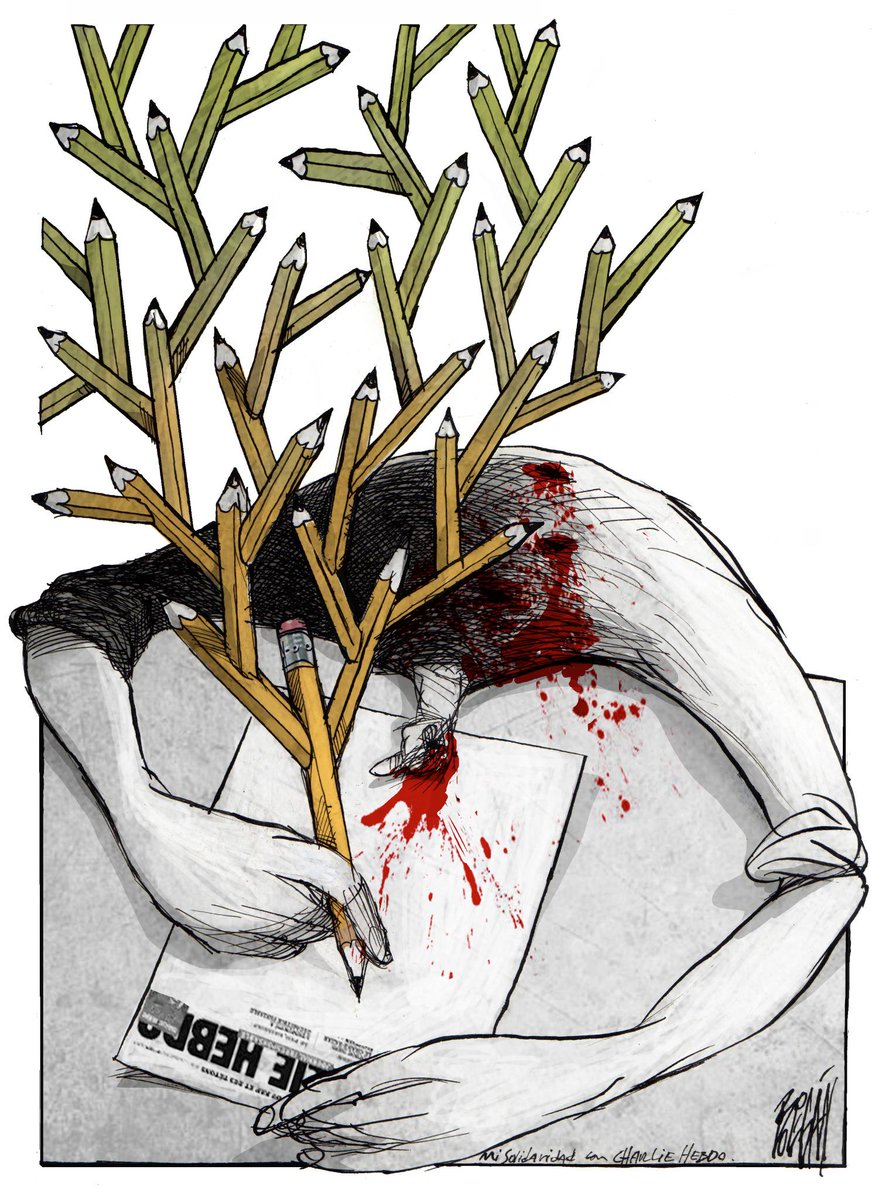
Cuban-born cartoonist Angel Boligan, on Charlie Hebdo

Cuban-born cartoonist Angel Boligan, on Charlie Hebdo

Nate Beeler in the Columbus Dispatch:

Nate Beeler's cartoon on Charlie Hebdo, for the Columbus Dispatch

Nate Beeler’s cartoon on Charlie Hebdo, for the Columbus Dispatch

Pat Bagley in the Salt Lake Tribune:

Pat Bagley, Salt Lake Tribune

Pat Bagley, Salt Lake Tribune

Ricardo Sanabria in Venezuela:
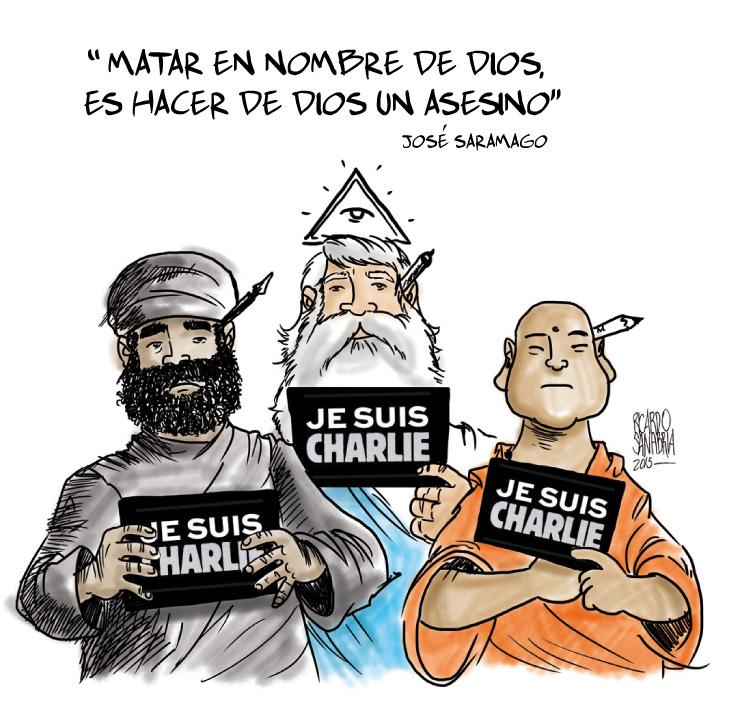
Ricardo Sanabria, Venezuela

Ricardo Sanabria, Venezuela

Manjool, an Indian cartoonist:

“Last message from #CharlieHebdo cartoonists to their killers. My #cartoon “

Clay Bennett at the Chattanooga, Tennessee newspapers:

Clay Bennett's cartoon on the tragedy at Charlie Hebdo

Clay Bennett’s cartoon on the tragedy at Charlie Hebdo

NOT by Banksy, but by Lucille Clerc:
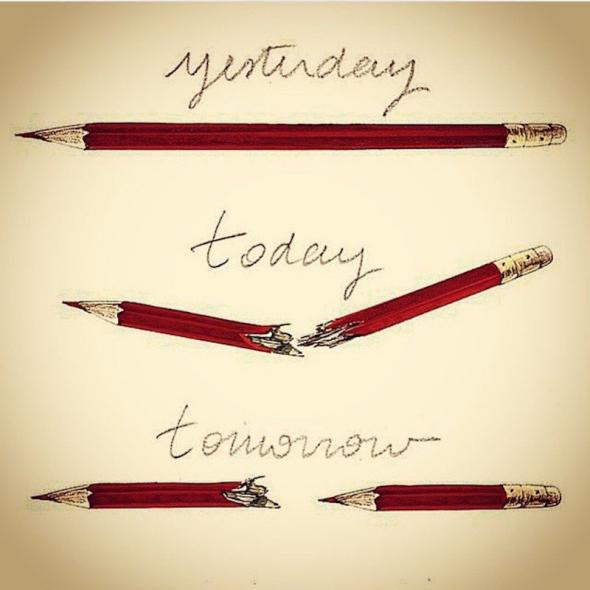
Cartoon by Lucille Clerc

Cartoon circulated as by Banksy, but really by graphic designer Lucille Clerc

John Cole, Scranton Times-Tribune:

@AnnePhutto said:  Je suis Charlie...my 12 year old daughter's favorite cartoon in response to the tragedy.  Cartoon by John Cole, Scranton News-Tribune

@AnnePhutto said: Je suis Charlie…my 12 year old daughter’s favorite cartoon in response to the tragedy. Cartoon by John Cole, Scranton Times-Tribune

Charlie Hebdo dead?  I don’t think so.

______________

*  Twain also warned against taking ridicule too far, and spoke on the difficulty of knowing, if you’re the butt of the ridicule:

  • Sense of ridicule is bitterer than death & more feared. — men commit suicide daily to escape it.
    Mark Twain’s Notebooks and Journals, Vol. 3, p. 346.
  • There is no character, howsoever good and fine, but it can be destroyed by ridicule, howsoever poor and witless. Observe the ass, for instance: his character is about perfect, he is the choicest spirit among all the humbler animals, yet see what ridicule has brought him to. Instead of feeling complimented when we are called an ass, we are left in doubt.
    Pudd’nhead Wilson

More:


New York Air National Guard honored Millard Fillmore, presented President Obama’s wreath at grave

January 7, 2015

I wasn’t there; this is the press release:

107th Airlift Wing Honors Millard Fillmore During Annual Ceremony at Presidents Grave Wednesday, Jan. 7

New York Air National Guard Col. Kevin Rogers places a wreath from President Barack Obama at the gravesite of President Millard Fillmore on Jan. 7, 2015. (Photo by Tech Sgt. Brandy Fowler, 107th AW)

New York Air National Guard Col. Kevin Rogers places a wreath from President Barack Obama at the gravesite of President Millard Fillmore on Jan. 7, 2015. (Photo by Tech Sgt. Brandy Fowler, 107th AW)

BUFFALO, NY (01/07/2015)(readMedia)– New York Air National Guard Col. Kevin Rogers marked the 215th birthday of President Millard Fillmore by laying a wreath from President Barack Obama at the grave of the 13th President on Wednesday, Jan. 7.

The tribute from the 107th Airlift Wing Inspector General, was part of the 50th graveside ceremony marking Fillmore’s birth conducted at Forest Lawn Cemetery by the University of Buffalo.

Fillmore, who was president from 1850 to 1853, was one of the founders of the University of Buffalo. He was also the school’s first Chancellor and instrumental in founding Buffalo’s General Hospital and local libraries and museums.

The University of Buffalo has hosted a graveside ceremony for Fillmore for the past 50 years. The ceremony also encompasses another tradition: the presentation of wreaths form the current president at the gravesites of past presidents on their Birthday.

The 107th Airlift Wing, based at Niagara Falls Air Reserve Station, traditionally places a wreath on Fillmore’s Grave. The New York National Guard also places wreaths on the graves of President Martin Van Buren in Kinderhook and President Chester Arthur in Albany.

Fillmore was born in 1800 in Moravia New York. He was a lawyer and served in the New York State Assembly. He served in the United States Congress from 1833 to 1835 and again from 1837 to 1845.

Fillmore ran unsuccessfully for governor of New York in 1844 but was defeated. He ran successfully for the position of State Comptroller in 1847 and was the first person to serve in that office as the state’s financial watchdog.

In 1848 Fillmore was nominated to run as vice president with the popular General Zachery Taylor, a hero of the Mexican War. Taylor died suddenly and Fillmore became president. He approved the bills that put in place the Compromise of 1850 designed to allow Texas to enter the Union as a Slave State in exchange for California entering it as a Free State. The measure also banned the sale of slaves in the District of Columbia.

Fillmore, the last member of the Whig Party to serve as president, returned home to Buffalo after losing the election of 1852. During the Civil War Fillmore, a former Major in the New York Militia, commanded a Buffalo home guard regiment called the Union Corps. He died in 1874.

The New York Air National Guard’s 107th Airlift Wing shares Niagara Falls Air Reserve Station with the Air Force Reserve’s 914th Airlift Wing. The unit is currently in the process of transitioning to a mission flying remotely piloted MQ-9 aircraft after previously flying the C-130 transport aircraft and the KC-135 refueling plane.

Members of the 107th Airlift Wing also respond to New York state emergencies and were heavily involved in responding to the lake effect snowstorm which hit Erie County in November.


Texas earthquakes, 2014

January 7, 2015

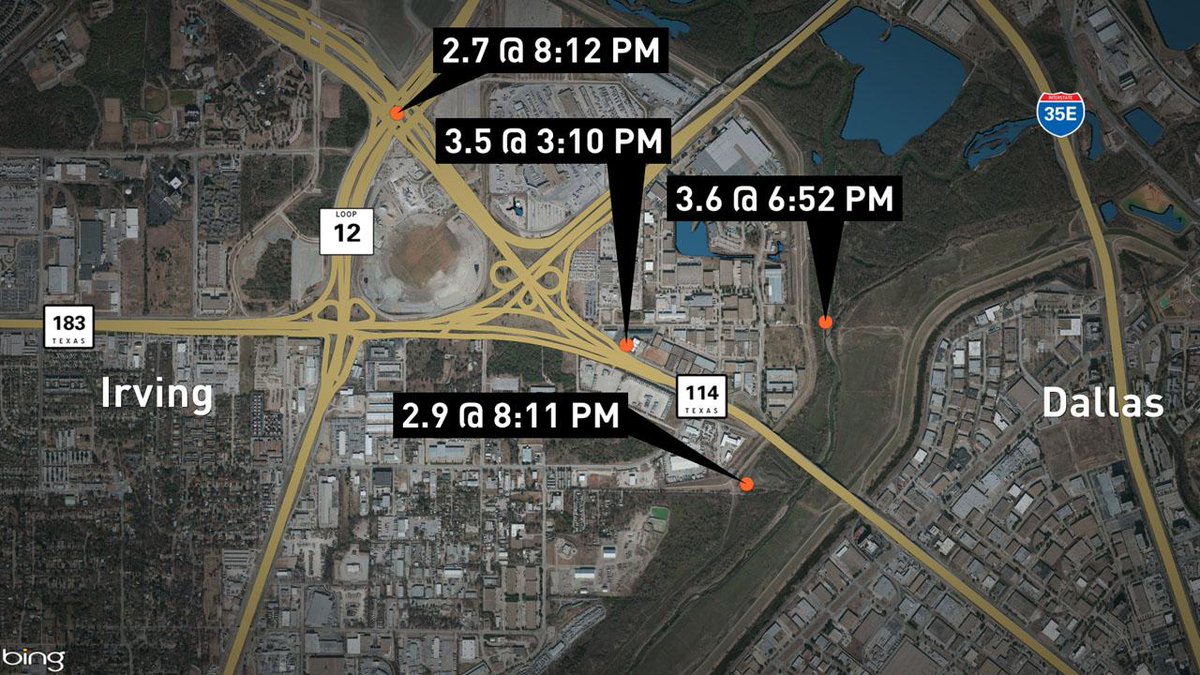
WFAA Channel 8 map of four quakes confirmed by 10:00 p.m. news casts, showing how close the quakes are in proximity to each other and the site of the old Cowboys Football Stadium.

WFAA Channel 8 map of four quakes confirmed by 10:00 p.m. news casts, showing how close the quakes are in proximity to each other and the site of the old Cowboys Football Stadium.

This Tweet from our local NBC TV affiliate sums it up nicely.

North Texas shook yesterday — not big quakes, but a bunch of ’em — and that doesn’t sit well with Texas oil executives, since it seems likely gas and oil drilling, especially hydraulic fracturing (fracking), and especially waste-water reinjection seem to be causes.

I grew up in Utah.  We had quakes you could feel, at least weekly.  Our home sat less than a mile west of the Wasatch Fault.  Many mornings my mother would stand drinking her coffee, looking over the stove and out our kitchen window at Mt. Timpanogos, remarking on the earthquakes.  Most often we couldn’t feel them, but the power and telephone lines that slashed through our $10 million view of the mountain would dance in sine waves during quakes. It was pretty cool.

Along the more famous faults, one rarely comes on more than a couple of quakes a day.

Dallas — more accurately, Irving — is far away from most major faults, and rarely has more than a couple of quakes a year in recent human history.

So this swarm of quakes makes news!

WTVT Channel 11 (CBS) reported:

DALLAS (CBSDFW.COM/AP) – Nine earthquakes, three of them with a 3-point magnitude or greater, rocked North Texas Tuesday into early Wednesday, knocking items off walls, causing cracks to appear in ceilings and generally rattling nerves across the region.

“The last one really shook,” said CBS 11 anchor and reporter Ken Molestina, who felt the the earth move in the White Rock Lake area of Dallas.

The latest quake, reported just before 1 a.m. Wednesday, measured in at a 3.1 magnitude, and was centered near the convergence of State Highway 114, Loop 12, and the Airport Freeway near the old Texas Stadium site in Irving.

Others felt the temblor in the Uptown area of Dallas and as far away as Bedford and Mesquite.

Here’s a list of the quakes in order of when they happened:

7:37 a.m.                    2.3 magnitude

3:10 p.m.                    3.5 magnitude

6:52 p.m.                    3.6 magnitude

8:11 p.m.                    2.9 magnitude

8:12 p.m.                    2.7 magnitude

9:54 p.m.                    1.7 magnitude

10:05 p.m.                  2.4 magnitude

11:02 PM                   1.6 magnitude

12:59 AM                   3.1 magnitude

Rafael Abreu, a geophysicist with the USGS, spoke with NewsRadio 1080 KRLD and said while the Irving earthquakes happened only hours apart, given the strength and intensity, “we’re not calling it an aftershock.”

At last count Tuesday night, there had been 24 or more earthquakes in the Irving area since November 1, 2014.

Jokes fly, too.  Not this much shaking since Elvis toured the area heavily in 1957, some say.

Screen capture of USGS reports of four earthquakes in or near Irving, Texas, on January 6, 2014

Screen capture of USGS reports of four earthquakes in or near Irving, Texas, on January 6, 2014

Recent studies show earthquakes in other areas linked to oil and gas drilling and extraction.  All of these quakes are in close proximity to working wells or wells being drilled.

What’s the Earth trying to tell us?

Details from USGS on biggest quake, January 6, 2014

Details from USGS on biggest quake, January 6, 2014

More:

Historically, Texas has not been a hotbed of earthquake activity, between 1973 and 2012.  Texas Seismicity Map from USGS.

Texas Seismicity, 1973-2012. USGS


Stars smile on climbers at El Capitan

January 7, 2015

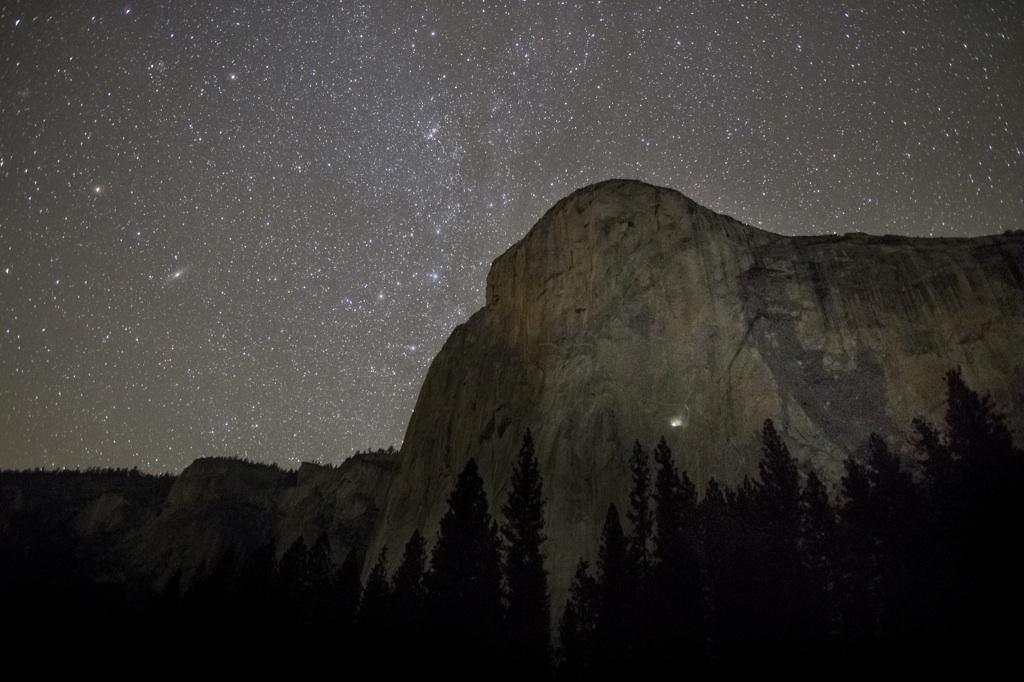
Nice photo forwarded from the Wilderness Society.

Wilderness Society Tweeted: Stars over Yosemite's El Capitan (in honor of @kjorgeson & @tommycaldwell1). Have a good night!  (Photo by Justin Kern, flickr)

Wilderness Society Tweeted: Stars over Yosemite’s El Capitan (in honor of @kjorgeson & @tommycaldwell1). Have a good night! (Photo by Justin Kern, flickr)

Actually, this photo probably is not from the past few days, when Kevin Jorgeson and Tommy Caldwell worked to free climb the rock — but the Milky Way is there if they care to look!

Not just the whole world is watching — the whole universe shines down.

(Have you been following their climbing exploits?)

More:


Graveside commemoration for Millard Fillmore’s birthday in Buffalo, January 7

January 6, 2015

Are you going to the graveside event in Buffalo, New York, for Millard Fillmore’s birthday?

Press release from the University of Buffalo:

Millard Fillmore’s Buffalo legacy to be recognized at commemoration

A plaque commemorating Millard Fillmore hangs on a gate in front of the grave site in Forest Lawn Cemetery.

By Sue Ann Wuetcher

December 30, 2014

“Millard Fillmore’s imprint on Buffalo’s development into a leading U.S. city of the 19th century is unparalleled and his legacy today remains truly vibrant.”
– William J. Regan, director of special events,University at Buffalo

BUFFALO, N.Y. – If Millard Fillmore, the much-maligned 13th president of the United States, were alive today, he might tell you he has a lot to be proud of.

Fillmore helped establish UB — serving as the university’s first chancellor from 1847 until his death in 1874 —and he played a major role in founding numerous cultural, civic and community organizations in Buffalo and Erie County, among them the Buffalo History Museum, the Buffalo & Erie County Public Library and Buffalo General Medical Center.

He also was instrumental in framing the charter that transformed the village of Buffalo into the city of Buffalo, and as a four-term congressman, secured funding to enlarge the Buffalo Harbor and expand the Erie Canal.

Fillmore’s “legacy organizations” will be well represented at the annual commemoration of Fillmore’s birthday, the 50th year UB has organized the annual program.

The ceremony will take place at 10 a.m. Jan. 7 — the 215th anniversary of Fillmore’s birth — at Fillmore’s gravesite in Forest Lawn Cemetery.

“In celebrating 50 years of planning this event, we thought it would be fitting to include all the organizations that can trace their roots back to Millard Fillmore,” says William J. Regan, director of special events. “Millard Fillmore’s imprint on Buffalo’s development into a leading U.S. city of the 19th century is unparalleled and his legacy today remains truly vibrant as these organizations continue to define and lead Buffalo in so many ways.”

The roster of organizations Fillmore touched is impressive, Regan says, and includes the Albright-Knox Art Gallery, The Buffalo Club, the Buffalo Public Schools, Buffalo Science Museum, the law firm Hodgson Russ LLP and the SPCA serving Erie County, as well as the history museum, public library, Buffalo General and, of course, UB.

Representatives of these organizations — Provost Charles F. Zukoski will represent UB — will give short tributes to Fillmore and present a community wreath to be placed on Fillmore’s grave. Wreaths also will be presented by the White House and Forest Lawn. Col. Kevin Rogers, inspector general of the 107th Airlift Wing of the New York Air National Guard based at the Niagara Falls Air Base, will place the White House wreath on behalf of President Obama.

Robert Goller, Town of Aurora historian, will deliver the memorial address and provide an account of Fillmore’s early days. Although he was born in Moravia, Cayuga County, Fillmore started his law practice in East Aurora and built a house there for himself and his wife, Abigail.

Following the gravesite ceremony, a reception sponsored by Forest Lawn and the Buffalo Club will be held in the new Margaret L. Wendt Archive and Resource Center in Forest Lawn.

The tradition to honor Fillmore dates back to 1937. From 1937 until 1965, the commemoration was staged by the city of Buffalo and the Buffalo Board of Education. The annual ceremonies were administered by Irving R. Templeton, a 1909 graduate of UB, who scheduled two programs annually on or near Jan. 7 — one in City Hall and one in Forest Lawn.

The responsibility of planning the commemoration shifted to UB when Templeton died in 1965. Although UB participated in the Fillmore birthday commemoration during Templeton’s stewardship, the university took over the ceremony and made it a community event starting in 1966.

The ceremony is open to all members of the UB and broader Western New York communities. Registration is encouraged at www.ubevents.org/event/mf2015

– See more at: http://www.buffalo.edu/news/releases/2014/12/043.html#sthash.dqcO3WTO.dpuf

No bathtub races this year, that I have found.

Do you know of any other commemorations of Fillmore’s birthday?


January 6: New Mexico flies U.S. flags for Statehood Day

January 6, 2015

President William Howard Taft signing the bill that made New Mexico a state, in 1912. (Other people in the photo, I have not yet identified). Image from OldPicture.com

President William Howard Taft signing the bill that made New Mexico a state, in 1912. (Other people in the photo, I have not yet identified). Image from OldPicture.com

New Mexico became the 47th member of the Union on January 6, 1912.  New Mexicans should fly their U.S. flags today in honor of statehood, the U.S. Flag Code urges.

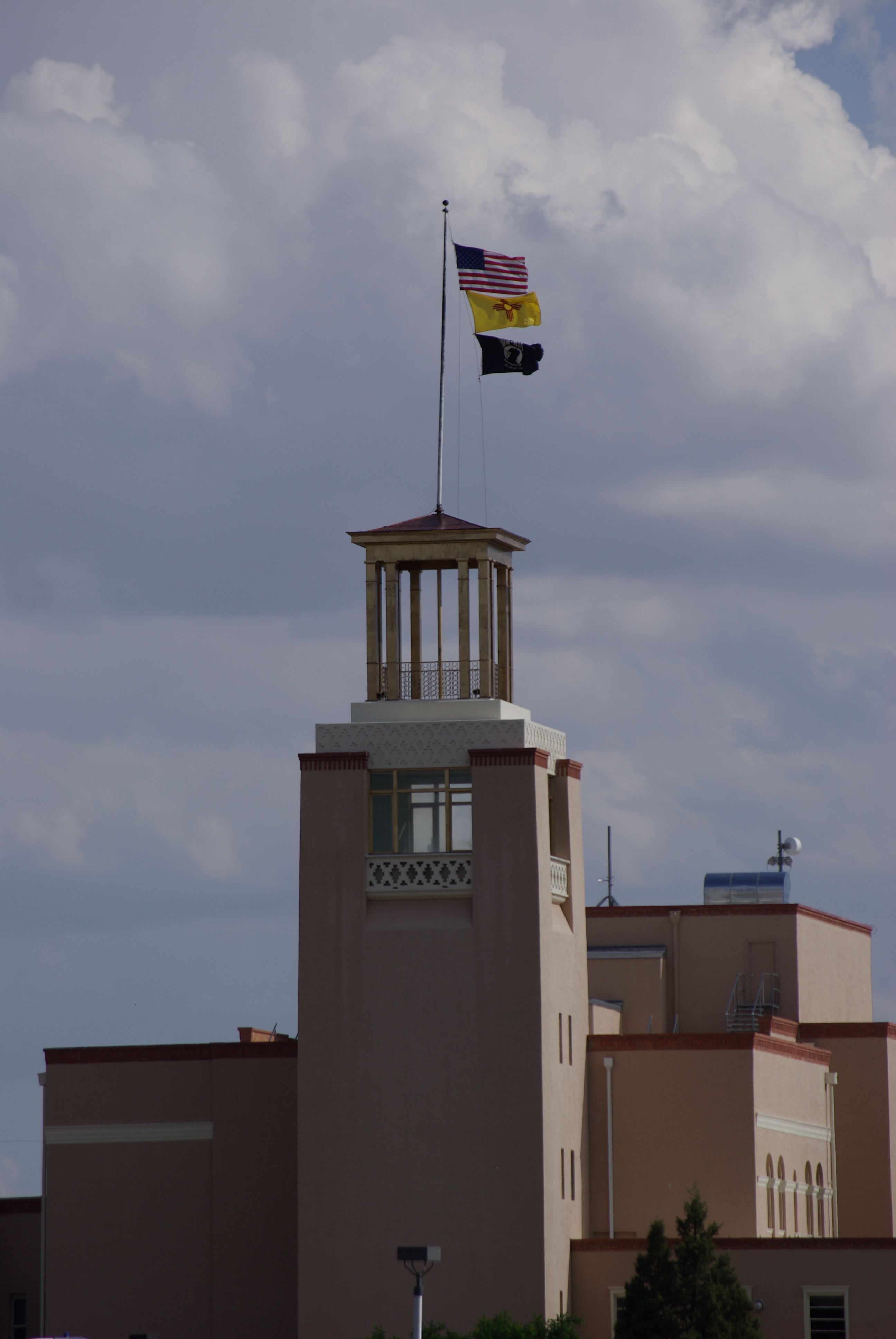
U.S. and New Mexico flags fly from the state education administration building in Santa Fe, 2014

U.S. and New Mexico flags fly from the state education administration building in Santa Fe, 2014. The third flag is the U.S. POW/MIA flag.

I don’t think Statehood Day is a big deal in New Mexico.  New Mexicans love art, though, and statehood and history of the land and the peoples who live there are celebrated throughout Santa Fe and New Mexico.  The New Mexico Art Museum features a lot about history.

The New Mexico State Capitol is one of the more unique in the U.S. There is no grand dome. Instead, the building is a large, circular structure, a giant kiva, honoring New Mexico’s ancient residents and ancestors.

We toured the Capitol in July. It features a massive collection of art by and about New Mexico, and is worth a stop as one would intend to visit any great art museum.

"Emergence," a representation of the creation of the present Earth and people, by Michael A. Naranjo, 2000. Part of the massive collection of New Mexico Art at the State Capitol -- this one outside the building itself.

“Emergence,” a representation of the creation of the present Earth and people, by Michael A. Naranjo, 2000. Part of the massive collection of New Mexico Art at the State Capitol — this one outside the building itself.

Simple Pleasures of New Mexico, acrylic by Gary Morton, 1992

Simple Pleasures of New Mexico,  stunning painting in acrylic by Gary Morton, 1992

If you’re in Santa Fe, plan to spend a half of a day, at least, looking at the Capitol and its art collections.  There are more than 400 pieces on display, sculpture, paintings, mixed media, and more.  It’s a world class gallery, free for the browsing.  Much of the art packs a powerful emotional punch, too, such as the sculpture outside the building honoring the vanished native tribes of North America.

Happy statehood, New Mexico.

More: 

USPS stamp honoring the centennial of New Mexico's statehood, in 2012. The stamp features a representation of the beauty of the state found in its desert hills and mountains.  VirtualStampClub.com

USPS stamp honoring the centennial of New Mexico’s statehood, in 2012. The stamp features a representation of the beauty of the state found in its desert hills and mountains. VirtualStampClub.com


Four Freedoms: FDR’s January 6, 1941 speech inspires us, 74 years later

January 6, 2015

Franklin Roosevelt delivered a State of the Union address to Congress on January 6, 1941, that would at least bend history, if not change it.  In the last part of the speech he mentioned four freedoms which, he said, are worth going to war to preserve, protect and extend.

Now we call it the Four Freedoms speech.  Today is the 74th anniversary of his delivery.  Do our students even study this any more?

_____________

I found a photo that reminded me of Norman Rockwell‘s “Freedom from Want,” and wrote about it.

Then I ran into a tweet from Texas educator Bonnie Lesley:

That in turn led to an Alternet post, displayed at Reader Supported News (RSN), by a guy who claims that, compared to 1941 and the progress made on the Four Freedoms, all four of them are in danger, in America, today.

Could that be right?  In was in his State of the Union address in January 1941 that Roosevelt described the four freedoms he said the U.S. should work to secure around the world — this was clearly a philosophical foundation-laying for going to war on the side of Britain, and against Germany, in the World War that was already raging, but which the U.S. had managed to stay out of for five years in Asia and two years in Europe.

Near the end of the speech on January 6, 1941, Roosevelt explained why freedom needed to be fought for, what was important to us, as Americans in the freedom of others in other nations.  This was 10 months before Pearl Harbor.  The United States counted itself officially “neutral” in World War II, already raging in Asia and Europe — the Battle of Britain was already over.  Anyone who seriously thought the U.S. would be able to stay out of the war probably lived in deep denial (much as denialists of today on a number of topics).  Roosevelt was working furiously to get support to Great Britain, and had already started the wheels to cut off U.S. supplies of war materials, including petroleum, to the Japanese empire.  (Odd to remember the U.S. was the largest exporter of petroleum then.)

Roosevelt knew he had to establish a philosophy to follow to merit defense of freedom, if, or when as he expected, war would draw the U.S. in, or an attack would trap the nation with need of a very quick response. In his State of the Union to the newly-elected Congress, at the start of his third term, Roosevelt talked in modern language about just what the U.S. stands for, and what the U.S. should be willing to fight for.

Here is an excerpt of the speech, the final few paragraphs:

I have called for personal sacrifice, and I am assured of the willingness of almost all Americans to respond to that call. A part of the sacrifice means the payment of more money in taxes. In my budget message I will recommend that a greater portion of this great defense program be paid for from taxation than we are paying for today. No person should try, or be allowed to get rich out of the program, and the principle of tax payments in accordance with ability to pay should be constantly before our eyes to guide our legislation.

If the Congress maintains these principles the voters, putting patriotism ahead of pocketbooks, will give you their applause.

In the future days, which we seek to make secure, we look forward to a world founded upon four essential human freedoms.

Norman Rockwell's

Norman Rockwell’s “Freedom from Fear,” 1943 painting based on FDR’s 1941 State of the Union address, “The Four Freedoms.” This painting was used on posters urging Americans to buy War Bonds.

The first is freedom of speech and expression — everywhere in the world.

The second is freedom of every person to worship God in his own way everywhere in the world.

The third is freedom from want, which, translated into world terms, means economic under- standings which will secure to every nation a healthy peacetime life for its inhabitants — everywhere in the world.

The fourth is freedom from fear, which, translated into world terms, means a world-wide reduction of armaments to such a point and in such a thorough fashion that no nation will be in a position to commit an act of physical aggression against any neighbor — anywhere in the world.

That is no vision of a distant millennium. It is a definite basis for a kind of world attainable in our own time and generation. That kind of world is the very antithesis of the so-called “new order” of tyranny which the dictators seek to create with the crash of a bomb.
To that new order we oppose the greater conception — the moral order. A good society is able to face schemes of world domination and foreign revolutions alike without fear.

Since the beginning of our American history we have been engaged in change, in a perpetual, peaceful revolution, a revolution which goes on steadily, quietly, adjusting itself to changing conditions without the concentration camp or the quicklime in the ditch. The world order which we seek is the cooperation of free countries, working together in a friendly, civilized society.

This nation has placed its destiny in the hands and heads and hearts of its millions of free men and women, and its faith in freedom under the guidance of God. Freedom means the supremacy of human rights everywhere. Our support goes to those who struggle to gain those rights and keep them. Our strength is our unity of purpose.

To that high concept there can be no end save victory.

War Bonds poster showing all of Rockwell's

Posters showing all four of Rockwell’s paintings also were printed for the War Bonds Drive. Image from the digital collection of the libraries at the University of North Texas

This speech inspired Norman Rockwell to create a series of paintings in tribute to the four freedoms, which paintings were used as posters for War Bond drives.

Paul Bucheit argues we’re losing those four freedoms, which we as a nation fought to secure, in the Pacific, in the Atlantic, in Africa, Europe and Asia:

The 2013 version shows how our freedoms have been diminished, or corrupted into totally different forms.

  • Freedom from want? Poverty keeps getting worse. . .
  • Freedom from fear? The new Jim Crow. . .
  • Freedom of worship? Distorted by visions of the Rapture. . .
  • Freedom of speech? No, surveillance and harassment. . .

Mr. Bucheit offers longer explanations.  I don’t think I agree completely, but I’m interested in your opinion:  Are we losing the Four Freedoms we fought for?

Tip of the old scrub brush to Bonnie Lesley, @EdFocus on Twitter.

More:

Herblock cartoon, August 13, 1951, whatever happened to freedom from fear?

“Say, whatever happened to ‘Freedom from Fear?'” Herblock cartoon in the Washington Post, August 13, 1951, on McCarthyism and the hunt for communists in government jobs. CJR290 image; click image for more information.


Yes, this is mostly an encore post.  Fighting ignorance requires patience.

Yes, this is mostly an encore post. Fighting ignorance requires patience.


Devil’s Tower, Wyoming, and stars at night

January 5, 2015

Tweet from the Wilderness Society. Devil's Tower National Monument, in Wyoming, at night.

Tweet from the Wilderness Society. Devil’s Tower National Monument, in Wyoming, at night. Photo by Alex Weimer, from his flickr feed


Remember the day Utah flew the flag backwards, to honor the Union?

January 4, 2015

In 2013, Holly Munson at the Constitution Center wrote up a piece about Utah’s perhaps odd path to statehood, certainly complementary to my reminder that you could fly your flags on January 4, to honor Utah’s statehood, under the U.S. Flag Code.  Munson’s piece was distributed on Yahoo! News.

Yes, this is mostly an encore post. Fighting ignorance requires patience.

Yes, this is mostly an encore post. Fighting ignorance requires patience.  Remembering history takes constant reminders.

Her report is very solid, even though brief, and interesting.  Utah history is nothing if not a convoluted path to statehood through what amounted to a civil war, the Mexican War, the discovery of gold in California, the transcontinental railroads, mining and immigration, Indian wars, old west shootouts, rampant environmental destruction with sheep grazing and mineral extraction and smelting, union strife, astonishing agricultural applications, and a lot of books written from tens of thousands of Mormon pioneer journals — Mormonism appears to be impossible without ink and paper and time to write.

Go read her story.

What caught my eye was the George W. Reed photograph of the Salt Lake City Temple of the Church of Jesus Christ of Latter-day Saints — the LDS, or Mormon church.  The Temple and the Tabernacle, also in the photo, both have their own unique architectural histories, and quirks that make them noteworthy purely from architecture.  (This George W. Reed should not be confused with the Civil War Medal of Honor winner, George W. Reed)

Reed was an early photographer for newspapers in Salt Lake City, and he took some wonderful photos for posterity.  He was also a founder of the leading non-Mormon paper in the state, The Salt Lake Tribune.  At points in its history, it’s been known as an anti-Mormon paper.  The University of Utah’s library holds about five dozen of his photos in their collection, indexed electronically if not quite available yet; there Reed is described:

A pioneer in the development of Utah newspapers, George Reed was originally employed by the Deseret News and in 1871 helped in establishing the Salt Lake Tribune. His photographs include nineteenth century views of Salt Lake City, individuals at Reed’s Avenue home, Wasatch Resort in Little Cottonwood Canyon, and a photograph of the American flag hung on the Salt Lake Temple in 1896 to commemorate Utah’s statehood.

In the collection of Utah State University, in Logan, Reed has yet more papers.  There we get a bit more of his history:

A pioneer in Utah journalism, George W. Reed was born in London, England, on April 7, 1833. He emigrated to Utah in 1862 and became manager of the Deseret News, a position he held until 1871 when he founded the Salt Lake Tribune. In 1882, after a decade at the Tribune, Reed sold his interest in the paper to P. H. Lannan. He married Elizabeth Tuddenham in 1866 and passed away December 1, 1909.

U.S. flag on the Mormon Temple, at Utah statehood in 1896

The Mormon Temple in Salt Lake City, Utah, draped with a U.S. flag in 1896, commemorating the completion of Utah’s statehood campaign when President Grover Cleveland declared Utah a member of the Union. Photo by George W. Reed; Reed worked for the Deseret News, and helped found the Salt Lake Tribune. I do not know whether this photo was published in either paper.  From the George W. Reed Collection, University of Utah Libraries.

Yes, you’re right!  That flag is backwards.  Well, it’s backwards according to the modern U.S. Flag Code, which specifies that when hung from a building, the flag’s union should always be in the viewer’s upper left corner (“northwest” corner were it a standard map).  In the photograph, the union is in the opposite corner.  No, we know the photo is not reversed, because it accurately portrays the location of the Tabernacle, to the west and slightly south of the Temple.

(From what platform did Reed get that photo?  I’ll have to check to be sure it was there in 1896, but I’m thinking he shot from the Salt Lake County Building; it’s a distance, though.  A photographic historical mystery!)

But we hear the protests:  The U.S. Flag Code did not exist in 1896!  How can that be a violation of a code that did not exist?

That’s right, too.

That is an indication that the traditions of flag display that some people get riled up about, that many people think we should amend the Constitution to protect, are new inventions more than old traditions.  Flag code violations are legion by well-meaning citizens celebrating the flag and patriotism, and rare by anyone with any malignant motives.

After a 49-year fight for statehood, through wars with the U.S., fighting with the U.S. forces in Mexico, the administrations of several presidents and 25 different U.S. Congresses, and pledges to change the rules of the church to ban polygamy and put that ban in the state constitution,  the people of Utah, especially the Mormon officials, were not trying to insult America by displaying the flag incorrectly.  Somebody said ‘fly the flag from the Temple,’ and some engineer or custodian got it done.  By 1896, most of the First Amendment litigation done in the U.S. had involved whether Mormons could keep their marriage policies (Mormons lost).  There was no intent to violate any rule of separation of church and state — nor would that be considered a violation today.  Churches may fly the nation’s flag with all the approval that suggests; it’s the government which may not fly a church’s flag.

Finally, there is no grand story in the flag’s being flown backwards.  It’s just one of those historical footnotes that mark the changing mores of the times, in this case, for standards of how to fly the U.S. flag.

Perhaps Utah history textbooks should make note of the day the U.S. flag was flown, backwards, to honor statehood.

More, and related resources:


Utah at 119 years: Fly your flag today for Utah statehood, January 4, 1896

January 4, 2015

Utah Capitol, with flags

South entrance (main) to the Utah State Capitol, with U.S. and Utah flags flying on the single flag poll, and the snow-dusted Wasatch Mountains in the background. Utah State Law Library photo.

Utah joined the Union on January 4, 1896.  It had been a 49-year slog to statehood for Deseret, the Mormon settlement in the Desert.  The size had been pared down, so it would not be the biggest state, incorporating parts of what is now Nevada, Arizona, Oregon, Idaho, Colorado and New Mexico.  New capitals had been tried and cast aside (Fillmore, Utah).  Democratic Party rule was broken when LDS church authorities went door-to-door, calling every other family to the Republican Party, and party parity.  The Mormon Church abandoned polygamy, and adopted a state constitution that gave the vote to women.

Finally, Utah became the 45th state.

You may fly your U.S. flag today for Utah statehood, especially if you’re in Utah.

Happy birthday, Utah!  119 years old today.

More:

U.S. flag in Capitol Reef NP

U.S. flag flying at Capitol Reef National Park, in Utah. Photo by longyang0369, via Flickr

Much of this material appeared here before; this is an annual event, after all.


January 3, 1959: Welcome, Alaska, and the 49-star flag — 55 years ago

January 3, 2015

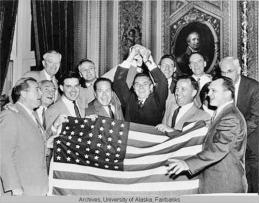
Alaska Territorial Gov. Bob Bartlett in center, with the 49-star flag (Bartlett was one of Alaska's first U.S. senators).

Alaska Territorial Gov. Bob Bartlett in center, with the 49-star flag (Bartlett was one of Alaska’s first U.S. senators).

The great service at the New York Times site, the Learning Network, notes the 1959 Dwight Eisenhower proclamation of Alaska as the 49th state, and the unveiling of the 49-star flag:

On Jan. 3, 1959, President Dwight Eisenhower signed a proclamation admitting Alaska to the Union as the 49th state. The New York Times noted that the signing included the unveiling of the new 49-star American flag.

The land that became Alaska came into U.S. possession in 1867, when William Seward, secretary of state under President Andrew Johnson, negotiated a deal to buy the 586,000-square-mile area from Russia for $7.2 million, less than 2 cents per acre. Seward’s decision was ridiculed in the American press, who saw no potential in the vast, inhospitable and sparsely populated area.

For decades after its purchase, Alaska was derided as “Seward’s folly” or “Seward’s icebox.” This opinion changed in 1896 with the discovery of gold in the neighboring Yukon Territory, which spurred tens of thousands of people to head to Alaska in search of gold. The gold rush also brought about a boom in mining, fishing and trapping.

Though the first statehood bill had been presented to Congress in 1916, there was little desire in either Alaska or Washington for Alaskan statehood until after World War II. During the war, the U.S. established multiple military bases to resist Japan’s attacks on Alaska’s Aleutian Islands and prevent a potential invasion of the mainland. The military activity, along with the completion of a major highway from Montana, led to a large population growth.

In 1946, Alaskans voted in favor of statehood in a referendum and Alaskan delegates began to lobby Congress for statehood. After years of debate, Congress voted in June 1958 to admit Alaska.

Eight months after Alaska’s admission, on Aug. 21, 1957 [should be 1959, no?], Hawaii became the 50th state. The 49-star remained in place until the following July 4, when it was replaced by the now-familiar 50-star flag.

49-star flags were produced only until August 1959, so there are few of them around.  I love this photo of the unveiling of the flag with President Eisenhower:

President Eisenhower and Quartermaster General MG Andrew T. McNamara, with 49-star flag - image from QM foundation

“Quartermaster General MG Andrew T. McNamara and President Eisenhower examine new 49 star flag” – image and caption from the Quartermaster Foundation. (Who are the other two people?  The guy on the right looks to me a bit like is Pennsylvania’s Sen. Hugh Scott.)

It had been about 47 years since the previous state admission (Arizona); people became aware that no law set what the flag should look like.  President Eisenhower issued a directive.

How did the nation survive for 170 years without firm, decisive and conclusive orders on what the flag should look like?  Isn’t it a great story that we went so long without law setting the requirements?

Alaska's state flag design came from 13-year old Benny Benson.

Alaska’s state flag design came from 13-year old Benny Benson. Benny Benson holding the Alaska flag at the Jesse Lee Home, Seward, Alaska. ASL-P01-1921, Alaska State Library-Historical Collections.


Alaska’s state flag came from the imagination of a 13-year-old Aleut, Benny Benson, winning a contest to design the state’s flag.  Alaska’s flag stands out in any display of U.S. state flags.

Yes, this is mostly an encore post.  Fighting ignorance requires patience.

Yes, this is mostly an encore post. Fighting ignorance requires patience.