Utah at 119 years: Fly your flag today for Utah statehood, January 4, 1896

January 4, 2015

Utah Capitol, with flags

South entrance (main) to the Utah State Capitol, with U.S. and Utah flags flying on the single flag poll, and the snow-dusted Wasatch Mountains in the background. Utah State Law Library photo.

Utah joined the Union on January 4, 1896.  It had been a 49-year slog to statehood for Deseret, the Mormon settlement in the Desert.  The size had been pared down, so it would not be the biggest state, incorporating parts of what is now Nevada, Arizona, Oregon, Idaho, Colorado and New Mexico.  New capitals had been tried and cast aside (Fillmore, Utah).  Democratic Party rule was broken when LDS church authorities went door-to-door, calling every other family to the Republican Party, and party parity.  The Mormon Church abandoned polygamy, and adopted a state constitution that gave the vote to women.

Finally, Utah became the 45th state.

You may fly your U.S. flag today for Utah statehood, especially if you’re in Utah.

Happy birthday, Utah!  119 years old today.

More:

U.S. flag in Capitol Reef NP

U.S. flag flying at Capitol Reef National Park, in Utah. Photo by longyang0369, via Flickr

Much of this material appeared here before; this is an annual event, after all.


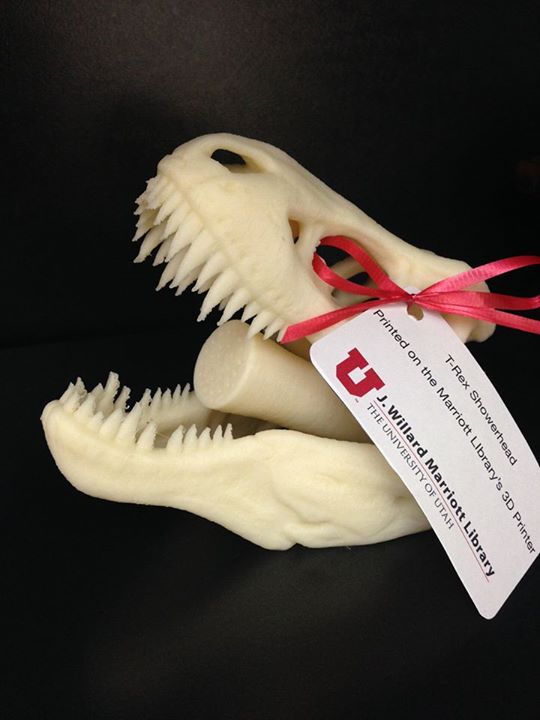
Oh, yes! T. Rex showerhead

December 5, 2014

3-D printing just got my interest big time:

From University of Utah's Twitter feed (@UUtah): RT @MarriottLibrary: 3D printed T-Rex showerhead? Yes, please!

From University of Utah’s Twitter feed (@UUtah): RT @MarriottLibrary: 3D printed T-Rex showerhead? Yes, please!

Is it for sale?  To alumni, maybe?


Does a name seal one’s geographic fate?

September 28, 2014

A site out of Utah that compiles a list of blogs based in Utah County, around Provo, lists Millard Fillmore’s Bathtub as one of the local products.

It’s tough to complain.  The site doesn’t drive much traffic my way, but there is an occasional foray.  The Bathtub can use all the traffic drivers anyone wants to provide for free, in honest linking.

There’s some good company on the list.  Jared Stein writes about education issues from Utah Valley University, and his blog is listed there.  (One must appreciate a blog that correctly uses a clip of the Black Knight sequence from Monty Python in discussing on-line education resources.)

Mount Timpanogos is based in Utah County.  It’s a beautiful, underappreciated block of ancient stone.

Mount Timpanogos at sunset.  Timpanogos is the second highest mountian in the Wasatch Front (11,752 ft/3,582 m), and forms the eastern border of Utah County.  Wikipedia image, photo by Eric Ward from Provo, UT, USA - Mount Timpanogos - 01/19/08

Mount Timpanogos at sunset. Timpanogos is the second highest mountian in the Wasatch Front (11,752 ft/3,582 m), and forms the eastern border of Utah County. Wikipedia image, photo by Eric Ward from Provo, UT, USA – Mount Timpanogos – 01/19/08.  The founder/editor of this blog has been inspired by this mountain for years, particularly in those years that it greeted him each morning from his bedroom window.

But the Bathtub is not based in Utah County, despite the reference to the mountain in the URL.

It’s great to have something of beneficial serendipity to note, in contrast with our usual observations that the “idiots” are carrying us all to hell in an uncomfortable and inadequately air-conditioned hand basket.

(Writing this reminds me that I’ve never been to the summit; anybody organizing a hike soon, and need a now-flatlander blogger along?)

Another important clue:  Amazon.com is not a company located in the Brazilian rainforest.


Family stickers on the van . . . too far

June 6, 2014

It was spotted in Utah, of course (note the mountains in the background).

Yeah, we had that family living next door to us for a while.

Look closely, it appears not to be a claim for a polygamous family . . . oy.  Surely, it is a joke.

Utah too big family - BnvLS6RIMAAl8xY

Maybe it’s a kindergarten teacher who thinks all students are her kids, or his kids. Maybe the driver just wants to start conversation, or convulsions of laughter.


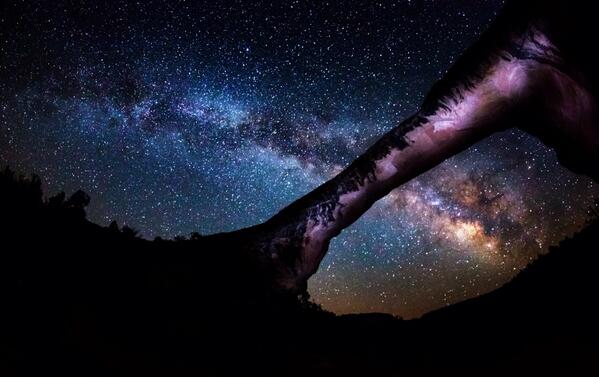
Milky Way over Arches N.P.

May 30, 2014

From the Department of Interior's Twitter feed:  Looking for a wow photo? This picture of the Milky Way over Natural Bridges Natl Monument should do the trick. pic.twitter.com/RfuDj7KXSA

From the Department of Interior’s Twitter feed: Looking for a wow photo? This picture of the Milky Way over Natural Bridges Natl Monument should do the trick. pic.twitter.com/RfuDj7KXSA

Owachomo Bridge?  Photographer?  I wish Interior would put in all the details with their photos.


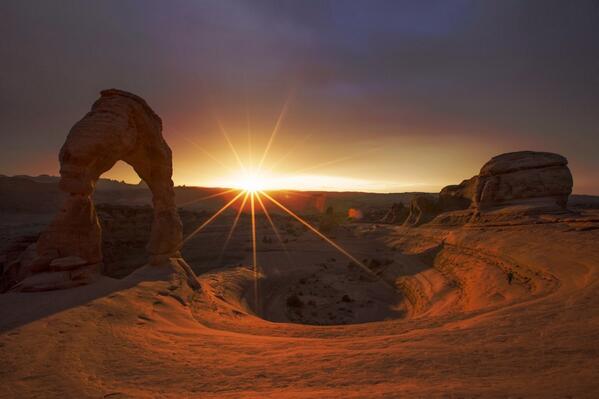
Delicate sunset in Utah

March 21, 2014

From the U.S. Department of Interior:  This stunning photo of dusk @ArchesNPS by Jonathan Backin is the perfect way to end the week. #utah #nature pic.twitter.com/5bIanEG8sZ

From the U.S. Department of Interior: This stunning photo of dusk @ArchesNPS by Jonathan Backin is the perfect way to end the week. #utah #nature pic.twitter.com/5bIanEG8sZ

Delicate Arch, with a dusting of snow, as the sun sets.

A great reason to live in Moab, Utah, or visit there.


π Day tribute from Arches National Park

March 14, 2014

Happy Pi Day!

Arches National Park Happy Pi Day! “PsyPhi” by Pete Apicella, 2010 Community Artist in the Parks (kh)

Hey, I wonder when Fibonacci’s birthday falls. π


Lightning strike in Monument Valley, Navajo Nation

February 20, 2014

Lightning strikes in Monument Valley, on the Navajo Reservation, Utah.  Photography by Carolyn Slay (Oak Ridge, TN); Monument Valley, UT

Lightning strikes in Monument Valley, on the Navajo Reservation, Utah. Photography by Carolyn Slay (Oak Ridge, TN); Monument Valley, UT Feb. 20 2014 Via smithsonianmag.com.

Lightning strike in Monument Valley, photo by Carolyn Slay of Oak Ridge, Tennessee; Smithsonian Magazine Tumblr Photo of the Day, February 20, 2014.

Rocks on the right can also be seen in this photo; can you help pinpoint the location of the photographer, and names of any of the other formations?


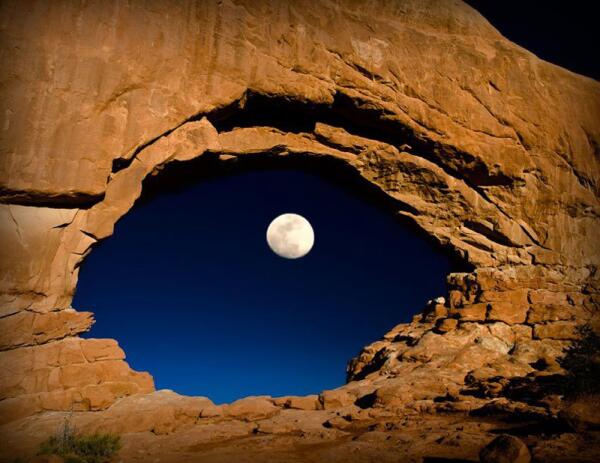
When the Moon hits your eye, in Arches NP

February 12, 2014

Photo by Lynn Sessions;

Photo by Lynn Sessions; “THE EYE OF THE #MOON: North Window arch at Arches National Park in #Utah. #NatGeo pic.twitter.com/XwHfdWK5Ft

It’s just a click of the shutter?  Ha!

I’m assuming not a lot of post-photo processing on this. Lynn Sessions had to figure out when the Moon would be in the North Window Arch, calculate exposure, and shoot off enough of them to get a decent shot before the Moon moved.  I suspect the rocks were “painted” with a flashlight during the exposure.

(Haven’t yet found the technical details of the shot. But I did find this about the photographer:
I’m a frustrated amateur photographer who is trying to visit every corner in Utah as well as hike/photograph every canyon in southern Utah. More at http://www.DreamBreeze.com )

Patience, planning, creativity — then just push the button.

More:


Sundown on the trail, Bryce Canyon National Park, #2

February 6, 2014

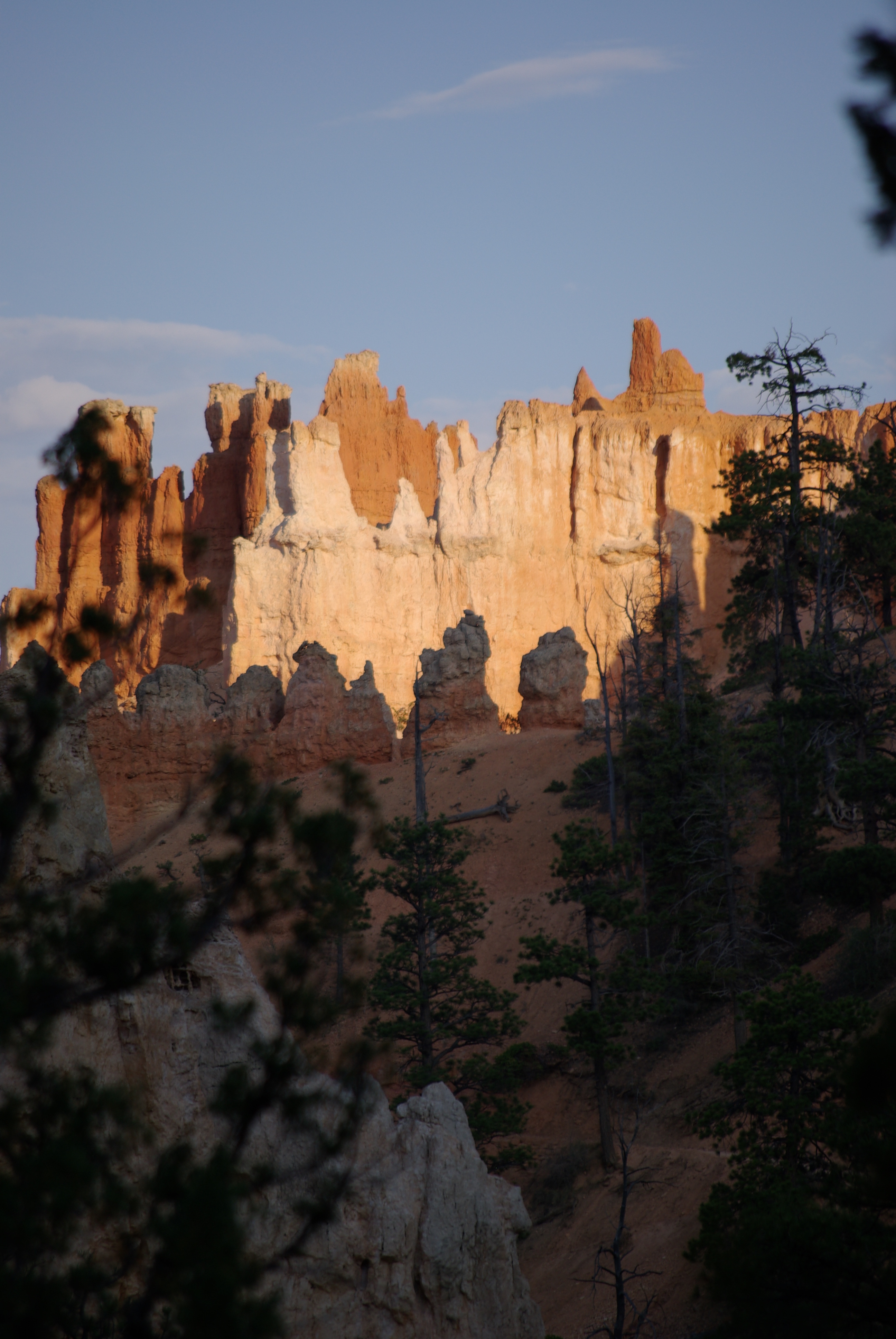
Hiking Bryce Canyon at sundown, one may see rocks in a new way, spotlighted from 93 million miles away.  Photo from 2008, by Ed Darrell

Hiking Bryce Canyon at sundown, one may see rocks in a new way, spotlighted from 93 million miles away. Photo from 2008, by Ed Darrell


Sundown on a trail in Bryce Canyon

February 5, 2014

Sundown shadows of hoodoos on pinnacles, Bryce Canyon National Park, 2008. Photo by Ed Darrell

Sundown shadows of hoodoos on pinnacles, Bryce Canyon National Park, 2008. Photo by Ed Darrell


Flying your U.S. flag for Utah’s statehood? Don’t make this error, and fly it backwards!

January 4, 2014

Last year I discovered Holly Munson’s write up from the Constitution Center about Utah’s perhaps odd path to statehood, certainly complementary to my reminder that you could fly your flags on January 4, to honor Utah’s statehood, under the U.S. Flag Code.  Munson’s piece was distributed on Yahoo! News.

Her report is very solid, even though brief.  Utah history is nothing if not a convoluted path to statehood through what amounted to a civil war, the Mexican War, the discovery of gold in California, the transcontinental railroads, mining and immigration, Indian wars, old west shootouts, rampant environmental destruction with sheep grazing and mineral extraction and smelting, union strife, astonishing agricultural applications, and a lot of books written from tens of thousands of Mormon pioneer journals — Mormonism appears to be impossible without ink and paper and time to write.

Go read her story.

What caught my eye was the George W. Reed photograph of the Salt Lake City Temple of the Church of Jesus Christ of Latter-day Saints — the LDS, or Mormon church.  The Temple and the Tabernacle, also in the photo, both have their own unique architectural histories, and quirks that make them noteworthy purely from an architectural-historical view.  (This George W. Reed should not be confused with the Civil War Medal of Honor winner, George W. Reed)

Reed was an early photographer for newspapers in Salt Lake City, and he took some wonderful photos for posterity.  He was also a founder of the leading non-Mormon paper in the state, The Salt Lake Tribune.  At points in its history, it’s been known as an anti-Mormon paper.  The University of Utah’s library holds about five dozen of his photos in their collection, indexed electronically if not quite available yet; there Reed is described:

A pioneer in the development of Utah newspapers, George Reed was originally employed by the Deseret News and in 1871 helped in establishing the Salt Lake Tribune. His photographs include nineteenth century views of Salt Lake City, individuals at Reed’s Avenue home, Wasatch Resort in Little Cottonwood Canyon, and a photograph of the American flag hung on the Salt Lake Temple in 1896 to commemorate Utah’s statehood.

In the collection of Utah State University, in Logan, Reed has yet more papers.  There we get a bit more of his history:

A pioneer in Utah journalism, George W. Reed was born in London, England, on April 7, 1833. He emigrated to Utah in 1862 and became manager of the Deseret News, a position he held until 1871 when he founded the Salt Lake Tribune. In 1882, after a decade at the Tribune, Reed sold his interest in the paper to P. H. Lannan. He married Elizabeth Tuddenham in 1866 and passed away December 1, 1909.

U.S. flag on the Mormon Temple, at Utah statehood in 1896

The Mormon Temple in Salt Lake City, Utah, draped with a U.S. flag in 1896, commemorating the completion of Utah’s statehood campaign when President Grover Cleveland declared Utah a member of the Union. Photo by George W. Reed; Reed worked for the Deseret News, and helped found the Salt Lake Tribune. I do not know whether this photo was published in either paper.  From the George W. Reed Collection, University of Utah Libraries.

Yes, you’re right!  That flag is backwards.  Well, it’s backwards according to the modern U.S. Flag Code, which specifies that when hung from a building, the flag’s union should always be in the viewer’s upper left corner (“northwest” corner were it a standard map).  In the photograph, the union is in the opposite corner.  No, we know the photo is not reversed, because it accurately portrays the location of the Tabernacle, to the west and slightly south of the Temple.

But we hear the protests:  The U.S. Flag Code did not exist in 1896!  How can that be a violation of a code that did not exist?

That’s right, too.

That is an indication that the traditions of flag display that some people get riled up about, that many people think we should amend the Constitution to protect, are new inventions more than old traditions.  Flag code violations are legion by well-meaning citizens celebrating the flag and patriotism, and rare by anyone with any malignant motives.

After a 49-year fight for statehood, through wars with the U.S., fighting with the U.S. forces in Mexico, the administrations of several presidents and 25 different U.S. Congresses, and pledges to change the rules of the church to ban polygamy and put that ban in the state constitution,  the people of Utah, especially the Mormon officials, were not trying to insult America by displaying the flag incorrectly.  Somebody said ‘fly the flag from the Temple,’ and some engineer or custodian got it done.  By 1896, most of the First Amendment litigation done in the U.S. had involved whether Mormons could keep their marriage policies (Mormons lost).  There was no intent to violate any rule of separation of church and state — nor would that be considered a violation today.  Churches may fly the nation’s flag with all the approval that suggests; it’s the government which may not fly a church’s flag.

Finally, there is no grand story in the flag’s being flown backwards.  It’s just one of those historical footnotes that mark the changing mores of the times, in this case, for standards of how to fly the U.S. flag.

Perhaps Utah history textbooks should make note of the day the U.S. flag was flown, backwards, to honor statehood.

More, and related resources:

Oh, yes! This is an encore post, too. We’re in the business of remembering history around here.


Fly your flag today for Utah statehood, January 4, 1896

January 4, 2014

Utah Capitol, with flags

South entrance (main) to the Utah State Capitol, with U.S. and Utah flags flying on the single flag poll, and the snow-dusted Wasatch Mountains in the background. Utah State Law Library photo.

Utah joined the Union on January 4, 1896.  It had been a 49-year slog to statehood for Deseret, the Mormon settlement in the Desert.  The size had been pared down, so it would not be the biggest state, incorporating parts of what is now Nevada, Arizona, Oregon, Idaho, Colorado and New Mexico.  New capitals had been tried and cast aside (Fillmore, Utah).  Democratic Party rule was broken when LDS church authorities went door-to-door, calling every other family to the Republican Party, and party parity.  The Mormon Church abandoned polygamy, and adopted a state constitution that gave the vote to women.

Finally, Utah became the 45th state.

You may fly your U.S. flag today for Utah statehood, especially if you’re in Utah.

Happy birthday, Utah!  118 years old today.

More:

U.S. flag in Capitol Reef NP

U.S. flag flying at Capitol Reef National Park, in Utah. Photo by longyang0369, via Flickr

Much of this material appeared here before; this is an annual event, after all.


Something about a campfire, in Arches National Park

November 8, 2013

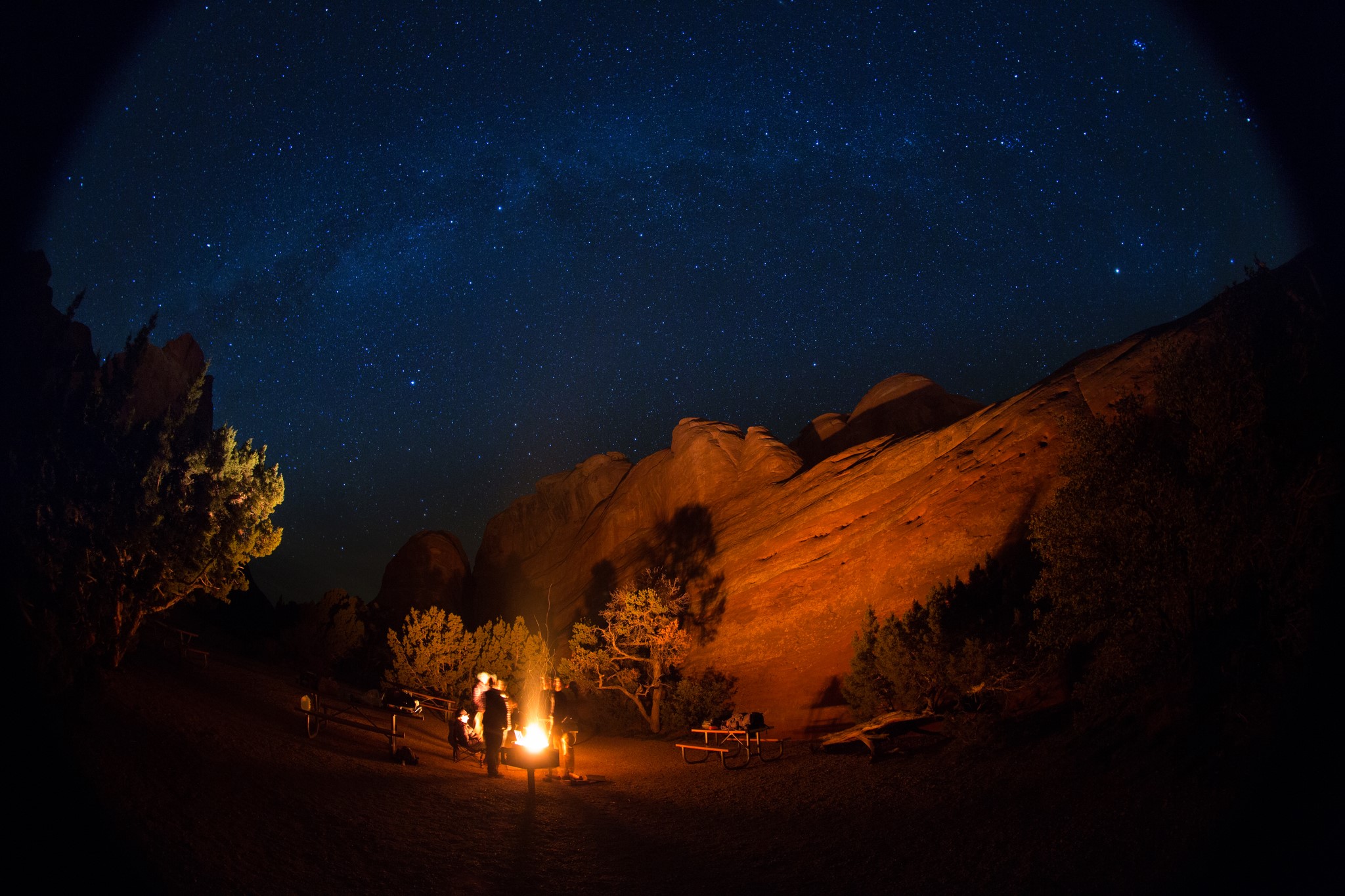
Campfire in Arches National Park, by John Dale, photographer, 2013

Photographer John Dale wrote: “We rolled in to Arches National Park to a beautiful sunset and got to our campsite just as it got dark, but that left us with a clear sky, plenty of stars, and a fire to warm up next to. Here’s a photo from the timelapse I took that night.”

From a photographer named John Dale, via Arches National Park’s Facebook page.

More:

Map of Arches National Park, Utah, United Stat...

Map of Arches National Park, Utah, United States showing predominant features such as arches, peaks, rivers and streams, mines, and roads. (Photo credit: Wikipedia)


Piano on Utah Lake

October 17, 2013

Let me state right up front that the only reason I’m posting this is because of the cameo appearance of Mt. Timpanogos in this video.

The sun is setting in the west; Timpanogos is that biggest mountain to the east.

Never heard of this guy before, the pianist William Joseph; found it through a clip in the Deseret News in Salt Lake City.

I understand there’s a platform hiding beneath the water.  When my grandfather, Leo Barrett Stewart, Sr., was a child, about ten miles south of where this film was shot, he said one could paddle a boat out to the middle of Utah Lake, and see the bottom, picking the trout one wished to fish for.  That was before the invasive carp was introduced.

It would be wonderful to see Utah Lake restored to the point that you could see the platform holding the piano.

Filming and credit details from devinsupertramp below the fold.

Read the rest of this entry »