National Radon Action Month: Test to see whether your home is safe

January 5, 2012

Press release from EPA today:

January 4, 2012

EPA Recognizes National Radon Action Month: Test for Radon Gas to Protect Health

21,000 Americans die from radon related lung cancer each year

WASHINGTON
– The U.S. Environmental Protection Agency (EPA) is encouraging Americans this January, as part of National Radon Action Month, to take simple and affordable steps to test their homes for harmful levels of radon gas. Radon, a colorless odorless gas, is the leading cause of lung cancer among non-smokers. Radon can seep into a home from underground and if left to accumulate, high levels of radon can cause lung cancer. Improving indoor air quality by increasing awareness of environmental health risks, such as radon gas, supports healthier homes and communities.

“Testing for radon is an easy and important step in protecting the health of your family,” said Gina McCarthy, EPA Assistant Administrator for the Office of Air and Radiation. “Radon can be found in every single state. Nationally, elevated radon levels are in as many as one in 15 homes – a statistic that is even higher in some communities.”

Approximately 21,000 people die from radon related lung cancer each year in the United States, yet elevated levels of this health hazard can be prevented through these simple steps:

  • Test: EPA and the U.S. Surgeon General recommend that all homes, both with and without basements, be tested for radon. Affordable Do-It-Yourself radon test kits are available at home improvement and hardware stores and online or a qualified radon tester can be hired.
  • Fix: EPA recommends taking action to fix radon levels above 4 Picocuries per Liter (pCi/L). Addressing high radon levels often costs the same as other minor home repairs.
  • Save a Life: By testing and fixing for elevated levels of radon in your home, you can help prevent lung cancer while creating a healthier home and community.

Radon is a natural, radioactive gas that comes from the breakdown of uranium in soil, rock and water. It can enter homes through cracks in the foundation or other openings such as holes or pipes. In addition to testing for radon, there now are safer and healthier radon-resistant construction techniques that home buyers can discuss with builders to prevent this health hazard.

In 2011, EPA announced the Federal Radon Action Plan, along with General Services Administration and the Departments of Agriculture; Defense; Energy; Health and Human Services; Housing and Urban Development; Interior; and Veterans Affairs. This action plan will demonstrate the importance of radon risk reduction, address finance and incentive issues to drive testing and mitigation, and build demand for services from industry professionals.

More information on how to Test, Fix, Save a Life, obtain a text kit, or contact your state radon office: http://www.epa.gov/radon or call 1-800-SOS-RADON

More information on the Federal Radon Action Plan: http://www.epa.gov/radon/action_plan.html

R001


January 3, 1959: Welcome, Alaska, and the 49-star flag

January 3, 2012

Alaska Territorial Gov. Bob Bartlett in center, with the 49-star flag (Bartlett was one of Alaska's first U.S. senators).

Alaska Territorial Gov. Bob Bartlett in center, with the 49-star flag (Bartlett was one of Alaska’s first U.S. senators).

The great service at the New York Times site, the Learning Network, notes the 1959 Dwight Eisenhower proclamation of Alaska as the 49th state, and the unveiling of the 49-star flag:

On Jan. 3, 1959, President Dwight Eisenhower signed a proclamation admitting Alaska to the Union as the 49th state. The New York Times noted that the signing included the unveiling of the new 49-star American flag.

The land that became Alaska came into U.S. possession in 1867, when William Seward, secretary of state under President Andrew Johnson, negotiated a deal to buy the 586,000-square-mile area from Russia for $7.2 million, less than 2 cents per acre. Seward’s decision was ridiculed in the American press, who saw no potential in the vast, inhospitable and sparsely populated area.

For decades after its purchase, Alaska was derided as “Seward’s folly” or “Seward’s icebox.” This opinion changed in 1896 with the discovery of gold in the neighboring Yukon Territory, which spurred tens of thousands of people to head to Alaska in search of gold. The gold rush also brought about a boom in mining, fishing and trapping.

Though the first statehood bill had been presented to Congress in 1916, there was little desire in either Alaska or Washington for Alaskan statehood until after World War II. During the war, the U.S. established multiple military bases to resist Japan’s attacks on Alaska’s Aleutian Islands and prevent a potential invasion of the mainland. The military activity, along with the completion of a major highway from Montana, led to a large population growth.

In 1946, Alaskans voted in favor of statehood in a referendum and Alaskan delegates began to lobby Congress for statehood. After years of debate, Congress voted in June 1958 to admit Alaska.

Eight months after Alaska’s admission, on Aug. 21, 1957 [should be 1959, no?], Hawaii became the 50th state. The 49-star remained in place until the following July 4, when it was replaced by the now-familiar 50-star flag.

49-star flags were produced only until August 1959, so there are few of them around.  I love this photo of the unveiling of the flag with President Eisenhower:

President Eisenhower and Quartermaster General MG Andrew T. McNamara, with 49-star flag - image from QM foundation

“Quartermaster General MG Andrew T. McNamara and President Eisenhower examine new 49 star flag” – image and caption from the Quartermaster Foundation. (Who are the other two people?  The guy on the right looks to me a bit like is Pennsylvania’s Sen. Hugh Scott.)

It had been about 47 years since the previous state admission (Arizona); people became aware that no law set what the flag should look like.  President Eisenhower issued a directive.

How did the nation survive for 170 years without firm, decisive and conclusive orders on what the flag should look like?  Isn’t it a great story that we went so long without law setting the requirements?

Benny Benson's award-winning flag design for the State of Alaska

Alaska’s flag was designed by 13-year-old Benny Benson

Alaska’s state flag came from the imagination of a 13-year-old Aleut, Benny Benson, winning a contest to design the state’s flag.  Alaska’s flag stands out in any display of U.S. state flags.


Promise keepers

January 3, 2012

Sometimes Santayana’s Ghost weeps a bit with joy, with those who know history.


Geographic literacy and logic become victims in Republican presidential campaign in Iowa

January 3, 2012

Rick Perry shooting at the coyote in the sky - Mad Mike's America

Rick Perry shooting at the coyote in the sky - Mad Mike's America

Sidney Crosby, Toronto Maple Leafs  - Business Insider

Sidney Crosby, Toronto Maple Leafs - Business Insider

_____________

I have it on good authority that Rick Perry will not be taking the Texas Assessment of Knowledge and Skills (TAKS) Exit Level test for juniors this spring.  He’s probably not ready for it, according to this report in the New York Times.  It may be that no Republican in Iowa is ready for it, either.

Energy: The audiences at Mr. Perry’s events seemed somewhat unmoved by parts of his speech that talked about job creation. But when it came to energy and oil, they perked up.

“Every barrel of oil that comes out of those sands in Canada is a barrel of oil that we don’t have to buy from a foreign source,” Mr. Perry said in Clarinda, earning a loud round of enthusiastic applause.

Later, the audience reacted again to Mr. Perry’s assertion that buying so much energy from foreign countries is “not good policy, it’s not good politics and frankly it’s un-American.”

I wonder if it’s un-Canadian.

See also:


Clay Bennett’s cartoon tops out the Lurie/UN Political Cartoon Awards

December 31, 2011

Clay Bennett of the Chattanooga Times-Free Press took the top prize and $10,000 in the 2011 UNCA and the United Nations Society of Writers and Artists Ranan Lurie Political Cartoon awards.

Clay Bennett, award-winning cartoonist for the Chattanooga Times-Free Press

Clay Bennett, award-winning cartoonist for the Chattanooga Times-Free Press

Bennett earned honorable mentions before in this competition.  His distinctive, almost simple style, and his sharp and incisive wit, make Bennett a great cartoonist, one of my favorites for a long time.

His 2011 Lurie Award winner depicted the breakdown in Palestinian/Israeli peace talks:

Clay Bennett's Lurie/UN Award winning cartoon, Chattanooga Times-Free Press

Clay Bennett's Lurie/UN Award winning cartoon, Chattanooga Times-Free Press; inspired by Escher, perhaps, it shows the difficulty in even getting started any talks on Mideast peace.

I especially like the ambidextrous feature:  The cartoon works upside down, too.

Congratulations, Mr. Bennett, and all the winners in the 2011 Lurie/UN Cartoon Awards.

More:


Annals of global warming: NASA press release, 2010 tied as warmest year on record

December 31, 2011

Certain things need to be on the record, in the annals.  Last January I failed to post this press release from NASA, issued January 11, 2011:

NASA Research Finds 2010 Tied for Warmest Year on Record

01.12.11
WASHINGTON — Global surface temperatures in 2010 tied 2005 as the warmest on record, according to an analysis released Wednesday by researchers at NASA’s Goddard Institute for Space Studies (GISS) in New York.

The two years differed by less than 0.018 degrees Fahrenheit. The difference is smaller than the uncertainty in comparing the temperatures of recent years, putting them into a statistical tie. In the new analysis, the next warmest years are 1998, 2002, 2003, 2006, 2007 and 2009, which are statistically tied for third warmest year. The GISS records begin in 1880.

The analysis found 2010 approximately 1.13 F warmer than the average global surface temperature from 1951 to 1980. To measure climate change, scientists look at long-term trends. The temperature trend, including data from 2010, shows the climate has warmed by approximately 0.36 F per decade since the late 1970s.

“If the warming trend continues, as is expected, if greenhouse gases continue to increase, the 2010 record will not stand for long,” said James Hansen, the director of GISS.

The analysis produced at GISS is compiled from weather data from more than 1000 meteorological stations around the world, satellite observations of sea surface temperature and Antarctic research station measurements. A computer program uses the data to calculate temperature anomalies — the difference between surface temperature in a given month and the average temperature for the same period during 1951 to 1980. This three-decade period acts as a baseline for the analysis.

The resulting temperature record closely matches others independently produced by the Met Office Hadley Centre in the United Kingdom and the National Oceanic and Atmospheric Administration’s National Climatic Data Center.

The record temperature in 2010 is particularly noteworthy, because the last half of the year was marked by a transition to strong La Niña conditions, which bring cool sea surface temperatures to the eastern tropical Pacific Ocean.

“Global temperature is rising as fast in the past decade as in the prior two decades, despite year-to-year fluctuations associated with the El Niño-La Niña cycle of tropical ocean temperature,” Hansen and colleagues reported in the Dec. 14, 2010, issue of Reviews of Geophysics.

A chilly spell also struck this winter across northern Europe. The event may have been influenced by the decline of Arctic sea ice and could be linked to warming temperatures at more northern latitudes.

Arctic sea ice acts like a blanket, insulating the atmosphere from the ocean’s heat. Take away that blanket, and the heat can escape into the atmosphere, increasing local surface temperatures. Regions in northeast Canada were more than 18 degrees warmer than normal in December.

The loss of sea ice may also be driving Arctic air into the middle latitudes. Winter weather patterns are notoriously chaotic, and the GISS analysis finds seven of the last 10 European winters warmer than the average from 1951 to 1980. The unusual cold in the past two winters has caused scientists to begin to speculate about a potential connection to sea ice changes.

“One possibility is that the heat source due to open water in Hudson Bay affected Arctic wind patterns, with a seesaw pattern that has Arctic air downstream pouring into Europe,” Hansen said.

For more information about GISS’s surface temperature record, visit:
http://data.giss.nasa.gov/gistemp/

A Warming World
http://climate.nasa.gov/warmingworld/

Global Temperatures Animation
http://svs.gsfc.nasa.gov/vis/a000000/a003600/a003674/index.html


(Missing) Typewriter of the moment: Albert Einstein

December 30, 2011

Einstein at his desk, Princeton, New Jersey, circa 1955

Einstein at his desk, Princeton, New Jersey, circa 1955

He wrote papers, and letters, long-hand.  Sometimes they would be typed up by an assistant, perhaps Helen Dukas.

The desk of Albert Einstein features a refreshing, bracing lack of technology.  No typewriter.  No telephone.  No radio.  No Dictaphone.  No intercom.  Pencils.  Is there even a ballpoint pen?  A chalkboard in back of the desk provided a large sketch pad for new ideas, and new trials of ideas, from the man who gave us nuclear power, gravity as a deformation of space, the speed of light as a firm constant in the universe, and relativity.

Somewhere there may be a typewriter Einstein actually used once or twice.  I’d like to know about it.

More: 

Ralph Morse photo of Einstein's office the day he died, April 18, 1955 -- originally for Life Magazine, not published

Ralph Morse photo of Einstein’s office the day he died, April 18, 1955 — originally for Life Magazine, not published; via AllPosters.  Note the antiquated telephone away from the desk, near the wall; Einstein’s pipe and a tobacco tin appear the closest things to technology on the desk; is that a bottle of ink for a fountain pen next to the tobacco tin?


December 30: Hubble Day, look to the stars

December 30, 2011

Lift a glass of champagne today in tribute to Edwin Hubble and his great discovery. Not sure what to call it — Hubble Day, Looking Up Day, Endless Possibilities Day — whatever, this is the anniversary of Edwin Hubble’s announcement that he had discovered the universe is much, much larger than anyone had imagined, containing far more stars than anyone had dared guess.

It’s a big universe out there.

Ultraviolet image of the Andromeda Galaxy, first known to be a galaxy by Edwin Hubble on December 30, 1924 - Galaxy Evolution Explorer image courtesy NASA

Ultraviolet image of the Andromeda Galaxy, first known to be a galaxy by Edwin Hubble on December 30, 1924 - Galaxy Evolution Explorer image courtesy NASA

So, today is a good day to celebrate the universe in all it’s glory – December 30.

On December 30, 1924, Edwin Hubble announced he’d discovered other galaxies in distant space. Though it may not have been so clear at the time, it meant that, as a galaxy, we are not alone in the universe (whether we are alone as intelligent life is a separate question). It also meant that the universe is much, much bigger than most people had dared to imagine.

Below, mostly an encore post — I keep trying to get people to celebrate.

In 2008 for Hubble Day, Wired picked up on the story (with a gracious link to 2007’s post here at the Bathtub). Wired includes several links to even more information, a good source of information. See Wired’s 2009 post here.

Hubble was the guy who showed us the universe is not only bigger than we imagined, it’s probably much bigger and much more fantastic than we can imagine. Hubble is the guy who opened our imaginations to the vastness of all creation.

How does one celebrate Hubble Day? Here are some suggestions:

  • Easier than Christmas cards: Send a thank-you note to your junior high school science teacher, or whoever it was who inspired your interest in science. Mrs. Hedburg, Mrs. Andrews, Elizabeth K. Driggs, Herbert Gilbert, Mr. Willis, and Stephen McNeal, thank you.
  • Rearrange your Christmas/Hanukkah/Eid/KWANZAA lights in the shape of the Andromeda Galaxy — or in the shape of any of the great photos from the Hubble Telescope (Andromeda Galaxy pictured above; Hubble images here)

    A few of the images from the Hubble Telescope

    A few of the images from the Hubble Telescope

  • Go visit your local science museum; take your kids along – borrow somebody else’s kids if you have to (take them along, too)
  • Spend two hours in your local library, just looking through the books on astronomy and the universe
  • Write a letter to your senators and congressman; tell them space exploration takes a minuscule portion of our federal budget, but it makes us dream big; tell them we need to dream big, and so they’d better make sure NASA is funded well.  While you’re at it, put in a plug for funding Big Bird and the rest of public broadcasting, too.  Science education in this nation more and more becomes the science shows on NPR and PBS, watched by kids who learned to read and think by watching Big Bird.
  • Anybody got a good recipe for a cocktail called “The Hubble?” “The Andromeda?” Put it in the comments, please.  “The Hubble” should have bubbles in it, don’t you think?  What was it the good monk said?  He was working to make great wine, but goofed somewhere, and charged the wine with another dose of yeast.  When he uncorked the very first bottle of what would come to be called champagne, Benedictine Monk Dom Pierre Perignon said “I am drinking stars!”  Only in French.  In any case, a Hubble cocktail should have bubbles, some of Perignon’s stars.

The encore post, from 2007:

December 30, 1924, Edwin Hubble announced the results of his observations of distant objects in space.

PBS

Edwin Hubble - source: PBS

In 1924, he announced the discovery of a Cepheid, or variable star, in the Andromeda Nebulae. Since the work of Henrietta Leavitt had made it possible to calculate the distance to Cepheids, he calculated that this Cepheid was much further away than anyone had thought and that therefore the nebulae was not a gaseous cloud inside our galaxy, like so many nebulae, but in fact, a galaxy of stars just like the Milky Way. Only much further away. Until now, people believed that the only thing existing outside the Milky Way were the Magellanic Clouds. The Universe was much bigger than had been previously presumed.

Later Hubble noted that the universe demonstrates a “red-shift phenomenon.” The universe is expanding. This led to the idea of an initial expansion event, and the theory eventually known as Big Bang.

Hubble’s life offered several surprises, and firsts:

Hubble was a tall, elegant, athletic, man who at age 30 had an undergraduate degree in astronomy and mathematics, a legal degree as a Rhodes scholar, followed by a PhD in astronomy. He was an attorney in Kentucky (joined its bar in 1913), and had served in WWI, rising to the rank of major. He was bored with law and decided to go back to his studies in astronomy.

In 1919 he began to work at Mt. Wilson Observatory in California, where he would work for the rest of his life. . . .
Hubble wanted to classify the galaxies according to their content, distance, shape, and brightness patterns, and in his observations he made another momentous discovery: By observing redshifts in the light wavelengths emitted by the galaxies, he saw that galaxies were moving away from each other at a rate constant to the distance between them (Hubble’s Law). The further away they were, the faster they receded. This led to the calculation of the point where the expansion began, and confirmation of the big bang theory. Hubble calculated it to be about 2 billion years ago, but more recent estimates have revised that to 20 billion years ago.

An active anti-fascist, Hubble wanted to joined the armed forces again during World War II, but was convinced he could contribute more as a scientist on the homefront. When the 200-inch telescope was completed on Mt. Palomar, Hubble was given the honor of first use. He died in 1953.

“Equipped with his five senses, man explores the universe around him and calls the adventure Science.”

That news on December 30, 1924, didn’t make the first page of the New York Times. The Times carried a small note on February 25, 1925, that Hubble won a $1,000 prize from the American Academy for the Advancement of Science.

(Does anyone have a suitable citation for that video? Where did it come from? Who produced it? Is there more somewhere?)

Happy Hubble Day! Look up!

Resources:

Hubble Space Telescope - NASA image

Hubble Space Telescope, working homage to Edwin Hubble - NASA image


Greg Marley’s “Chanterelle Dreams, Amanita Nightmares” in the kitchen

December 29, 2011

Happy to see Mr. Marley has a video to accompany his book of last year, Chanterelle Dreams, Amanita Nightmares.  Marley hasn’t aged much in three decades; think it’s the ‘shrooms?

Vodpod videos no longer available.

Greg Marley’s “Chanterelle Dreams, Amanita Nigh…, posted with vodpod

From Chelsea Green TV. Chelsea Green publishes Marley’s work.

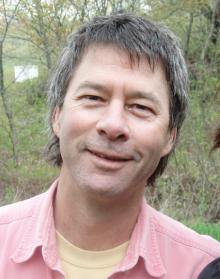
Greg Marley, Maine mycologist and author of "Chanterelle Dreams, Amanita Nightmares"

Greg Marley

Marley’s book was a finalist in the culinary history category for the 2011 book awards from the International Association of Culinary Professionals (IACP) , and won the 2011 Jane Grigson Award from IACP for distinguished scholarship and depth of research in cookbooks.  The award was named in honor of publisher and food author Jane Grigson, who herself published a volume on mushroom cookery.

From the Chelsea Green authors’ bios:

Greg Marley has a passion for mushrooms that dates to 1971, the year he left his native New Mexico and spent the summer in the verdant woods of central New York. Since then, he has become an avid student and teacher of mycology, as well as a mushroom identification consultant to the Northern New England Poison Control Center and owner of Mushrooms for Health, a company that provides education and products made with Maine medicinal mushrooms. Marley is the author of Mushrooms for Health: Medical Secrets of Northeastern Fungi. He lives and mushrooms in Rockland, Maine.

Greg and I met a couple of summers later, in “the verdant woods of central New York.”  We struck it off as two westerners in the usually wet East (though it was very dry that summer).  We worked together four summers, tramping the woods, canoeing the Adirondacks around Saranac Lake, singing (we were half of the barbershop quartet in a production of Meredith Willson’s “The Music Man” and joined around campfires on a hundred sparkling occasions), and sampling wild foods, in our work with the Louis August Jonas Foundation.

Nice to see a kid from the neighborhood doing good, and maybe well.


December 29, 1890: Massacre at Wounded Knee

December 29, 2011

We lose important anniversaries in the holidays between Thanksgiving and Valentine’s Day, especially in that school-less period from a few days before Christmas to a few days after New Year’s Day.

Today is the anniversary of the Massacre at Wounded Knee, December 29, 1890.

I don’t have an appropriate post ready — I just matched the date up last night.  I hoped someone would have a good memorial up today.  But I haven’t seen one, yet.

How can we remember, if we forget even to note the date?

Cemetery at Wounded Knee, South Dakota - Purdue Agriculture Connections

Jennifer Allen (partially obscured) Rabi Mohtar, Liz Hilkert and Gale Ruttanaphon tour Wounded Knee Cemetery, about 15 minutes away from the village. (Matt Beyrouty photo)

Sources: 

Wounded Knee, by Keith Beasley:


Michael Pollan at TEDS: What do potatoes think of us?

December 29, 2011

Pollan asks a provocative question:  Do we force plants to do our bidding when we breed them, or are we being manipulated by them?

Pollan is the author of Botany of Desire, a great book.  There is a PBS production based on the book.


World War II internments – 4,000 abductions from South America

December 29, 2011

Recent revisions to the Texas Essential Knowledge and Skills (TEKS) for U.S. history include more rigor in the study of internments of Japanese, German and Italian descendants during World War II (many of whom were U.S. citizens).

At some risk of irritating the copyright gods, we repost here a story from the Florida State University Office of Research, about a story from a book by Max Paul Friedman, Nazis & Good Neighbors: The United States Campaign Against the Germans of Latin America in World War II (Cambridge University Press, 2003).

In the past week I’ve discovered that many of the on-line archive photos I’ve used in the past have gone off-line, generally because the libraries lost funding to keep the archives going.  This is good material for Texas classrooms, which I hope will not go off-line; this is my attempt to preserve this story.


Roosevelt’s Wrong Enemies

In a hasty move made in the name of national security, FDR needlessly swept some 4,000 civilians from their homes in Latin America.

By Andy Lindstrom

Werner Kappel was no Nazi.

In fact, after the Gestapo threatened him and his father, a Jewish leather-goods dealer in Berlin, he and his dad had fled their native Germany in 1938. But after Pearl Harbor three years later, both father and son were snatched from the new lives they had built for themselves in Panama and deported to the United States in a roundup of what government officials called “dangerous alien enemies.”

Like more than 4,000 other Latin Americans of German heritage—the vast majority of them with no apparent connection to Adolf Hitler’s National Socialism or its rabid anti-Jewish ranting—they ended up behind barbed-wire fences in a desert Texas internment camp. A few were later released after agreeing to return to Germany; others stayed until U.S. courts finally ordered them freed, in some cases as late as 1947, two years after World War II ended.

In its early phase, the long-overlooked World War II roundup of German nationals in 15 South and Central American countries may have been grounded in an honest but exaggerated fear of a so-called “Fifth Column” of pro-Nazi subversives threatening the security of America’s southern flank, says Max Paul Friedman, an assistant professor of history at Florida State University.


Historian Max Paul Friedman Searching 16 archives in seven countries over a 10-year period, Friedman pieced together the all-but-forgotten story of U.S. relocation of Germans in Central and South America during WWII.


Eventually, though, Friedman found that proscription lists were drawn up by U.S. State Department and FBI officials who were woefully untrained for the task—few spoke Spanish or German. In many cases, their decisions were based on bogus accusations from local informants—often degenerated into naked confiscation of German properties that either were coveted by their non-German neighbors or competed economically with American business interests.

Such arbitrary policies damaged often-fragile U.S.-Latin American relations both during and after the war, Friedman said. The deportation and confinement of Latin Americans of German descent, he continued, became “a forgotten precedent” that should serve as a red flag in the present war against international terrorism.

“Now, when I read about Guantanamo (the American military prison in Cuba where uncharged Afghan detainees are being held indefinitely and without legal recourse or representation), and I hear about the revival of racial profiling, I hear echoes,” he said during a recent interview. “And I worry that we may be repeating some of the same mistakes.”

Friedman’s recent book (published by Cambridge University Press, August 2003), Nazis & Good Neighbors: The United States Campaign Against the Germans of Latin America in World War II, chronicles the deportations that showed what Friedman called “a complete disregard for Franklin Roosevelt’s vaunted Good Neighbor Policy (and) a not very effective way to combat the very real dangers in Latin America.”

Aside from Germans, more than 2,000 Japanese and 288 Italians also were deported from Latin America and interned in the U.S. during the World War II crackdown, Friedman learned from post-war statistics he discovered in the National Archives.

While this was going on, of course, the government was coordinating a massive-and far more well-known-roundup of Japanese and Japanese-Americans on U.S. soil. All told, about 110,000 persons of Japanese descent of all ages were “relocated” to inland internment camps from their homes on the U.S. West Coast in a move based solely on their racial identity.

Friedman’s book focuses on what he concedes was a “sideshow” to the Japanese internment during the war. Although small by comparison, the incident is an intriguing footnote to U.S. history, and demonstrates just how far the government will go to protect itself in wartime.

In hindsight, what Roosevelt’s policymakers feared most about the small number of relocated Germans in Latin America may seem irrational to some today-they actually worried that these people were Nazis or Nazi-sympathizers who were going to try to overturn governments south of the Rio Grande, take over the Panama Canal and thus pave the way for an invasion by Hitler’s forces from the south.

But in fact, the threat had a core of truth, since there were Nazi spies operating in the region, Friedman said.

“There was good reason to try to prevent a Nazi takeover of the region; the problem was in targeting the wrong people not because of anything they’d done, but just because of who they were.

“In this rather forgotten episode in response to the panic after Pearl Harbor, we did something that we do often-—-basically jettison legal principle, civil liberty, international law,” Friedman said. “We went looking for dangerous or potentially dangerous people on the basis of group affiliation. If they were German, spoke German or were of German origin—that was really enough to get people put in a camp.”

A specialist on U.S. foreign relations, particularly U.S. relations with modern Latin America and Nazi Germany, Friedman joined the FSU history department in 2002 with a doctorate from the University of California-Berkeley and some three years working for National Public Radio as a researcher and assistant producer. Friedman has worked with such NPR luminaries as former “All Things Considered” commentator Bob Edwards and, for 10 years, for investigative reporter Seymour Hersh, who broke the Vietnam-era My Lai Massacre and the more recent Iraqi prisoner-abuse stories.

Friedman’s book—six years in the writing and heavily documented with research from 16 archives in seven countries—has already received numerous accolades and honors, including the A.B. Thomas Book Award from the South Eastern Council on Latin American Studies and the 2003 Herbert Hoover Award for the best scholarly work on any subject of U.S. history during Hoover’s lengthy public career.

Friedman came onto the barely remembered internment of Latin American Germans during World War II purely by accident, he said. After hearing brief mention of it on a television news show, he was directed to a medical-school friend of the show’s producer who had recently treated a 96-year-old survivor of the camps. That led to an exhaustive search of government records, private correspondence and interviews with 40 former internees or family members now living in Latin America or Europe.

Fluent in four languages and with a reading knowledge of Italian, Friedman was particularly interested in talking to Jewish members of the German communities in each country because, he said, “they would have had no motivation to conceal what happened.” In fact, several of the Jews he contacted had actually been held in Nazi concentration camps, potential victims of the Holocaust, before making their way to what they thought was the safety of Latin America.

“The whole thing was very unfair,” Werner Kappel of Sun City Center, Florida, told Friedman in a 1999 telephone interview. “We had nothing to do with Hitler, because we were chased out by the Nazis. We didn’t even feel like Germans anymore, and the Germans didn’t think we were Germans-only the Americans thought so.”

American thinking about the dangers posed by Latin America’s numerous German communities apparently rested on two basic premises, Friedman said. One, voiced by Roosevelt three months before Pearl Harbor, was that Nazi agents already were at work among the expatriates setting the stage for what he called “intrigues …plots… machinations… sabotage,” even secret landing strips in Colombia with the Panama Canal as a reachable target.

(Postwar reports indicated no secret landing strips in Colombia or any other Latin American countries. In fact, no Nazi-related sabotage was ever reported in those countries, just as none happened on the West Coast during the Japanese-American internments.)

In Friedman’s opinion, a second motivation to intervene in what were essentially internal matters in the various countries south of our borders stemmed from what he called “the U.S. view of Latin America as a vulnerable, dependent region where Latinos are helpless and foreigners are the real actors.”

In other words, Friedman contends, despite all the much-ballyhooed promises of mutual cooperation and trust embodied in Roosevelt’s “Good Neighbor Policy”—when push came to shove, Latin American governments could not be trusted to police their own people.

Even while thousands of Germans in the United States—many with known ties to pro-Nazi organizations—remained relatively free from harassment (fewer than 1 percent were interned), detainees from 15 of Latin America’s smaller countries were shipped north either for eventual repatriation to Germany or to internment centers for the duration of the war.

Brazil and Chile, along with Mexico, refused to yield to U.S. pressure and set up their own holding facilities for suspected Nazi sympathizers.


The Swedish passenger liner Gripsholm was used to exchange Germans for citizens of the Americas. (far left) A german family boards the Gripsholm for repatriation to Germany in 1944.


As Friedman documents in detail, expropriation of German-owned businesses and the subsequent deportation of their owners proved to be both capricious and, in many cases, blatantly unjustified takeovers of properties that had no possible connection with Nazi war aims.

In one example, he cited a Panama shopkeeper who was interned because he allegedly had too many German customers. Paid informants, tempted by $50 bounties for each name they came up with, reported dozens of “Gestapo officials,” “imminent uprisings,” and so-called “German paramilitary units” that proved fabrications at best.

Altogether, Friedman said, the FBI found that only eight of the 4,058 Germans deported from Latin America and interned in the U.S. had active ties with Nazi espionage rings. As for outright sabotage, Friedman’s examination of the FBI records for the period showed what the FBI called “absolutely nil.”

And what were conditions like for these detainees, once they did make it to U.S. shores? Actually, Friedman found, in general they were treated quite well-particularly compared to what they would have faced at detention centers in most other belligerent nations.

“The prison camp was beautiful, at least for us kids,” one Costa Rican veteran said of his camp near Crystal City, Texas. Friedman quotes him in the book.

Camp Blanding, Florida, was described by the camp commander as a country club. Internees that Friedman cited tended to agree.

“We grew tan and swelled up like doughnuts from the good meals,” one reported in a letter to the German government, adding he was served three hot meals daily and could buy three kinds of beer at the canteen.

Despite the testing challenge of summer heat and winter cold in jerry-built buildings, detainees that Friedman interviewed from Camp Kenedy (sic), south of San Antonio, reported that their guards proved reasonably sympathetic as it became obvious most were ordinary farmers, older men and even whole families bewildered by the charges against them.

“Muy correctos,” said one from Guatemala. “I have no complaints against them.”

Official government policy that brought them to barbed-wire internment far from their lost homes and confiscated businesses was another matter. As Friedman discovered, Assistant Secretary of State Breckenridge Long was particularly notorious for refusing to investigate pleas of innocence by detainees. “They are lawless, scheming, defiant-and in many ways unassimilable (sic),” he wrote in his diary about Jewish refugees trying to enter the U.S. in the early years of Nazi repression. “Some are certainly German agents.”

FBI chief J. Edgar Hoover seemed to hold similar views about the subversive intentions of Jews and Latin American Germans in general, Friedman said. As the man responsible for large portions of U.S. intelligence gathering, especially in Latin America, Hoover passed on to the State Department what Friedman called such unsubstantiated whoppers as “1,400 airplanes and 50 submarines” poised in Martinique for an attack on the Panama Canal and other targets including the Florida Keys.

Hoover also forwarded to Washington a memorandum compiled by his Latin American agents that Germany was building a fleet of some 1,000 submarines to transport Nazi soldiers into Colombia and Venezuela where, it was assumed, they would link up with local sympathizers for an attack upon Allied forces.

“None of these claims was true,” Friedman said. “Even the State Department advised its bureau chiefs that data from the (FBI) should be treated with caution.”

But for the unsuspecting Germans of Latin America, Long set U.S. policy and Hoover supplied him with information. Clearly, Friedman said, the FBI and state department officials directly responsible for identifying suspected Nazi sympathizers in Latin America were among the most poorly informed to make such choices.

Long’s chief assistant, Albert Clattenburg, at first defended his agency’s policies gone wrong on the basis of national security. The deportation program began, he said in a 1943 memorandum Friedman quotes in his book, as a sincere effort to root out “the carefully prepared organizations of the Axis governments in the other American republics and thus to ensure the political security of this hemisphere.”

Instead, Clattenburg continued, “the motives of the other American republics in cooperating with us have only a thin veneer of concern for hemispheric security.” Deportees themselves, Clattenburg said, felt they were chosen as easy victims of graft by local governments while conniving U.S. officials used the program as a way to break up German commercial influence in areas where American business interests wished to move in.

Former Justice Department investigator Raymond W. Ickes, who traveled in 1943 to 18 Latin American countries to check on the operation, seems to have agreed with Clattenburg’s assessment. The most common reason behind a person’s deportation, Ickes told Friedman in 1997, was that the individual had “property, real property-land-that was attractive.” The U.S. policy provided such dictators as Nicaragua’s Anastasio Somoza and Tiburcio Carias of Honduras with a good excuse to expel the Germans and seize their property, Ickes said.

As Ickes recalled the deportation program, “When I got down there, I saw that this was not accomplishing anything,” he told Friedman. “It was wheel-spinning, and a complete abrogation of human rights.”

Because of the language barrier, he said, ”the local people could get away with almost anything.” As for the majority of internees, they had “no more business being in detention in the United States than I had.”

Ickes’ report actually helped prune the deportation lists, Friedman said. But it did little to change the long-term thinking of those who felt that the life-or-death dangers of global war left no time for political correctness. If mistakes happened, Friedman found that officials responsible considered them the price for pursuing a greater good-namely, national security.

Even at the highest levels of American government, Ickes told Friedman, the fear of Nazi subversion was so great that the deportation program, in his words, was “understandable, if not justifiable.”

Texas Interns: German deportees from Latin America arrive at Camp Kenedy, Texas in 1942


In principle, Friedman agrees with Ickes’ assessment. But he also insists that, by following such a course, State Department officials were making a costly mistake.

“Typically, in this country, we cast the debate as one between the bleeding hearts and the security hawks,” he said in a discussion of his book’s findings. “Either you’re for civil liberties because you don’t want the rights of the innocent to be trampled on. Or you’re for national security because you’re hard-nosed and you want to protect the country and you don’t have time for such niceties in a time of national crisis.”

During World War II and since, the government would have benefited from having more security agents trained for overseas assignments with the time to gain local experience and a working knowledge of an area’s languages, Friedman feels. Following high standards of investigation and evidence can guide officials to the right targets, instead of wasting resources on the wrong people, he said In this way, respecting civil liberties can actually help improve security.

Instead, as Friedman documented in the Latin America of six decades ago, “We wound up with 4,000 people, most of whom had nothing to do with the German war effort and, along with affecting some of our best friends in Latin America, and wasting ships and troops and guards and meals and diplomatic effort on a needless program, we did all that and gained very little if anything from it.”

Postscript: Werner Kappel was paroled from detention in 1943, found a job in St. Louis and was later drafted into the U.S. Army. Wounded and awarded the Purple Heart while fighting in the Philippines, he took the oath of citizenship shortly after the war ended. Six months later, he finally was released from supervision by the government’s Alien Enemy Control Unit.-EDITOR.


Texas Statehood, December 29, 1845

December 29, 2011

166 years ago today: Rub your pet armadillo’s belly, slaughter the fatted longhorn, crank up the barbecue pit with the mesquite wood, put Willie Nelson and Bob Wills on the mp3 player, put the “Giant” DVD on the television, and raise your glass of Big Red, Dr. Pepper, or Lone Star Beer (or Pearl, or Shiner Bock, or Llano Wine).

Texas was admitted to the union of the United States of America on December 29, 1845.

President Polk's authorization to affix Great Seal of the U.S. to Texas Statehood documentsPresident Polk’s Authorization to Affix the Great Seal to Texas Statehood documents – Texas Memorial Museum, University of Texas at Austin

The text reads:

I hereby authorize and direct the Secretary of State to affix the Seal of the United States to an authenticated copy of “an act to extend the laws of the United States over the State of Texas and for other purposes” approved Dec. 29, 1845 dated this day, and signed by me and for so doing this shall be his warrant.

James K. Polk
Washington, Dec. 29, 1845

Texas Statehood - Great Seal of the U.S., State Archives Division, Texas State Library

Great Seal of the United States, as affixed to Texas Statehood proclamation - image from State Archives Division, Texas State Library

Resources:


Paul Stamets at TEDS – fungus to save the world

December 29, 2011

Don’t laugh.  Listen and learn.  (Greg Marley, is your TEDS talk coming soon?)

Entrepreneurial mycologist Paul Stamets seeks to rescue the study of mushrooms from forest gourmets and psychedelic warlords. The focus of Stamets’ research is the Northwest’s native fungal genome, mycelium, but along the way he has filed 22 patents for mushroom-related technologies, including pesticidal fungi that trick insects into eating them, and mushrooms that can break down the neurotoxins used in nerve gas.

There are cosmic implications as well. Stamets believes we could terraform other worlds in our galaxy by sowing a mix of fungal spores and other seeds to create an ecological footprint on a new planet.

“Once you’ve heard ‘renaissance mycologist’ Paul Stamets talk about mushrooms, you’ll never look at the world — not to mention your backyard — in the same way again.” — Linda Baker, Salon.com


Mercury Poisoning Prevention (video from AOL.com)

December 28, 2011

Video – Some fish have levels of mercury so high that it may be harmful, especially for pregnant women and young children. Find out if you may have been exposed to mercury.

Vodpod videos no longer available.

AOL.com Video – Mercury Poisoning Prevention, posted with vodpod

Remember these prevention tips.

Ask yourself:  If mercury poisoning is not a problem worthy of EPA’s new standards to prevent mercury pollution, why are health officials warning us to restrict our intake of fish that soak up the mercury emitted by coal-fired power plants?


[No, I can’t figure out why the video doesn’t show here.  Look at the VodPod widget in the right column, a bit lower, and look at the video there.  Or, click on the link, and go to the site with the video.]