Signs of life: Endangered squirrels

May 13, 2014

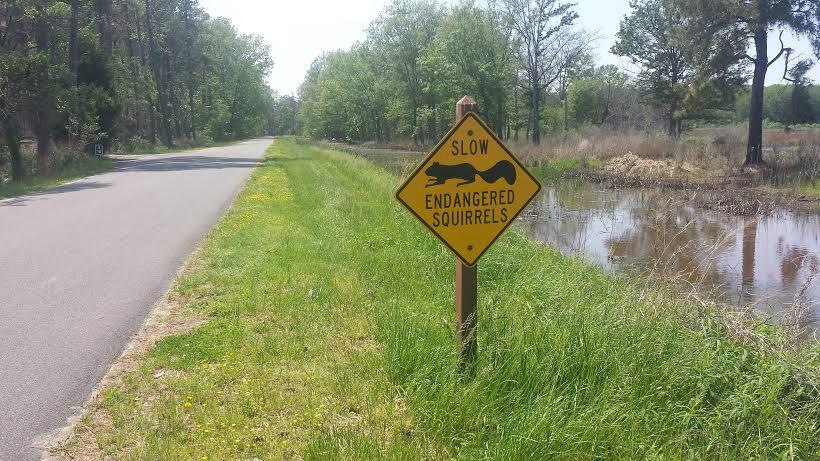
From jbendery (Jennifer Bendery) --  I learned today that there are endangered squirrels, and apparently they have ginormous tails. (h/t @kate_sheppard) pic.twitter.com/Uu4QxiDa5M

From jbendery (Jennifer Bendery) — I learned today that there are endangered squirrels, and apparently they have ginormous tails. (h/t @kate_sheppard) pic.twitter.com/Uu4QxiDa5M

A lot of punchlines possible, e.g., ‘if the squirrels weren’t slow, maybe they wouldn’t be endangered.’

Still a rather unique sign, no?

I wonder where it is?  This sign marks habitat in the Blackwater National Wildlife Refuge  in Maryland for the Delmarva fox squirrel.

Update:  Well, maybe not wholly unique; World Wildlife Fund has this one — again, without a note about location.

Slow - squirrel crossing sign © Michael Mallet

© Michael Mallet


Annals of Global Warming: Significant events for U.S. April 2014.

May 13, 2014

National Overview - April 2014, from NOAA's National Climatic Data Center

National Overview – April 2014, from NOAA’s National Climatic Data Center

NOAA publishes these data monthly.  We tend to ignore them, as background noise.

But click over to NOAA’s site, look at the charts and click to follow links.  Ponder the story being told.

This is the snapshot for April 2014.

Major climate events NOAA is closely monitoring:

  • Drought in the West, Central and Southern Plains, and Midwest. Long- and short-term dryness will increase wildfire risk and continue to have impacts on water resources and agriculture.
  • El Niño development likely this summer or autumn. According to NOAA’s Climate Prediction Center, there is a greater than 65 percent chance of El Niño conditions developing later this year, which could have significant impacts on temperature and precipitation patterns across the U.S. More information is available from the Climate Prediction Center.

Supplemental April 2014 Information


  • Climate Highlights — April
  • The average temperature for the contiguous U.S. during April was 51.7°F, which was 0.7°F above the 20th century average. This was the 46th warmest April in the 120-year period of record.
  • Much of the contiguous U.S. had April temperatures near the 20th century average. Above-average temperatures were scattered along the West Coast and in the Southwest, the Southern Plains, and across parts of the Ohio Valley and the Southeast. Below-average temperatures were observed across parts of the Upper Midwest and Northern Plains. No state had April temperatures among their 10 warmest or coolest.
  • Alaska had the 12th warmest April of its 96-year period of record, with a temperature 3.8°F above the 1971-2000 average. This was the warmest April for Alaska since 2007. Much of the warmth was situated in western Alaska, where Nome had its fourth warmest April since local records began in 1907. The April precipitation total in Alaska was 23.3 percent below the 1971-2000 average, the 23rd driest April on record. Anchorage had its fifth driest April with only nine percent of normal monthly precipitation.
  • The April contiguous U.S. precipitation total of 2.83 inches was 0.31 inch above the 20th century average and the 30th wettest April on record.
  • Above-average precipitation in the Upper Midwest resulted in Wisconsin having its third wettest April and Minnesota its eighth wettest. Heavy precipitation across the Southeast, particularly near the end of the month, caused Alabama to have its fifth wettest April, Georgia its seventh wettest, and Florida its ninth wettest.
  • On April 29th and 30th, torrential rain fell across the Southeast, Mid-Atlantic and Northeast causing significant flash flooding. The Gulf Coast of Alabama and the Florida panhandle bore the brunt of the heavy rains. At the Pensacola Regional Airport, in Florida, the two-day precipitation total was 20.47 inches, with 15.55 inches of the total falling on the 29th, breaking both one-day and two-day precipitation records; local records date back to 1879. On the 29th, Mobile, Alabama received 11.24 inches of rain, the third greatest calendar day rainfall total for the city since local records began in 1871. According to the 2014 National Climate Assessment released on May 6th, the amount of heavy precipitation falling in single events has increased by 27 percent across the Southeast since 1958. This event is consistent with projections of increases in the frequency and intensity of extreme precipitation events across the U.S. as the world warms.
  • Below-average precipitation was observed across parts of the West, the central Rockies, and the Central and Southern Plains. Oklahoma had its 12th driest April on record, with 50 percent of average precipitation. Parts of Texas were also particularly dry, where San Angelo observed just 30 percent of normal monthly precipitation.
  • According to the April 29thU.S. Drought Monitor report, 38.4 percent of the contiguous U.S. was in drought, nearly the same as the beginning of April, with both improvement and degradation of drought conditions on regional scales. Beneficial rain improved drought conditions across the Upper Midwest and Southeast during the month, while drought conditions worsened in parts of the West and across portions of the Central and Southern Plains.
  • Drought conditions improved in Hawaii during April due in part to heavy rainfall at the end of March and the beginning of April. Only 0.7 percent of the state was experiencing drought conditions on April 29th, down from 14.4 percent at the beginning of the month. This was the smallest drought footprint for Hawaii since April 2008, and the first time since June 2008 that no part of the state was experiencing severe drought. Most of the drought improvement occurred across the Big Island, with central Molokai still experiencing moderate drought conditions.
  • A severe weather outbreak on April 27-29 spawned at least 38 tornadoes from Nebraska to North Carolina, according to preliminary estimates from NOAA’s Storm Prediction Center. At least 32 fatalities were blamed on the tornadoes, with Arkansas and Mississippi being the hardest hit. An EF-4 tornado in Pulaski and White counties in Arkansas resulted in 15 fatalities, while an EF-4 in Winston County, Mississippi resulted in nine fatalities.
  • Based on NOAA’s Residential Energy Demand Temperature Index (REDTI), the contiguous U.S. temperature-related energy demand during April was 28 percent below average and the 37th lowest in the 1895-2014 period of record.
  • During April, there were about 75 percent more cold daily temperature records (1,419 cold maximum temperature records, 1,380 cold minimum temperature records; 2,799 total) than warm daily temperature records (544 warm maximum temperature records, 1,039 warm minimum temperature records; 1,583 total).
  • Climate Highlights — year-to-date (January – April)
  • For the first four months of 2014, the contiguous U.S. temperature was 38.7°F, 0.4°F below the 20th century average, and the 46th coldest January-April on record. This was the coldest four-month start to a year since 1993.
  • Below-average temperatures were widespread across the eastern U.S. where 13 states had January-April temperatures among their 10 coldest on record. The coldest departures from average occurred across the Midwest. No state had its coldest January-April on record.
  • Warm conditions were observed across a large portion of the West. Arizona and California were both record warm, with four-month temperatures 4.5°F and 5.2°F above their 20th century average, respectively. Nevada, Oregon and Utah each had one of their five warmest January-April periods on record.
  • The year-to-date precipitation total for the contiguous U.S. was 8.79 inches, 0.68 inch above the 20th century average and the 33rd driest January-April on record.
  • Below-average four-month precipitation totals were widespread across the Southwest and the Central and Southern Plains. Arizona, Kansas, New Mexico, Oklahoma, and Texas each had January-April precipitation totals that ranked among their 10 driest on record. Oklahoma had its second driest January-April on record, with less than half of average precipitation; 1936 was the driest. The dry conditions across Oklahoma decimated much of the winter wheat crop in the state, with estimates of the lowest harvested yield since 1957. In west Texas, precipitation deficits that date back to 2010 have been unprecedented in the observational record, with nearly every major reservoir in the region at less than 40 percent of capacity.
  • The U.S. Climate Extremes Index (USCEI) for the year-to-date was the 14th highest on record for the period at 145 percent of average. Elements that contributed to the above-average USCEI included the spatial extent of cold maximum and minimum temperatures, warm maximum temperatures and the spatial extent of drought. The USCEI is an index that tracks extremes (falling in the upper or lower 10 percent of the record) in temperature, precipitation and drought across the contiguous U.S.
  • Based on REDTI, the contiguous U.S. temperature-related energy demand during January-April was 27 percent above average and the 29th highest in the 1895-2014 period of record.

Galileo may have put it like this:  Eppure, lei si scalda!


Milky Way in Navajoland: YIKÁÍSDÁHÁ

May 13, 2014

Milky Way over Monument Valley Navajo Park. Photo by Gavin Heffernan and Harun Mehmedinović, from the video

Milky Way over Monument Valley Navajo Tribal Park. Photo by Gavin Heffernan and Harun Mehmedinović, from the video (which also features Grand Canyon National Park)

Phil Plait’s column/blog at Slate, Bad Astronomy, put me on to this one.  Wow.

You can see it at Vimeo, and read a lot more about the making of the film.

YIKÁÍSDÁHÁ (Navajo for Milky Way or “That Which Awaits the Dawn”)

Phil wrote:

And that they do. The Milky Way is the star of the show; the galactic bulge, disk, and dark fingers of vast dust lanes as clear as if this were taken from space. Well, sort of; I was impressed by the mix of clouds and sky, to be honest. The contrast was interesting, and it’s rather amazing the Milky Way could stand out so clearly above the cloud line.

One thing I want to point out specifically: At 2:10 in, a meteor flashes and leaves behind a curling wisp of what looks like smoke. This is called a persistent train, the vaporized remains of the meteoroid itself, and can glow for several minutes. The upper level winds from 60–100 km above Earth’s surface are what blow it into those curlicues.

More details, for more films from these guys:

Shot and Produced by: Gavin Heffernan and Harun Mehmedinović
Music: A Seated Night (Ambient) by Moby. Courtesy MobyGratis.com / Unknown Native Chant
Thanks: Northern Arizona University, Grand Canyon National Park, Monument Valley Tribal Park.

See other Sunchaser Timelapses on Vimeo here: vimeo.com/album/189653
LIKE Sunchaser Pictures on Facebook! facebook.com/SunchaserPicturesPage
LIKE Bloodhoney on Facebook! facebook.com/blood.honey.by.harun.mehmedinovic

For more from the artists:

BloodHoney.com
SunchaserPictures.com


Photo of the moment: India brilliantly demonstrating the error of Mao Zedong

May 12, 2014

You remember the quote, don’t you?

Every Communist must grasp the truth; “Political power grows out of the barrel of a gun.”

Mao Zedong, “Problems of War and Strategy” (November 6, 1938), Selected Works, Vol. II, p. 224.

Here is the 21st century response from India:

A man shows off his finger, marked with ink, to show he's voted in India's elections, 2014.   WSJ image

A man shows off his finger, marked with ink, to show he’s voted in India’s elections, 2014. WSJ Tweet: India’s weeks-long federal elections come to a close. Photos from the polling place: http://trib.al/SekkQd2 (EPA)

In a democratic regime, political power grows from the finger that rings the doorbell or dials the phone to invite a neighbor to vote, and to that same finger marking the ballot in the voting place.  In the 21st century, democratic revolutions are slower, cause less bloodshed, but are more deeply rooted in the will of the people, and last longer in the deep reforms they bring to a nation.

The finger is mightier than the gun.

Mao is dead.  Even his nation turns towards capitalism, and eventually, to personal political freedom.

O, Tempora! O, Mores!

To which I would add (hoping I get the grammar correct!):  Novae viae veteres malis eius conterendos.  Spes et patientia superare tyrannidis.  (New ways crush the old bad habits. Hope and determination overcome tyranny.)

Afterthought:   When Malcolm X preached “The Ballot or the Bullet,” he advocated the ballot. He knew.


George Takei’s Mothers Day decal find, “Eat Local”

May 12, 2014

Shouldn’t be controversial in your neighborhood, should it?

Decal for your car, to support breast feeding among new mothers.  Available at Amazon.com, from Red Clay Designs.  Thanks to George Takei.

Decal for your car, to support breast feeding among new mothers. Available at Amazon.com, from Red Clay Designs. Thanks to George Takei.

More:


Insta-Millard: Look alive, kids, Fuego is lurking!

May 12, 2014

One way to get the kids out of their sleeping bags in the morning, no?  Just alert them to the passing California condor, looking for something that doesn’t move, to eat.

USFWS PacificSouthwest:

USFWS PacificSouthwest: “Now that is up close and personal! Melissa Galieti snapped this picture of #Condor 470 ‘Fuego,’ May 5 in Big Sur, California. pic.twitter.com/QKvURadqaV

Only way to get closer to these majestic birds is to do what our cousin Amanda Holland did, and work with the Condor recovery project.

Might be a life’s work in there somewhere.


Flying your flag for Mothers Day?

May 11, 2014

Mothers Day is one of those days designated in law as an appropriate time to fly your U.S. flag.

Are you flying yours today?

Cory Amaro's mother among flags flown in memory of military people, on Memorial Day. One of the few images I could find of a mother with U.S. flags.

Corey Amaro’s mother among flags flown in memory of military people, on Memorial Day. One of the few images I could find of a mother with U.S. flags. (Click the image to go to Amaro’s blog for a touching little story.)


Bob Reitz remembers Dallas — this afternoon!

May 10, 2014

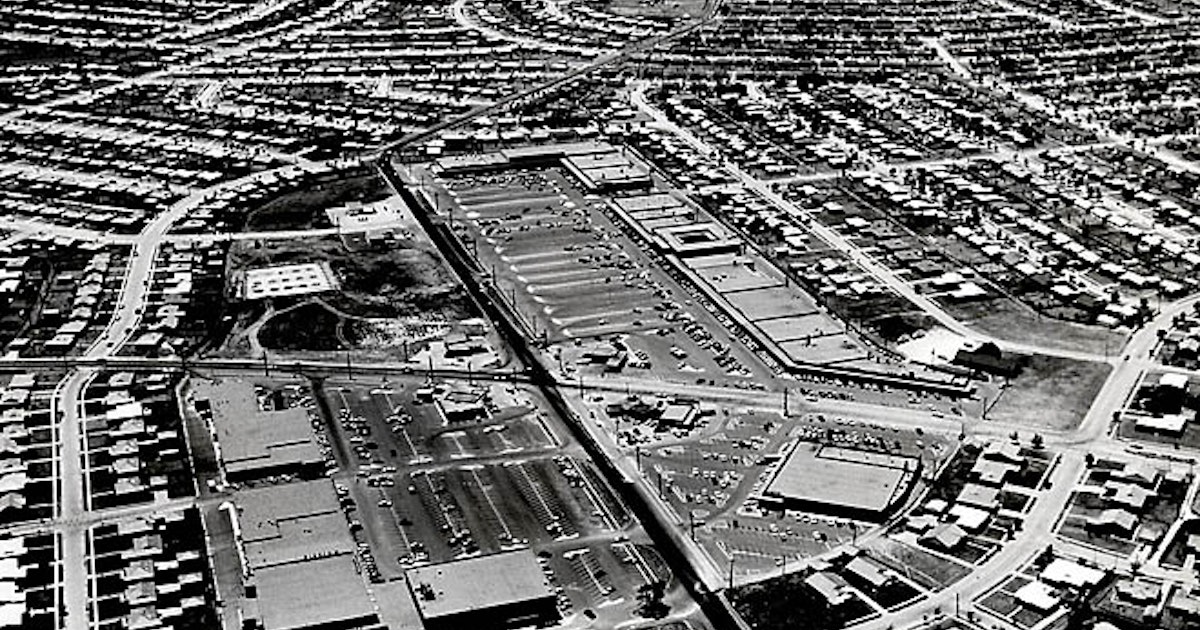
Caption from the Dallas Morning News blogs:  This aerial photo shows the Casa View shopping village and the surrounding area in 1957, three years after Bob Reitz moved into the neighborhood with his family at age 7. Reitz is presenting a talk titled

Caption from the Dallas Morning News blogs: This aerial photo shows the Casa View shopping village and the surrounding area in 1957, three years after Bob Reitz moved into the neighborhood with his family at age 7. Reitz is presenting a talk titled “A Time We Once Shared” from 2 to 4 p.m. Saturday at Dallas’ White Rock Hills Branch Library. File 1957 / Staff Photo

Steve Blow writes columns for the local section of the Dallas Morning News Wednesday he featured one of our veteran Scouters from Wisdom Trail District here in the southwest corner of Dallas County.

Dallas and Scout historian Bob Reitz - Photo by Ed Darrell

Dallas and Scout historian Bob Reitz

Bob Reitz is also the curator of the Jack Harbin Boy Scout Museum at Camp Wisdom, a surprisingly great store of Scout history.  Among many other things he does well, Bob is a historian of great stories.

This afternoon, May 10, he’s telling stories of Dallas in his growing up years in the “middle-middle class” neighborhood of Casa View, east of downtown.  Bob’s got two hours (it will seem like one or less) at the White Rock Hills Branch Library, starting at 2:00 p.m. (9150 Ferguson Rd, 75228 (map))

You ought to go.

Below the fold, Steve Blow’s column, should it disappear from the DMN site.

Read the rest of this entry »


Feynman Day comes Sunday; celebrate with your mother, and fly the flag!

May 9, 2014

No, we’re not joking.

May 11 is the anniversary of the birth of Richard Feynman (born 1918, died 1988).

Richard Feynman

Richard Feynman. Borrowed from Luciano’s Tumblr, LikeaPhysicist

In 2014, his birthday falls on Sunday, Mothers Day.  Mothers Day is one of the designated-by-law days to fly the U.S. flag — so fly your flag!  You can tell your mother it’s for her — but it’s also for Richard Feynman.

Why Feynman Day?  To celebrate invention, physics, interesting characters, and that essential, American quality of je ne sais quoi.

In addition to his winning the Nobel Prize for Quantum Electrodynamics (QED), Feynman popularized the critique of science and other enterprises with what we now call Cargo Cult science, or education, or whatever, where people follow the dance steps, but without the rhythm and music.

Those two things alone would make him a remarkable man.  But, like a product offered for $19.95 as a good buy in a 2:00 a.m. infomercial, with Feynman, there’s more.  With Feynman, there is always more.

I got alerted to Feynman in the first days of the old Quality Paperback Book Club, when they featured his new memoir, Surely You’re Joking, Mr. Feynman!  QPBC was hot on the book, and with a title like that, how could I resist?  When I got the book a week or so later, I read it within two days, while attending law school and working full time.  I remember Feynman.

Norton published the book — and their description, alone, should make you want to read it:

A New York Times bestseller—the outrageous exploits of one of this century’s greatest scientific minds and a legendary American original.

In this phenomenal national bestseller, the Nobel Prize­-winning physicist Richard P. Feynman recounts in his inimitable voice his adventures trading ideas on atomic physics with Einstein and Bohr and ideas on gambling with Nick the Greek, painting a naked female toreador, accompanying a ballet on his bongo drums and much else of an eyebrow-raising and hilarious nature.

All true, and that’s not even the half of the outrageousness, all done with great good humor, about a life lived in great good humor through what should have been a memorable age, but often was just terrifying.

I think sometimes that Feynman’s calm, alone, borne of that great good humor and insatiable curiosity,  may have gotten us through the birth of the atomic age and the Cold War.

Feynman was a giant, and we don’t revere him enough.  Consider:

  • Feynman’s high school sweetheart, Arlene, came down with tuberculosis.  He married her, and took her with him to New Mexico to make the atom bombs.  The stories of her confinement to a hospital, and the laborious trekking he had to make between Los Alamos and her bedside in Santa Fe, are touching, and heartbreaking.  It is one of the great love stories of the 20th century, certainly, and perhaps for all time.  It also provided the title for his second memoir, What Do You Care What Other People Think?
  • Every single, college-age man should read Feynman’s stories of how to date, and how to seduce women.  His approach was unique, and endeared him to women — in legend, to many women.  Feynman’s dating must have been part of the inspiration for the comedy series, “Big Bang Theory.”  Feynman’s stories are better.  (Heck, it’s even the subject of a popular, classic XKCD comic — probably only Feynman and Einstein among Nobel-winning physicists have made so much money for so many cartoonists.)
US postage stamp featuring Richard Feynman

US postage stamp featuring Richard Feynman

  • Yeah, he’s already been featured on a postage stamp, see at right.  That’s not good enough for Feynman, though — the U.S. Postal Service created a special cancellation stamp for Feynman, featuring a version of his Feynman Diagrams.

    A special postal cancel was authorized by the USPS (United States Postal Service) to honor the 80th birthday of Richard Feynman. This cancel was used in Lake Worth, Florida. For this special day the post office was renamed “Feynman Station.”

    Feynman Commemorative Cancel Feynman Diagram

    The Feynman Diagram used for the postal cancel on this envelope depicts what is known as a “bubble process.” It shows a high energy particle, for example, a cosmic ray (a) from a distant supernova, which emits a high energy photon, for example, a gamma ray (b). The photon, in turn, creates a particle (c) and an anti-particle (d) that exists for a brief moment and then recombines.

    As Feynman liked to point out, an anti-particle is the same thing as a particle with negative energy traveling backward in time (which is why the arrow at (d) points backwards, i.e. to the left). So you could say the photon created only one particle that, at first, traveled forward in time (the bottom semi-circle) and then reversed and went back in time (the top semi-circle) and annihilated itself! By inventing diagrams like this, Richard Feynman made it much easier to understand what is going on in the interactions between sub-atomic particles without getting lost in tremendous amounts of tedious math

  • Working at Los Alamos on the Manhattan Project, Feynman developed a keen appreciation for bureaucracy and all its follies.  His vexations for the security managers are also legendary.  Here’s a quick version of one story — he asked friends and family to write to him in code, but to not include a key to the code, so he’d have to crack the code to read the letter.  Feynman could do it, but the security people couldn’t.  Hilarity ensued.
  • Feynman developed a love for the still-relatively unknown, landlocked Asian nation of Tannu Tuva.  It’s just the sort of place to appeal to a character like Feynman — so obscure most atlases didn’t, and don’t, show it at all — seemingly consumed by the Soviet Union, but held in a special status.  Home of throat singing — and almost impossible to get to.  During the Cold War, Feynman struck up correspondence with people in Tuva, to the concern of Soviet and American intelligence agencies, who seemed not to understand someone might do such thing out of curiosity.  Feynman hoped to travel there to visit new friends, but his final bouts of cancer took him before it was possible.  Tuva, famous among philatelists only, perhaps, honored Feynman with postage stamps and postcards.
  • Just try to find a photo of Feynman not smiling. The man was a joy to be around, for most people, most of the time.
  • Quantum electro dynamics?  No, I can’t explain it, either — but his work had a lot to do with how particles wobble.  I remember that because, according to Feynman, he got the inspiration for the work for which he won the Nobel while spinning plates, like a Chinese acrobat on the Ed Sullivan Show, to the delight of students in the Cornell University cafeteria, and the shock and horror of the food service people.  Who else has yet confessed to such an inspiration for a Nobel?

There’s more — a lot more.  Feynman outlined our current generation of computer memory devices — in 1959.  No, he didn’t patent the idea.  He did patent an idea for a nuclear-powered spacecraft.  Another delightful story.

Feynman in an Apple ad

Feynman was featured in print and broadcast ads for Apple — not one, but two (did anyone else get that honor from Apple?). “Think Different.” This is one of Apple Computer’s most successful advertising campaigns. The theme of the campaign is one that celebrates figures in history who changed the world by thinking differently. Richard Feynman was among the chosen figures.

Feynman served on the board that approved science books for the California school system — his stories of that work will shock some, but it will make others shake their heads as they recognize the current crop of cargo-cultists and political bullies who dominate textbook approval processes, knowing nothing at all about what they are doing, or why.

No, I didn’t forget his brilliant work on the commission that studied the Challenger disaster, for NASA. There’s so much stuff to glorify!

In history, Feynman should be remembered much as we remember Thomas Jefferson, as a renaissance man in his time, a man who put great intellect to great work for his nation and all humanity.

Feynman's second Apple ad

The second Apple ad featuring Richard Feynman. An excerpt from Apple Computer’s campaign commercial: “Here’s to the crazy ones, the misfits, the rebels, the troublemakers, the round pegs in the square holes, the ones who see things differently. They’re not fond of rules and they have no respect for the status quo. You can quote them, disagree with them, glorify or vilify them… about the only thing you can’t do is ignore them, because they change things, they push the human race forward; and while some may see them as the crazy ones, we see genius, because the people who are crazy enough to think they can change the world are the ones who do.”

The sages say we shouldn’t have regrets, but I do have one.  When the Challenger Commission was meeting in Washington, D.C., I was working on another commission up the street.  I knew Feynman was ill, but our work was important, and we’d heard his disease was in remission.  I didn’t goof off a day and go to any of the hearings to see him, to get an autograph, to meet the man.  I though I’d have other opportunities to do that.  Now I regret not having met him in person.

In print, and in film, I know him well.  In our family, reading Feynman is something everybody does.  Feynman’s memoir was one of the last books I read to our son, Kenny, as he was growing up, and growing into reading on his own.  Even reading about Feynman, together, was an adventure.  Our son, James, took us into the real physics of Feynman, and though I struggle with it more than James, we still read Feynman, for humor, and physics.

What would be appropriate ways to mark Feynman’s birth?  At some future date, I hope we’ll have public readings of his books, showings of the documentaries about him, recreations of his lectures, perhaps.  And then everyone can get in a circle, beating drums and singing about getting some orange juice, before sending postcards to our friends in Tuva.

Richard Feynman, we still need you, and miss you dearly.

Tannu Tuva

Tuva’s capital is the delightfully-named Kyzyl. From this map, can you figure out where Tuva is, or how to get there — without Google, or Bing?

Tuva postcard honoring Richard Feynman

Tuva postcard, in honor of Richard Feynman — who loved to drum.

There will always be “More” about Richard Feynman, if we’re lucky:

Have a great Feynman Day!

Much of this is an encore post.


Insta-Millard: Department of Interior’s quick take on climate change report

May 9, 2014

Department of Interior’s video this week leads with climate change — and in fact, each segment deals with climate change in some way.

Published on May 9, 2014

This week: the White House releases the third annual National Climate Assessment, showing that climate change is already affecting Americans and the U.S. economy; USGS releases a Climate Change Viewer that can track water resource changes at the county, state, and watershed level; Secretary Jewell joins California leaders and first responders as the state braces for another tough wildfire season; the Secretary meets with community leaders and experts to talk about the balance between conservation and smart development; the Secretary announces the approval of a new solar energy project on tribal lands in Nevada, and attends the 69th Departmental Honor Awards Convocation in Washington, DC.


Insta-Millard: “Not available on the App Store” — real child’s play

May 9, 2014

Found on Twitter:

Deep thoughts on Twitter, about children, childhood, recess and play. https://twitter.com/IntThings/status/464766923201576960

Deep thoughts on Twitter, about children, childhood, recess and play. https://twitter.com/IntThings/status/464766923201576960


Insta-Millard: The vultures in Detroit’s bankruptcy

May 9, 2014

Maybe there’s a John Waters movie in the story.

From Metrotimes, the alternative weekly paper in Detroit:

Jerry Vile strikes again. The artist (and volunteers) stuck about 100 plastic lawn flamingos painted to look like vultures — one can imagine Vile lovingly glueing on the feathers — on the front lawn of the Detroit Institute of Arts. A banner was also erected, reading “Happy Bankruptcy: You’re Getting Flocked! Vultures by the Scads, LLC.”

It’s Vile’s latest prank that targets Detroit’s bankruptcy and the threat of selling the DIA’s artwork to appease “creditor vultures.” Within the past year the artist has put out an ad for Detroit’s liquidation in Metro Times, rolled out an oversized can of Crisco in front of the Joe Louis fist, and  placed price tags on public art throughout the city.

The only statement the artist has made so far about the vultures is a post on his Facebook page that says, “Sssssshhhhhhhh. Can’t wait to get a look at Beal’s face when he pulls up to work tomorrow.”

Negotiations are ongoing in regard to an $816 million so-called “grand bargain” — funded by numerous foundations, the state, and the DIA itself — that would spin the DIA into a new nonprofit and prevent the sale of any city-owned art. Meanwhile, Lansing is setting up a board that could oversee Detroit’s pensions and finances for 20 years, and also potentially appropriate $194.8 million from the state’s rainy day fund toward Detroit’s bankruptcy.

Plastic vultures on the lawn of the Detroit Institute of Arts - Metrotimes photo

Plastic vultures on the lawn of the Detroit Institute of Arts – Metrotimes photo


We are poorer because Farley Mowat is dead

May 9, 2014

Farley Mowat died May 7.  He was 92.

The man was such a champion of the environment that he was, at one time in the 1980s, prevented from traveling to the U.S., because he was listed with Immigration as a potential terrorist.  He may be the only person so listed, simply for urging that we stop killing animals.

Mowat was unsurpassed as a pure curmudgeon in favor of the wild, wild animals, wilderness, and environmental protection.  He was a story teller above all, understanding completely the powerful role that stories play in moving government policies — which his books frequently did.  His first works, on indigenous peoples in Canada’s far north, wrought significant changes in Canada’s policies towards those now known as First Nations.  When his signature book, Never Cry Wolf, was translated into Russian, Russia prohibited hunting wolves.

Victim of virus arcticus, Farley Mowat, probably in the 1970s; image from Econet.ca

Victim of virus arcticus, Farley Mowat, probably in the 1970s; image from Econet.ca

From the Washington Post obit notice:

“I keep my optimism alive and revitalized by accepting the fact that we are a bad species, and probably haven’t got much time here,” he told The Washington Post in 1994, “and it’s not going to break my heart when Homo sap wanders offstage.”

Then he added, “Wanna get some more coffee?”

Barry Goldwater might say that extremism in pursuit of noble conservation is no vice.  Mowat wouldn’t care what Goldwater thought.

So long, Farley Mowat.

More:


Quote goof of the moment: Tom Paine didn’t say that; Edward Abbey did.

May 7, 2014

Oy.  You’d hope that the Rabid Right would learn after a few dozen of these errors that they should try to verify stuff before they claim events of history, or sayings of famous people are gospel — especially stuff involving our patriotic founders.

But, no.

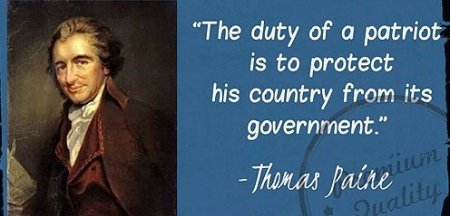
Sometimes their failure to check sources can produce amusement, though, like this one which they misattribute to Tom Paine in propaganda supporting rent scofflaw Cliven Bundy and other land management issues:

Tom Paine didn't say that. Ed Abbey said it.

Tom Paine didn’t say that. Ed Abbey said it.

“The duty of a patriot is to protect his country from its government.”

Someone mildly familiar with Tom Paine and his life and other writings might suspect the supposed attribution from the start.  Paine was a great advocate of governments to protect the rights of citizens, especially citizens like him, who were often on the outs with popular opinion and avoided the Guillotine in France and mob violence in the U.S. only through interventions of government officials who told mobs the law did not cotton their wishes to see violence on Mr. Paine.

Wikiquote notes Paine didn’t say it.  A simple check would have found that.

But other sites claim it was written by Edward Abbey, the author of Desert Solitaire and The Monkeywrench Gang.

“A patriot must always be ready to defend his country against his government.”

— Edward Abbey, A Voice Crying in the Wilderness (Vox Clamantis en Deserto) : Notes from a Secret Journal (1990) ISBN 0312064888

Why is that delicious?

The quote — the image above, for example — is being used by pro-militia groups who have defended Cliven Bundy’s trespassing on public lands in Nevada, and by Texans who, upset that they don’t have such a good target as massive Bureau of Land Management (BLM) holdings in Texas, have ginned up a faux controversy, claiming falsely that BLM is seeking to seize lands in Texas.

Edward Abbey?  He didn’t much like BLM, and he was particularly ticked off at the Bureau of Reclamation and the imposition of Glen Canyon Dam on the Colorado River with the drowning of Glen Canyon.  Abbey’s disdain of federal land managers and grand dam schemes may have been exceeded only by his contempt for developers, miners and ranchers who took advantage of the desert for profit.

Would Abbey have supported Bundy’s overgrazing on public lands, or Texas Republicans scrambling to make a false issue to mismanage lands?  Oy.  Oy.  And oy.

See this brilliant poster at Americans Who Tell The Truth:

From Americans who Tell the Truth, Edward Abbey.

From Americans who Tell the Truth, Edward Abbey. Writer, ‘Desert Anarchist’ : 1927 – 1989 “The most common form of terrorism in the U.S.A. is that carried on by bulldozers and chainsaws. It is not enough to understand the natural world; the point is to defend and preserve it. Sentiment without action is the ruin of the soul.”

Wall of Fame (people and sites who got the cite right):

Wall of Shame (people and sites who got the cite wrong):

Save


Insta-Millard: Resuscitating Liberty after climate change hit

May 7, 2014

http://twitter.com/2NewEarth/status/464074434576654336

Read the rest of this entry »