Reflections in a window on the wild

January 29, 2014

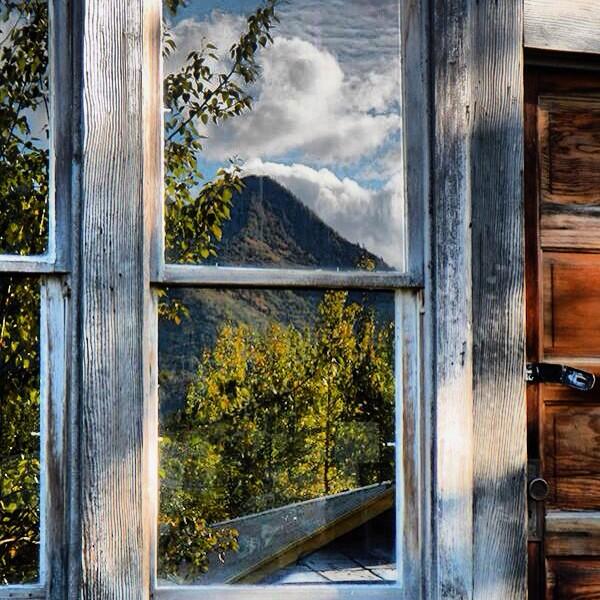
From the U.S. Department of Interior: Really cool reflection photo from America's largest national park: @WrangellStENPS in #Alaska. pic.twitter.com/WHUYkgJNTH

From the U.S. Department of Interior: Really cool reflection photo from America’s largest national park: @WrangellStENPS in #Alaska. pic.twitter.com/WHUYkgJNTH

Wrangell-St. Elias is our largest National Park? At 20,587 square miles, it’s about 80% as large as West Virginia, and larger than nine other states.

Just the facts:

Wrangell–St. Elias National Park and Preserve is a United States national park and national preserve managed by the National Park Service in south central Alaska. The park and preserve was established in 1980 by the Alaska National Interest Lands Conservation Act.[3] This protected area is included in an International Biosphere Reserve and is part of the Kluane/Wrangell-St. Elias/Glacier Bay/Tatshenshini-Alsek UNESCO World Heritage Site. The park and preserve form the largest area managed by the National Park Service in the United States by area with a total of 13,175,799 acres (20,587.19 sq mi; 53,320.57 km2). The park includes a large portion of the Saint Elias Mountains, which include most of the highest peaks in the United States and Canada, yet are within 10 miles (16 km) of tidewater, one of the highest reliefs in the world. Wrangell-St. Elias borders on Canada’s Kluane National Park and Reserve to the east and approaches the U.S. Glacier Bay National Park to the south. The chief distinction between park and preserve lands is that sport hunting is prohibited in the park and permitted in the preserve. In addition, 9,078,675 acres (3,674,009 ha) of the park are designated as the largest single wilderness in the United States.

Wrangell-St. Elias National Monument was initially designated on December 1, 1978 by President Jimmy Carter using the Antiquities Act, pending final legislation to resolve the allotment of public lands in Alaska. Establishment as a national park and preserve followed the passage of the Alaska National Interest Lands Conservation Act in 1980. The park, which is bigger than the nation of Switzerland, has long, extremely cold winters and a short summer season. It supports a variety of large mammals in an environment defined by relative land elevation. Plate tectonics are responsible for the uplift of the mountain ranges that cross the park. The park’s extreme high point is Mount St. Elias at 18,008 feet (5,489 m), the second tallest mountain in both the United States and Canada. The park has been shaped by the competing forces of volcanism and glaciation. Mount Wrangell is an active volcano, one of several volcanoes in the western Wrangell Mountains. In the St. Elias Range Mount Churchill has erupted explosively within the past 2000 years. The park’s glacial features include Malaspina Glacier, the largest piedmont glacier in North America, Hubbard Glacier, the longest tidewater glacier in Alaska, and Nabesna Glacier, the world’s longest valley glacier. The Bagley Icefield covers much of the park’s interior, which includes 60% of the permanently ice-covered terrain in Alaska. At the center of the park, the boomtown of Kennecott exploited one of the world’s richest deposits of copper from 1903 to 1938, exposed by and in part incorporated into Kennicott Glacier. The mine buildings and mills, now abandoned, compose a National Historic Landmark district.

More:


Photograph, or painting of Paris?

January 17, 2014

And from what was this shot, if it’s a photo?

With everyone else,

I love
Paris in the
the springtime!

But I wonder what brain bending goes on in this image.  From Fascinating Pics:

Paris at Sunset, France pic.twitter.com/QnhtkUPKLn - Fascinating Pics

Paris at Sunset, France pic.twitter.com/QnhtkUPKLn Photo by Coolbiere.

What do you think? Painting?  Photo?  Manipulated photo?

Update: J.A. Higginbotham tracked down the original Flickr photo, by a Coolbiere.  Nikon D-800, 70-200 zoom telephoto, at 122mm; claims to have taken it from Mount Parnasse. Luck and preparedness.  Wow.


Insta-Millard, photography and astronomy edition: South DakotaHenge

December 23, 2013

How much image manipulation, if any, was necessary to capture this enormous-looking Moon rising over a South Dakota “road to nowhere,” close to the 2013 Winter Solstice?

From @GlobePics:

From @GlobePics: “Road To Nowhere – Supermoon” – Supermoon rises over this road to nowhere in eastern South Dakota. pic.twitter.com/82AoFgPvWn

Who should get credit for the photo?  (I can’t quite read the name in the lower left corner.)

Buy a print here, from the photographer, Aaron J. Groen.

More:


Who is Tim Pangos?

December 19, 2013

Ha. I am amused at people so anxious to take material from this blog, or complain about something I’ve written, that they can’t be bothered to look around for names of the blog, or author, or otherwise look for proper attribution.

I’ve been called “Tim Panogos” several times, “Tim Pagonos” a few.  I’ve had a few zombies from Santayana’s nightmares insist on calling me Millard.

This is to note that the humor will continue:  Now my photos are credited to “Tim Pangos.”  To be sure, it’s posted by LatinaMom.  Happy to be able to hold on to multicultural appeal.

Here's my photo, as featured at

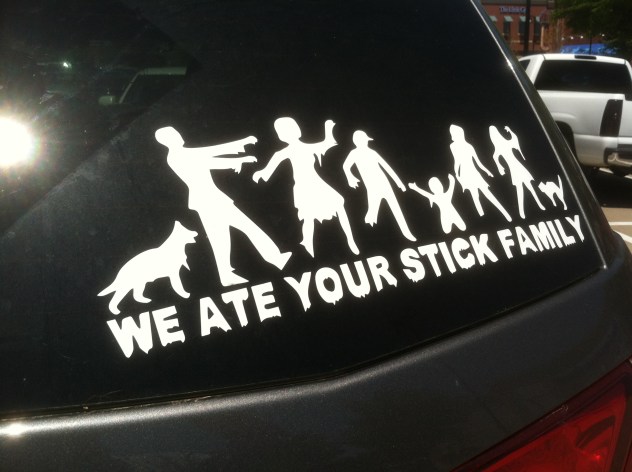
Here’s my photo, as featured at “Funny Bumperstickers” by Latina Mom. ” Zombies. They’ll get you every time. Image via Tim Pangos.  Photo and original post by Ed Darrell at Millard Fillmore’s Bathtub — use of photos encouraged, with attribution.  This photo from my iPhone, by the way.

For the record, the URL of this blog features the name of that great Utah landmark, Mount Timpanogos.  I do not intentionally use the pseudonyms “Tim Panagos,” “Tim Pangos,” nor any other derivative from the mountain’s moniker.


There’s a Milky Way in Australia?

November 26, 2013

Yes, but it’s upside down, right?

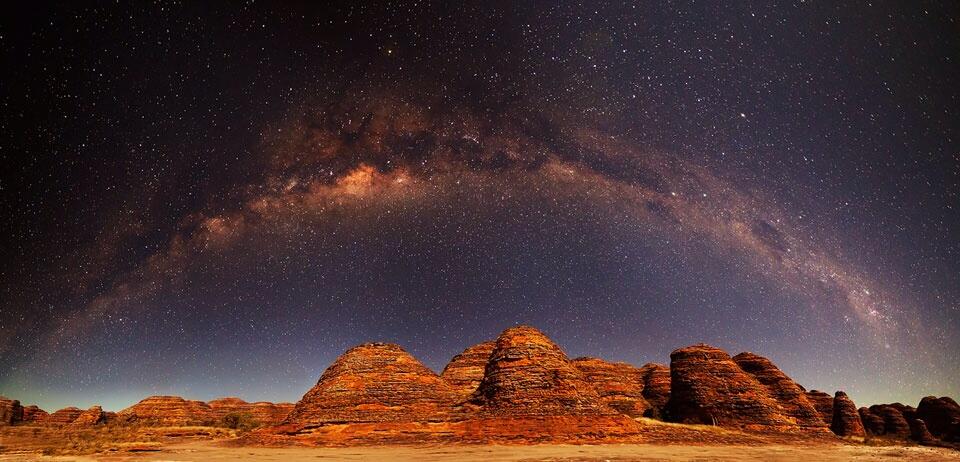
Meredith Frost Tweeted: Great shot of the Milky Way over Western Australia (Photo/Mike Salway) An Astronomy Picture of the DayMeredith Frost Tweeted: Great shot of the Milky Way over Western Australia (Photo/Mike Salway) An Astronomy Picture of the Day

Meredith Frost Tweeted: Great shot of the Milky Way over Western Australia (Photo/Mike Salway) An Astronomy Picture of the Day

Turns out this was the Astronomy Picture of the Day back in September 2012.  NASA said:

Milky Way Over the Bungle Bungles
Image Credit & Copyright: Mike Salway Explanation: Which part of this picture do you find more interesting — the land or the sky? Advocates for the land might cite the beauty of the ancient domes of the Bungle Bungle Range in Western Australia. These picturesque domes appear as huge layered beehives and are made of sandstones and conglomerates deposited over 350 million years ago. Advocates for the sky might laud the beauty of the Milky Way’s central band shown arching from horizon to horizon. The photogenic Milky Way band formed over 10 billion years ago and now includes many well-known nebulae and bright stars. Fortunately, you don’t have to decide and can enjoy both together in this beautiful 8-frame panorama taken from the dark skies of Purnululu National Park about two months ago.

Decide Anyway: Land or Sky

I’d make some remarks about silly names for land formations in Australia — but here we sit with The Grand Tetons, The Gros Ventre, and several dozen “Molly’s Nipples” in our nation.

But really:  Bungle-Bungles?

Ain’t geography grand? Ain’t nature grand? Ain’t NASA doing something right?

More:


NASA’s photo of the day the Earth smiled

November 13, 2013

NASA's caption:  On July 19, 2013, in an event celebrated the world over, NASA's Cassini spacecraft slipped into Saturn's shadow and turned to image the planet, seven of its moons, its inner rings -- and, in the background, our home planet, Earth. Image Credit:  NASA/JPL-Caltech/SSI

NASA’s caption: On July 19, 2013, in an event celebrated the world over, NASA’s Cassini spacecraft slipped into Saturn’s shadow and turned to image the planet, seven of its moons, its inner rings — and, in the background, our home planet, Earth. Image Credit: NASA/JPL-Caltech/SSI

It’s difficult to improve on NASA’s matter-of-fact explanations.

The Day the Earth Smiled

On July 19, 2013, in an event celebrated the world over, NASA’s Cassini spacecraft slipped into Saturn’s shadow and turned to image the planet, seven of its moons, its inner rings — and, in the background, our home planet, Earth.

With the sun’s powerful and potentially damaging rays eclipsed by Saturn itself, Cassini’s onboard cameras were able to take advantage of this unique viewing geometry. They acquired a panoramic mosaic of the Saturn system that allows scientists to see details in the rings and throughout the system as they are backlit by the sun. This mosaic is special as it marks the third time our home planet was imaged from the outer solar system; the second time it was imaged by Cassini from Saturn’s orbit; and the first time ever that inhabitants of Earth were made aware in advance that their photo would be taken from such a great distance.

With both Cassini’s wide-angle and narrow-angle cameras aimed at Saturn, Cassini was able to capture 323 images in just over four hours. This final mosaic uses 141 of those wide-angle images. Images taken using the red, green and blue spectral filters of the wide-angle camera were combined and mosaicked together to create this natural-color view. A brightened version with contrast and color enhanced, a version with just the planets annotated, and an unannotated version are also available.

This image spans about 404,880 miles (651,591 kilometers) across.

The outermost ring shown here is Saturn’s E ring, the core of which is situated about 149,000 miles (240,000  kilometers) from Saturn. The geysers erupting from the south polar terrain of the moon Enceladus supply the fine icy particles that comprise the E ring; diffraction by sunlight gives the ring its blue color. Enceladus (313 miles, or 504 kilometers, across) and the extended plume formed by its jets are visible, embedded in the E ring on the left side of the mosaic.

At the 12 o’clock position and a bit inward from the E ring lies the barely discernible ring created by the tiny, Cassini-discovered moon, Pallene (3 miles, or 4 kilometers, across). (For more on structures like Pallene’s ring, see PIA08328). The next narrow and easily seen ring inward is the G ring. Interior to the G ring, near the 11 o’clock position, one can barely see the more diffuse ring created by the co-orbital moons, Janus (111 miles, or 179 kilometers, across) and Epimetheus (70 miles, or 113 kilometers, across). Farther inward, we see the very bright F ring closely encircling the main rings of Saturn.

Following the outermost E ring counter-clockwise from Enceladus, the moon Tethys (662 miles, or 1,066 kilometers, across) appears as a large yellow orb just outside of the E ring. Tethys is positioned on the illuminated side of Saturn; its icy surface is shining brightly from yellow sunlight reflected by Saturn. Continuing to about the 2 o’clock position is a dark pixel just outside of the G ring; this dark pixel is Saturn’s Death Star moon, Mimas (246 miles, or 396 kilometers, across). Mimas appears, upon close inspection, as a very thin crescent because Cassini is looking mostly at its non-illuminated face.

The moons Prometheus, Pandora, Janus and Epimetheus are also visible in the mosaic near Saturn’s bright narrow F ring. Prometheus (53 miles, or 86 kilometers, across) is visible as a faint black dot just inside the F ring and at the 9 o’clock position. On the opposite side of the rings, just outside the F ring, Pandora (50 miles, or 81 kilometers, across) can be seen as a bright white dot. Pandora and Prometheus are shepherd moons and gravitational interactions between the ring and the moons keep the F ring narrowly confined. At the 11 o’clock position in between the F ring and the G ring, Janus (111 miles, or 179 kilometers, across) appears as a faint black dot. Janus and Prometheus are dark for the same reason Mimas is mostly dark: we are looking at their non-illuminated sides in this mosaic.  Midway between the F ring and the G ring, at about the 8 o’clock position, is a single bright pixel, Epimetheus. Looking more closely at Enceladus, Mimas and Tethys, especially in the brightened version of the mosaic, one can see these moons casting shadows through the E ring like a telephone pole might cast a shadow through a fog.

In the non-brightened version of the mosaic, one can see bright clumps of ring material orbiting within the Encke gap near the outer edge of the main rings and immediately to the lower left of the globe of Saturn. Also, in the dark B ring within the main rings, at the 9 o’clock position, one can see the faint outlines of two spoke features, first sighted by NASA’s Voyager spacecraft in the early 1980s and extensively studied by Cassini.

Finally, in the lower right of the mosaic, in between the bright blue E ring and the faint but defined G ring, is the pale blue dot of our planet, Earth. Look closely and you can see the moon protruding from the Earth’s lower right. (For a higher resolution view of the Earth and moon taken during this campaign, see PIA14949.) Earth’s twin, Venus, appears as a bright white dot in the upper left quadrant of the mosaic, also between the G and E rings.  Mars also appears as a faint red dot embedded in the outer edge of the E ring, above and to the left of Venus.

For ease of visibility, Earth, Venus, Mars, Enceladus, Epimetheus and Pandora were all brightened by a factor of eight and a half relative to Saturn. Tethys was brightened by a factor of four. In total, 809 background stars are visible and were brightened by a factor ranging from six, for the brightest stars, to 16, for the faintest. The faint outer rings (from the G ring to the E ring) were also brightened relative to the already bright main rings by factors ranging from two to eight, with the lower-phase-angle (and therefore fainter) regions of these rings brightened the most. The brightened version of the mosaic was further brightened and contrast-enhanced all over to accommodate print applications and a wide range of computer-screen viewing conditions.

Some ring features — such as full rings traced out by tiny moons — do not appear in this version of the mosaic because they require extreme computer enhancement, which would adversely affect the rest of the mosaic. This version was processed for balance and beauty.

This view looks toward the unlit side of the rings from about 17 degrees below the ring plane. Cassini was approximately 746,000 miles (1.2 million kilometers) from Saturn when the images in this mosaic were taken. Image scale on Saturn is about 45 miles (72 kilometers) per pixel.

This mosaic was made from pictures taken over a span of more than four hours while the planets, moons and stars were all moving relative to Cassini. Thus, due to spacecraft motion, these objects in the locations shown here were not in these specific places over the entire duration of the imaging campaign. Note also that Venus appears far from Earth, as does Mars, because they were on the opposite side of the sun from Earth.

The Cassini-Huygens mission is a cooperative project of NASA, the European Space Agency and the Italian Space Agency. NASA’s Jet Propulsion Laboratory, a division of the California Institute of Technology in Pasadena, manages the mission for NASA’s Science Mission Directorate, Washington, D.C. The Cassini orbiter and its two onboard cameras were designed, developed and assembled at JPL. The imaging operations center is based at the Space Science Institute in Boulder, Colo.

For more information about the Cassini-Huygens mission visit http://www.nasa.gov/cassini and http://saturn.jpl.nasa.gov .

Image credit: NASA/JPL-Caltech/SSI
Bigger image:

Cassini's view looking back from Saturn, on July 19, 2013, the day the Earth smiled. Click for much larger view.  NASA photo and annotations

Cassini’s view looking back from Saturn, on July 19, 2013, the day the Earth smiled. Click for much larger view. NASA photo and annotations

What do you think:  Tax money well spent?

More:


Moon, stars, Earth, all conspire to produce astonishing beauty in Hawaii

November 5, 2013

It’s a composite of 11 photographs to get the whole panoramic view — which just demonstrates that in photography it’s great to be lucky, but it usually takes great skill to get that amount of luck.

How much processing was involved, really?

Don’t worry, just check out the photo.

Double Moonbow, lava glow and fading Lunar Halo; 11-picture Panoramic taken on the rim of Kilauea's Caldera On the Last Super Moon. Sean King, Atmospheric Phenomena

Double Moonbow, lava glow and fading Lunar Halo; 11-picture Panoramic taken on the rim of Kilauea’s Caldera On the Last Super Moon. Sean King, Atmospheric Phenomena

See the Facebook page for Hawaii Stargazing Adventures.

Click thumbnail for a larger image.  Kilauea and double Moonbow - Sean King - 736169_10201694350153369_1176409460_o


If the photo didn’t exist, you wouldn’t believe it: Abraham Lincoln and Fidel Castro

October 11, 2013

This popped in over the Twitter transom yesterday:

http://twitter.com/HistoricalPics/status/388348900857622528

I don’t recall having seen the shot before. But Alex Selwyn-Holmes at Iconic Photographs posted a very complete story about the picture in 2009.

Fidel Castro at the Lincoln Memorial, 1959. Photo by Alfredo Korda. Korda titled the photo "David and Goliath."

Fidel Castro at the Lincoln Memorial, 1959. Photo by Alfredo Korda. Korda titled the photo “David and Goliath.”

Between April 15 and April 26 1959–a few months after he took power in Cuba–Fidel Castro went to the United States, invited by the American Society of Newspaper Editors. In one of those forgotten episodes of the Cold War, Castro went to the US for loans. Castro hired one of the best public relations firms to present his new government. Castro answered impertinent questions jokingly and ate hot dogs and hamburgers. His rumpled fatigues and scruffy beard cut a popular figure easily promoted as an authentic hero.

Read the whole story at Iconic Photographs.

In 1959, Castro’s forces had recently ousted Cuban president (and dictator) Gen. Fulgencio Batista.  Under Batista Cuba was very much a playground for America’s rich, and a steady supply of cheap sugar and good cigars.  In the musical play and movie, “Guys and Dolls,” the character Sky Masterson gets a date with a Salvation Army-style preacher woman, to win a bet.  When she finally consents (after he offers to fill her mission hall with reprobates in need of salvation), she asks what time she should be ready for dinner.  “Noon,” Masterson replies.  They are to fly from New York to Cuba for dinner, and return by the next morning.  Cuba’s reputation as hangout for American mobsters came honestly.  (“Guys and Dolls” opened on Broadway in 1950, and the movie hit theaters in 1955. That was the heyday of the Douglas DC-6, which is what a gambler probably would have flown from New York to Havana at that time, flying in to what is now Jose Marti International Airport.)

In contrast to the playboy mobsters, Cuban people tended to lead very bleak lives.  Sugar and tobacco farming did not make Cubans rich; processing of sugar was done by large international corporations.  Cuban cigars, recognized for quality, tended to be cheap, and tobacco farmers and cigar makers employed thousands of underpaid Cubans.  Cuba’s Havana nightlife seemed reserved for the wealthy, which usually meant foreign tourists, and not Cubans.

Castro’s revolution succeeded partly because of that rift, and Castro promised to turn things around for the masses of Cuban people (promises yet unkept).

For 11 days in 1959, Fidel Castro fascinated the U.S.  He spoke to the Council on Foreign Relations in New York, and to the American Society of Newspaper Editors. (His UN speech and famous hotel stay, in which he plucked and cooked chickens in his New York Hotel room, came the next year).  Castro ate hot dogs, and laid a wreath in the tomb of George Washington. At one point Castro was introduced in the audience of the “Ed Sullivan Show” as “the George Washington of Cuba” (this trip?)  But in Washington, Castro ran into Richard Nixon’s anti-Communist paranoia when seeking aid from the Eisenhower administration.  Without help from the U.S., Castro took offers of assistance from the Soviet Union who were anxious to have a friend and ally in the Americas, close to United States territorial waters.

Would Castro have cozied to the U.S. instead of the U.S.S.R., had the U.S. offered aid.  Most  historians think Castro’s communist path was already set when he visited the U.S.

This photo makes one wonder.  Certainly it was good public relations, for Castro to be seen paying homage to Abraham Lincoln.  Was it more than just a propaganda photo?

It’s a fascinating photo.

What do you think?

More:


Two presidents, a study in blue

September 27, 2013

Pete Souza photo - Pres Obama talks backstage with Pres Clinton as Hillary Clinton waits to be introduced at CGI event 9-24-2013

White House photographer Pete Souza: ‏@petesouza 24 Sep Pres Obama talks backstage with Pres Clinton as Hillary Clinton waits to be introduced at CGI [Clinton Global Initiative] event today [September 24, 2013] pic.twitter.com/TCYqyxMZa8

Pete Souza’s work as White House photographer continues to fascinate me.  He’s got more opportunity than most of us have to get great shots — but he’s also got a keen eye for a good story-telling photo, and a good eye for great photo composition on the fly.

In this photo, Souza captures two presidents lost in conversation, bathed in blue stage lights, awaiting their time on the stage; but next up is Hillary Clinton, who will introduce them.  Mrs. Clinton awaits her cue.  The presidents met at the annual meetings for the Clinton Global Initiative.

Hold on to this photo; depending on events of 2016, it may yet have many more stories to tell.


Everglades National Park!

September 26, 2013

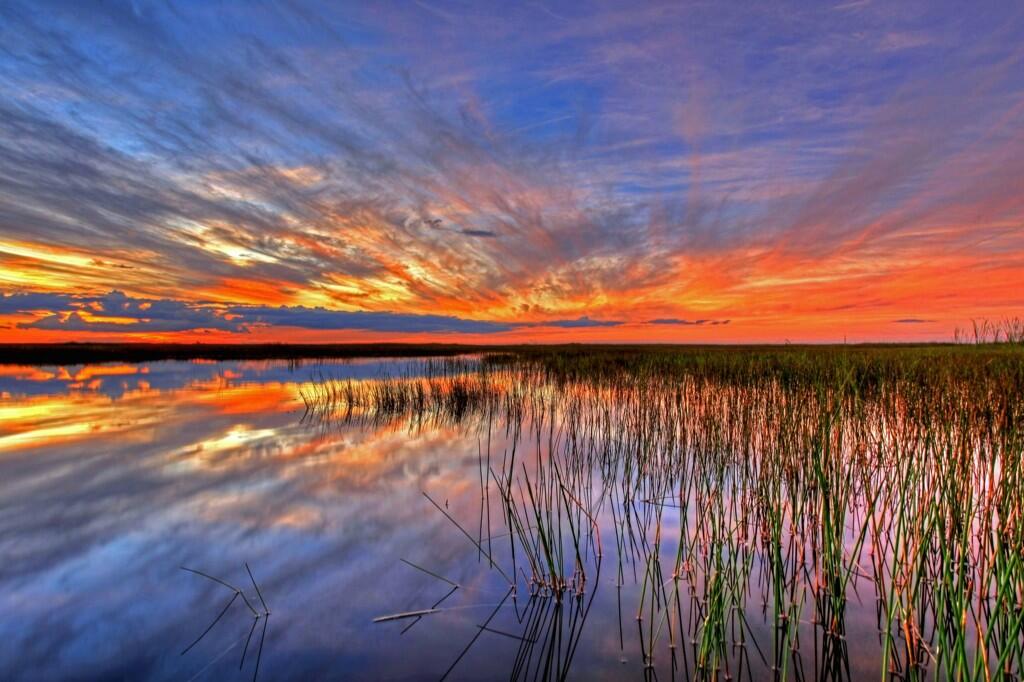
Sunset at Everglades National Park

Caption from Interior’s Tweet: Sometimes there are no words to describe America’s public lands. This photo @EvergladesNPS proves it. #Florida pic.twitter.com/3l7fnrcfsG

Everglades National Park, in Florida, is a great example of wild lands that belong to all Americans, that we almost let slip away.

I’m not sure a painter could do a more stunning version of this view.

More:

LocMap Everglades National Park

Location map: Everglades National Park in red. Wikipedia photo


Abrams Falls, Great Smoky Mountains National Park

September 19, 2013

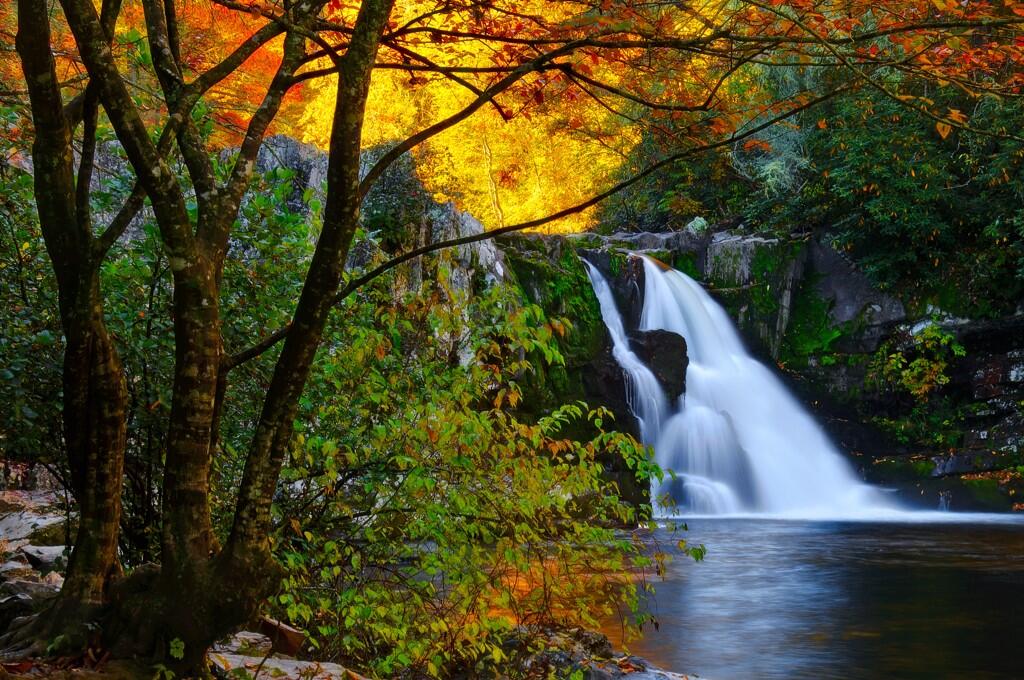
Department of Interior Tweet: It doesn't get much prettier than this. Abrams Falls in Great Smoky Mountains National Park. #Tennessee pic.twitter.com/S5dQgcffEZ

US Dept of Interior ‏@Interior 16 Sep Department of Interior Tweet: It doesn’t get much prettier than this. Abrams Falls in Great Smoky Mountains National Park. #Tennessee pic.twitter.com/S5dQgcffEZ

There’s great beauty in many of the units of the U.S. National Park Service.  The Great Smoky Mountains National Park, one of the “crown jewels” of the Park System, has a few spots of beauty of its own.

Great Smoky Mountains National Park, Abrams Falls,

More:


We remember

September 11, 2013

Stunning photo of a snowy owl, taken by Frank K. Schleicher (who holds the copyright), and shared by the Hawk Mountain Sanctuary Association.

Most stunning in the photograph:  Look behind the owl.

Photo of snowy owl, looking across New York Harbor, by Frank K. Schleicher

Photo of snowy owl, looking across New York Harbor, by Frank K. Schleicher


Electricity in the air, times 2

September 1, 2013

Spectacular photo of Glen Canyon Dam, in the early morning, with a thunderstorm to the north.  This photo was taken close to the spot where Norman Rockwell painted the dam about 40 years ago.

 Electricity is in the air at Glen Canyon! Although the Glen Canyon Dam produces hydroelectric power around the clock, an early morning thunderstorm really cranked up the voltage earlier this month. Use caution when planning your upcoming outdoor activities as intense thunderstorms are common this time of year. (Photo Credit: David Bailey)

Electricity is in the air at Glen Canyon! Although the Glen Canyon Dam produces hydroelectric power around the clock, an early morning thunderstorm really cranked up the voltage earlier this month. Use caution when planning your upcoming outdoor activities as intense thunderstorms are common this time of year. (Bureau of Reclamation/Interior Facebook entry; photo Credit: David Bailey)

More:

Norman Rockwell's tribute to the Glen Canyon Dam.  Bureau of Reclamation image

Norman Rockwell’s tribute to the Glen Canyon Dam. Bureau of Reclamation image


Just point your cameras to the skies and shoot: Lubbock on August 14

August 14, 2013

With all the cameras around, if everybody just points their own camera to the skies and starts shooting, we’ll get some good shots.

Tonight the Texas Storm Chasers sent this one out:

Storm over Lubbock, Texas, August 14, 2013 - photo by Texas Storm Chasers

Texas Storm Chasers ‏@TxStormChasers 27m RT @TaylorKLynn: @TxStormChasers Took these from my phone of the storm heading into northern Lubbock! pic.twitter.com/5LQX1qBWsN #txwx

Looks like “Night on Storm Prairie” to me. (Where’s Disney when you need em?)

Shot with a camera phone, I’m guessing from inside a hotel (are those reflections in the window?).  Not sure who shot it, so I’ve just credited “Texas Storm Chasers.”

Weather is cool.  Photos of weather are cool, too.

More:

Read the rest of this entry »


Gun nuts offensive, even in the unconscious subtext

August 14, 2013

Found this on Facebook, a poster designed to be clever:

Facebook poster, from National Gunrights.org

Facebook poster, from National Gunrights.org, featuring guerrilla fighters from the Second Boer War

I like people who use history and historical photographs to inform modern issue debates well.  But I worry sometimes about the subtexts when people use these photos.

For example, who are these guys?  Were they Pinkerton Detectives hired to shoot iron workers at Andrew Carnegie‘s Homestead, Pennsylvania, steel works?  Hatfields, or McCoys?  The deputy sheriffs in Cheyenne, Wyoming, looking out for Butch Cassidy and the Hole in the Wall Gang?  Is it Butch and the gang?  Are these crazed killers, sporting men, officers of the law, or what?

One hopes it’s not a lynch mob from Kansas, or Georgia, or Texas . . .  When the photo’s subjects are unidentified, we might wonder what is the message intended by showing these people; use of the photo implies endorsement, especially absent any disclaimer.  Oh, yeah, it’s quite likely that the person who put the photo up was wholly ignorant of historical context.  But that’s another form of ignorance promotion.  Looking at the list of possibilities I came up with, you can see why I wouldn’t want to promulgate an image that offers endorsement of murderers, thugs, thieves or racists or any combination of that list.

TinEye.com turned up 49 uses across the internet (there may be more, just out of TinEye’s view). Using those links, I’ve learned that the photo is of some unnamed Boer guerrilla fighters in the Second Boer War, circa 1899.  Well, there is this wag claiming the photo may be of George Sydenham Clarke.  He’s in the minority.

Would you want these guys representing your political views?  Any of these guys among those who tried to kill Winston Churchill?  Do they want that in their legacy?

I’m pretty sure I don’t want Boer guerrilla fighters representing my views; they were racist (not that the British were any better), they were crude, and they often tended to let bullets speak for them when words would have worked and been much better for all concerned. 

One might wonder what message the group, NationalGunrights.org, intended.

In the screenplay for the great movie, “Butch Cassidy and the Sundance Kid,” the great William Goldman wrote Butch Cassidy wondering at the collection of hired assassins the railroads sent after him and his gang:  “Who are those guys,” Butch said, several times.

It’s an apt question here.  Who are those guys?  Why would anyone want them representing them?

(And, historically, I wonder whether anyone knows the names of any of these five men; I haven’t found any identification).

More: