Friday Photo: Washington Monument from the top down

October 26, 2012

U.S. Department of Interior, on Instagram:

http://distilleryimage8.instagram.com/7ca1151c1eea11e2957722000a1f9a39_7.jpg

Interior’s Instagram caption: It’s not every day you see the #Washington #Monument from this angle. #dc #mall #bestofteday

For me, additional security in Washington, D.C., has stolen much of the fun, joy and awe of the Washington Monument — compounded by the damage from the 2011 Virginia earthquake.

Before September 2011, the Washington Monument was open until midnight in summer months.  Tourists head off for dinner and hotels at before 6:00 p.m. — the tourist lines disappear, and especially after 10:00 p.m. on most nights, one could, or one and the three or four visiting friends you had could, without waiting catch the elevator to the top for an absolutely matchless view of Washington D.C. at night.

Spy on the White House; spot the tourists dangling feet in the Reflecting Pool at the Lincoln Memorial; see the light in the Capitol Dome indicating Congress in session, and gloat that you were in recreational mode instead.  See a couple kissing on the steps of the Jefferson Memorial, thinking no one would see them.  Watch the arc of U.S. Airways airplanes coming down the Potomac River corridor, panicking anyone in the USA Today building who happened to look out and look down on an aircraft passing by, and almost hear the screams from the non-frequent DCA fliers as the plane banked sharply at low level to line up with the runway at National Airport (it will never be Reagan to true aviation buffs, who still miss the controllers who gave us confidence in that thrill ride).

For the Fourth of July, the National Park Service (NPS) used to conduct a lottery to select a tiny handful of professional photographers to shoot the fireworks, one of the best displays on Earth.  The fireworks shoot from near the Lincoln Memorial.  Does NPS do that any more?

Then walk down the stairway, past the hundreds of carved memorial stones, gifts of Americans who wished to honor George Washington by contributing some large, expensive rock to the interior of the obelisk rising Pharaoh-style out of the swamp near the Tidal Basin.  Notice the color line shift that marked the Know-Nothing Party control of the group building the monument — the original American Tea Party austerity group, who stopped construction for 20 years just to prove they could impose austerity on those ‘spendthrifts’ who wished to build a monument to a man, even without any public money, and even though they controlled the commission only from 1855 to 1858 (the Civil War intervened).

The Washington Monument, all 555 feet, 5 1/8 inches of it, is closed now.  When I visited last, in June, damage from the earthquake was still being assessed, and to protect the monument and the public, no access to the interior was allowed.  Around the base, the 50 U.S. flags still fly 24 hours each day; but the paths to the monument now have blockades to stop any unauthorized truck, perhaps laden with explosives, and the public benches sat empty where we used to meet small-town Americans awed by the thing, and foreign tourists in awe of America.

The caption from Interior begs more explanation.  Why don’t we see this view?  The Washington Mall — that expanse of grass and, now, museums between the U.S. Capitol on the east end and the Potomac-side Lincoln Memorial on the west — graces pilots’ air charts as a civilian no-fly zone.  After too many small-plane pilots gave the FAA fits, and somebody parked one on the lawn of the White House, FAA banned all flights over the mall, except by police or other official aircraft.  Pragmatically it’s the D.C. cops and Marine One helicopters who might be able to capture this view.

How did Interior get the shot?  The Instagram doesn’t explain. Perhaps it was part of the work to repair and restore the monument from the earthquake.

This picture highlights some interesting things. You can see wear and discoloration of the stone, from weather.  Discoloration is not consistent; you can see how the windows at the top alter the even flow of water.  Acid rain causes the stone to turn gray, then black; the monument is light only from a couple of scrubbings (though, contrary to climate denialist and GOP claims, Clean Air Act control of acid rain reduces the damage since 1972).  Some of the discoloration may be from copper solutions washed off the window frames by the rain.

If you look closely, you can see one of the cracks caused by the earthquake.  At the peak rests a tiny pyramid of aluminum, undistinguishable from the limestone.  Aluminum?  Yes — while the metal is a very common element around the Earth, refining it out of ore was difficult, commercially impossible in the 1880s when the Monument was completed.  As a last tribute to Washington, builders capped it with what was then one of the most precious metals on Earth, aluminum.  Soon after, the advent of mass quantities of generated electricity made aluminum refining commercially viable; today we make disposable drink cans out of what was once the most precious metal on Earth, when purified.  One may ponder how George Washington would consider such technological changes in the nation where he hoped every citizen might have a “vine and fig tree,” first to cap his monument with aluminum, and then make millions of tons of the stuff to throw away.  We are an industrial society to an extent Washington did not, perhaps could not anticipate.  Would he approve?

About a quarter of the way up from the base, you see the color of the limestone changed, as I noted earlier.  All the stone on the face of the monument came from the same quarry; however, during the cessation of construction during the rule of the Know Nothings on the monument commission, rock from the quarry continued to come out, to be used in other projects.  By the time construction on the monument was restarted, rock quarrying pulled out limestone of a slightly darker, more reddish color.  Builders decided to continue with the color variation rather than pull down the stone already stacked.  The Washington monument thus becomes a memorial not only to Washington, but also to the politics he futilely hoped would not affect our nation’s government, even non-governmental commissions working around and about the government.  That color line preserves in stone some of the political errors of the mid-19th century.  It remains unclear whether anyone ever learned a beneficial lesson from those times.

At the base you see patterns of stone unrecognized at ground level (are those white stripes the benches to wait in line to get up to the top?).  Around the monument a phalanx of 50 U.S. flags, which fly constantly (except in hurricanes), and you can see the lights that illuminate the flags and the monument at night.  Flying into Washington, D.C., at night, becomes one of the great vistas of the world, pierced by the shining white spire of the Washington Monument against a black sky (or dark blue, better), and the panorama of great public buildings, also lighted limestone.

Under local and federal zoning rules, skyscrapers are not allowed in that core area, to preserve the buena vista.

And finally, in the photo you can see fewer than a dozen people, colored dots at the base of the structure.  Are they looking up?

More:


Nightfall, video essay on Los Angeles

September 26, 2012

You wondered how anyone could ever fall in love with the modern megalopolis that is Los Angeles?

Along comes Colin Rich with this video ode, visual poetry to an essential chunk of America.  Oh, yeah, it’s got lots of time-lapse. Notice how the photography turns simple airplanes into something akin to shooting stars, and notice how even an ugly old radio tower crowded with microwave and digital communication antennae turn into things of grace, if not beauty:

More information from Colin Rich:

Music: M83, “Echoes of Mine” off of ‘Hurry Up, We’re Dreaming.’ Available from Mute Records, EMI Music
Download the song/album here here: itunes.apple.com/us/album/midnight-city

Cinematography, Direction, and Editing by: Colin Rich: facebook.com/colinrich1
Produced by Pacific Star Productions pacstarpro.com

A big thanks to Matthews MSE (msegrip.com) especially to Bob Kulesh, Tyler & Ed Phillips for their generous support and patience of this lengthy endeavor. Most of the linear motion control shots were captured using their FloatCam DC Slider, a wonderful piece of engineering for the time lapse world.

‘Nightfall’ is a three minute tour of light through the City of Angels.

I shot “Nightfall” in an attempt to capture Los Angeles as it transitioned from day to night. As you probably know, LA is an expansive city so shooting it from many different angles was critical. Usually I was able to capture just one shot per day with a lot of driving, exploring, and scouting in between but the times sitting in traffic or a “sketchy” neighborhood often lead to new adventures and interesting places.

Nightfall in particular is my favorite time to shoot time lapse. Capturing the transition from day to night while looking back at the city as the purple shadow of Earth envelopes the eastern skyline and the warm distant twinkling halogen lights spark to life and give the fading sun a run for her money- this will never grow old or boring to me.

In this piece, it was important to me for the shots to both capture and accentuate the movement of light through the day and night and the use of multiple motion control techniques allowed me to do so.

I hope you enjoy watching it as much as I enjoyed creating it.

An English translation of the lyrics-

“It is late. I am looking for my other home, taking an unfamiliar path: a small trail near the factories and the city, cutting through the forest. I can barely see nature when suddenly, night falls. I am engulfed by a world of silence, yet I am not afraid. I fall asleep for a few minutes at the most, and when I wake up, the sun is there and the forest is shining with a bright light.

I recognize this forest. It is not an ordinary forest, it is a forest of memories. My memories. The white and noisy river, my adolescence. The tall trees, the men I have loved. The birds in flight, and in the distance, my lost father.

My memories aren’t memories anymore. They are there, with me, dancing and embracing, singing and smiling at me.

I look at my hands. I caress my face, and I am 20 years old. And I love like I have never loved before.”

Surely this film can be used, at least for a bell ringer or warmup, in geography classes.


What do your clothes see in the washing machine?

September 15, 2012

Do you ever wonder what  your clothes would see, if they could see, from inside the washing machine?

Dario Viola provides a brief answer, courtesy his waterproof GoPro camera, on Vimeo:


Night skies at Yosemite, in time-lapse

September 6, 2012

Yosemite National Park, watching stars, with time-lapse photography.  The only way life gets better than this is to go there and film it yourself.  Yosemite Nature Notes 19.

Description from Nature Notes:

Yosemite’s vast acreage and remote location protect some of the darkest night skies in the country. Astronomers, photographers and city dwellers flock to the park to take advantage of this unique opportunity to view planets, stars, and galaxies.

Producer is Steven M. Bumgardner, and it features, inter alia, an interview with Shawn Reeder, whose time-lapse work I’ve highlighted before.

For classroom use, some topics and questions to pursue:

  • For geography, where is Yosemite N.P.?  Flying commercially, which airport is the best to get to the park?

    President Teddy Roosevelt and conservationist John Muir at Overhanging Rock, Glacier Point, Yosemite

    President Teddy Roosevelt and conservationist John Muir pose at Overhanging Rock at the top of Glacier Point, near which the men camped in a hollow and awoke to five inches of snow in 1903. National Park Service image

  • Map reading and orientation:  In the time-lapse sequences, you can frequently see lights streaking across the sky.  Those are commercial airliners — can you tell what airport they are headed to, or from?  Can you tell which ones are coming, which going?
  • Science:  What star formations do you see in these photographs that you can see from your house?  What star formations are not visible from your house?
  • Government:  Who signs the checks that pay the rangers pictured in the film?  For which agency do the work, in which branch of which government?
  • People in the film discuss light pollution from nearby cities.  Is there an agency in the federal government who has jurisdiction over light pollution?  How about an  agency in the state government?  What are the rules on light pollution for cities around Yosemite?
  • Can you identify the landmarks, the cliffs, rocks, mountains and rivers, portrayed in the film?  (Students might use a USGS topographical map, California state tourist promotion maps and websites, National Park Service databases, Google Earth, Google,  and a wide variety of other sources.
  • Who was president of the U.S. when Yosemite was set aside as a National Park, and what were the controversies surrounding it?
  • Who was John Muir?  Who was Frederick Law Olmsted?  What were their roles in the history of Yosemite?
  • Who lived in Yosemite, if anyone, before the Spanish missions were established in California?  When were the missions established?  How did the U.S. gain possession of the Yosemite Valley?

Moonrise at Mammoth Hot Springs

August 22, 2012

Department of Interior erupts at Instagram again:

Moonrise over Mt. Everts, Mammoth Hot Springs, Yellowstone National Park - Dept of Interior photo

Moonrise over Mt. Everts, near Mammoth Hot Springs, Yellowstone National Park – Dept of Interior photo

Department of Interior tweeted that the photo was posted at Instagram — no other big details:

A full #moon rises over Mt. Everts near Mammoth Hot Springs in #Yellowstone National Park.

With more than 300 properties including the “Crown Jewels” of the National Parks, with employees carrying cell phones, it must be an interesting job to pick one photo to post on Instagram on any given day.  I wonder who makes the selection.

(I wonder whether anyone will glance quickly, and misread “Mt. Everts” as “Mt. Everest.”)

More:


Photos from just another day at Denali . . .

August 15, 2012


Interior Dept photo, America's Great Outdoors, Denali National Park and Preserve

Interior Department photo, America’s Great Outdoors, at Denali National Park and Preserve; photo caption from AGO said, “We’re not sure it’s possible to take a bad photo up there!”  Click for larger view.

More:

Update:  Interior tweeted another photo later today.

Denali Wildflower, U.S. Department of Interior

From the U.S. Department of Interior Tweet: This morning we gave you an amazing shot of #Denali. Would you believe this one is from the same place? Whether large or small, beauty in Denali is everywhere you look. #Alaska

Can someone identify the flower?


“Does it get better than this?” U.S. flag and Denali

August 10, 2012

Instagram from the Department of Interior, yesterday:

U.S. flag and Denali on an almost-clear day; Department of Interior photo, August 2012 - public domain

U.S. flag and Denali on an almost-clear day; Department of Interior photo, August 2012 – public domain

usinterior Tweeted, “Does it get any better than this?”

Denali, also known as Mt. McKinley, is the highest point in North America, 20,320 feet (6,194 m) above sea level.  Measured base to peak, it’s the tallest mountain on land on Earth — Everest and other Himilayan peaks rise from a very high plateau.  Denali is high enough that it makes its own weather.  Finding a day when the mountain is not almost completely obscured by clouds is rare, locals say.  Finding an almost-clear view, with blue sky in the background, is a cause for photographer excitement.

You’ll notice straight-line clouds in the sky — condensation trails from passenger jets.  I wonder how many flights bend a little to get a better view of the mountain for passengers?  Do big airlines even do that anymore?

Nice shot.  I could learn to like Instagram with more photos of this quality.

Better, it would be nice to be there, taking these shots.

More, including the controversy over the mountain’s name:


EPA photograph exhibit in Dallas: Progress in environmental protection?

August 8, 2012

Let’s see what history shows.  EPA started a photographic record of environmental conditions, in 1971.  Recently the project gained light again with help of the National Archives.  Parts of the record are touring the country, and the display is available in Dallas for a week (photos added):

National “Documerica” Environmental Photo Exhibit Comes to Dallas

(DALLAS – August 7, 2012) The Environmental Protection Agency will open “Documerica” exhibit of photographs depicting environmental conditions of the past and present beginning August 7, 2012. The display arrives in Dallas after a quick stop in Austin at the Texas Environmental Superconference as part of its national tour. The exhibit will be open on the 7th Floor at Fountain Place in downtown Dallas through August 14, 2012.

(From the Documerica-1 Exhibition. For Other I...

One of the photos in the Documerica archives, looking to me to be from Texas, along Texas’s Colorado River (I have no idea whether this is one of the photographs displayed) (From the Documerica-1 Exhibition. For Other Images in This Assignment, See Fiche Numbers 27, 28, 31, 32, 33.) (Photo credit: The U.S. National Archives)

From its development in 1971, “Documerica” became the United States’ first serious pictorial examination of the environment. The project collected more than 15,000 images, documenting the environmental and human conditions of this country when EPA was starting its mission. The idea was to visually record the difference in conditions in later years, providing the public with a measurement of progress made to accomplish goals set by Congress.

Forty years later the project was rediscovered with the help of National Archives. “State of the Environment” launched Earth Day 2011 as an opportunity for the public to participate and engage in a modern revitalization of Documerica. There are more than 1,900 new images that have been submitted to EPA through Flickr.

The EPA photo project will continue accepting submissions through the end of 2013. Public entries will be considered for a larger exhibit of both projects set for March-September 2013 at the U.S. National Archives’ Lawrence F. O’Brien Gallery in Washington, D.C.

-30-

To learn more and to follow the project, visit: www.epa.gov/stateoftheenvironment
To match images near you, a selection of the full record is available on the National Archives Flickr photostream

More about activities in EPA Region 6 is available at http://www.epa.gov/aboutepa/region6.html

Can I make time to go?

Fountain Place, in Dallas; image from Dallas Architecture

EPA’s art exhibit is on the 7th floor of Fountain Place, this building, usually listed at 1445 Ross Avenue. It’s between the Woodall Rodgers Freeway and Ross Avenue, between North Field Street and North Akard Street, Metered parking may be available; it should be a not-too-difficult walk from the West End, if done before the temperature rises above 95 degrees (as it is predicted to do each day in the next week).

The building that houses the exhibit is a landmark in Dallas, designed by I. M. Pei; fountains and trees grace the base of the building.  If you’re not a denizen of daytime downtown Dallas, it might be worth a trip to see.

Alas, the fleeting nature of the stay in Dallas means it will be long gone before any environmental science classes can be assigned to view it.

Fortunately the photographs are available on Flickr — teachers, will you let us know what devious assignments you make out of this collection of historic photographs?

Additional Resources: 


Port Isaac, Cornwall: Depends on your point of view

August 5, 2012

What you see in this photo may depend on where you sit, or stand.

Aerial photo of Port Isaac, from Facebook, August 2012

Aerial photo of Port Isaac, Cornwall, from Facebook, August 2012; attributed to Wimp.com

It’s a photo of a town in Cornwall, England:  Port Isaac.  Lovely photo, showing the verdant hills around the town where grains grow in some abundance (the town’s name means “corn port,” suggesting a thriving grain trade a millennium ago), sheep or other animals graze, and showing the port from which fishermen sail to bring in bounty from the oceans.  The picturesque little town is popular among writers and other artists.  It’s historic and quaint streets make a popular backdrop for television and film production — the popular BBC series “Doc Martin” films there.

Since some internet “cool stuff” site (Wimp.com?  I can’t find it there) picked up the photo, it’s become popular around the internet and on Facebook.  Generally the identifiers for the town get stripped away as the ‘net is wont to do.  So conjecture pops up in comments:

English: Roscarrock Hill, Port Isaac The first...

Roscarrock Hill, Port Isaac The first house on the right is Fern Cottage, made famous as the house of Doc Martin, in the TV series of the same name. (Photo credit: Wikipedia)

  • Secret town, cut off from the rest of civilization?
  • Wasn’t that area once forested, and doesn’t the photo show the perils of deforestation for agricultural, or any other purposes? “Many moons ago before humanity it was beautifully covered with pristine forests full of life. It’s now a self-centred disaster brought by humanity…this pic is ugly !”
  • Isn’t it idyllic, and who wouldn’t want to live there?  “This looks like Cornwalls beautiful rocky edge of the world,I just love the area and holiday there most years,maybe one day i will have saved enough to retire there ,it is truly a stunningly wonderful place to be come rain or shine.”
  • If only there were no people there!  “our planet earth is still beautiful you just have to look at it from a distance.”
  • See how the town is sprawling into the pastures?  See the dangers of (small-town) urban sprawl?
  • London is prettier.
  • You should see Ireland/Wales/Norway!

Ugly or beautiful — opinions differ depending on what the poster thinks it is, and what the poster thinks s/he knows about the place.

Perhaps its really a shot of Rohrshach, Norway . . .

More:

Cornwall

Rohrshach?  Do you see the face?  (It’s actually Cornwall (Photo credit: joeflintham))


Got Obama’s back, he’s got ours . . .

July 29, 2012

Not sure why I love this photo so:

President Obama poses for snapshots with citizens in a midwest cafe . . . summer 2012

President Obama poses for snapshots with people in a midwest cafe, summer 2012 – via Instagram

Partly it’s the spontaneity of the event.  You know that Barack Obama grins broadly into the cellphone camera or other small, amateur electronic camera on the other side.  The people on either side of him grin, too.

Partly it’s the ease with which the President of the United States becomes just Barry posing for pictures when people ask him to.

Partly it’s the serendipity of someone being wholly out of location to take the grinning teeth photo, but having the presence of mind to snap a picture from the back, showing not only the president at ease, but the people posing with him wholly comfortable with the situation — ‘hold on to each other, everybody smile . . . [click].’

Partly it’s the completely unexpected nature of the happenstance photo.  Were it posed, the flags would be bigger, posted correctly; the hand sanitizer would be moved out of the way.  Were it posed, the notices under the mints for sale would be moved, so the camera could see the other side.

I’m also fond of the wallpaper border that makes the top frame of the picture.

Someone sent me a link to the photo a few weeks ago.  I wish I could pin it down to location and date, and to who took the photo.


Yosemite time-lapse tour

July 25, 2012

From Project Yosemite, a series of cool time-lapses, from one of the coolest spots on Earth, Yosemite National Park.

Details on the film, and how to track down the artists and see more, from Project Yosemite’s Vimeo site:

A collaborative project by Sheldon Neill and Colin Delehanty. What started as an idea turned into an ongoing adventure to timelapse Yosemite in an extreme way.

We were complete strangers before it all started, but after we met on Vimeo our idea came into sight, and then began the challenge to make numerous trips to YNP where we would capture the beautiful landscape it offers for visitors every year.

We invite you to watch our video in hopes you’ll witness Yosemite like never before.

Project Yosemite

Yosemite HD

This video is a collaboration between Sheldon Neill and Colin Delehanty. All timelapses were shot on the Canon 5D Mark II with a variety of Canon L and Zeiss CP.2 Lenses.

Project Yosemite Website: projectyose.com
Facebook Page: facebook.com/projectyose
Contact info: info@projectyose.com

Thanks to Dynamic Perception for their motion controlled dolly and continued support!

Dynamic Perception Website: dynamicperception.com

Track: Outro
Album: Hurry Up, We’re Dreaming
Artist: M83
Site: ilovem83.com
Publishing: emimusicpub.com
Licensing: bankrobbermusic.com

This whole project has been an amazing experience. The two of us became friends through Vimeo and explored a shared interest in timelapsing Yosemite National Park over an extended period of time. We’d like to expand this idea to other locations and would appreciate any suggestions for a future project.

Project Yosemite was featured as a main story on Yosemite National Park’s Spring Newsletter.: yosemitepark.com/timelapse-sprnews-2012.aspx

To view this in 2K, visit: youtu.be/OwFbjJasW3E
Be sure to change the quality settings to ‘Original’.

Twitter:
twitter.com/#!/SheldonNeill
twitter.com/#!/delehanty

Facebook:
facebook.com/sheldon.neill
facebook.com/delehanty

Behind The Scenes: vimeo.com/35223326
By Dalton Runberg

Our hearts go out to the families of Markus Praxmarer who lost his life while climbing Half Dome on September 19th, 2011 and Ranger Ryan Hiller, who was crushed by a tree January 22nd 2012. They will be missed. (A photo of Ranger Ryan Hiller can be found to the right, above the statistics counter)

Generalized geologic map of the Yosemite area....

Generalized geologic map of the Yosemite area. (USGS image) (Photo credit: Wikipedia)

Yosemite National Park is spectacular, and much photographed than other great natural places of beauty.  How much does it benefit from being in California, closer to many people with good cameras and great photographic skills, to an extent that more distant, spectacular parks like Glacier N.P., Yellowstone N.P and Big Bend N.P. do not benefit? How does that affect management of the parks? How does that affect how people view their own local adventure areas?

Will Project Yosemite be back with more?

More:


Look on the cloudy side of the street . . .

July 21, 2012

. . . for the rainbow.

A view from Elbert Road, a few miles north of U.S. Highway 24 in Colorado, on July 18, 2012:

Rainbow on Elbert Road, Colorado, July 18, 2012 - photo by Ed Darrell, Creative Commons License (please attribute)

Start of a dual rainbow in an afternoon rainfall, Elbert Road, Colorado – photo by Ed Darrell


Vote for Rachel Carson Sense of Water Contest winning photographs

July 18, 2012

It’s the annual competition EPA sponsors for younger people and older people, the Rachel Carson Sense of Water Contest.   Contest officials want you to participate and vote on the photos, to help select the winners:

Wade In And Cast Your Vote For The 2012 Winners Of The Rachel Carson Sense Of Water Contest

2012 July 18
By Kathy Sykes

“To stand at the edge of the sea, to sense the ebb and flow of the tides, to feel the breath of a mist moving over a great salt marsh, to watch the flight of shore birds that have swept up and down the surf lines of the continents for untold thousands of year, to see the running of the old eels and the young shad to the sea, is to have knowledge of things that are as nearly eternal as any earthly life can be.” Rachel Carson from “The Sea Around Us

For the past six years, I have had the privilege of overseeing the Rachel Carson Sense of  Wonder contest. The purpose is to create artistic expressions through photography, poetry, essays and dance that capture the sense and appreciation of the environment. This year’s contest focused on water in recognition of the 40th Anniversary of the Clean Water Act. Teams of young persons and older have expressed appreciation for water through extraordinary and precious expressions of art. From raindrops on a blade of grass, to a gentle rain in a forest, to waves in the ocean as far as the eye can see, we see, taste and feel water.

I have been heartened to receive messages from grandparents and grandchildren, parents and children, teachers and students, and nature lovers of all ages, who appreciate the teaching of Rachel Carson.

Andre Gide, a French Nobel laureate for literature wrote, “Man cannot discover new oceans unless he has the courage to lose sight of the shore.” Many of our teams did just that, discovering and exploring water and nature with a new sense of wonder. And just as the pleasing as Handel’s water music was for King George, I too have been thrilled by the notes from participants:

  • “thanks for giving this opportunity to kids to rethink about environment and nature”
  • “we had a great time completing this contest.”
  • “such a wonderful project!!!”
  • “when will EPA announce the 2013 contest and what will the theme be?”

Our judges were also impressed by the imaginative entries from teams that worked across generations to discover and enjoy the beauty of water. It was a quite a challenge for them to select finalists from so many lovely works. Now it is your chance to help us select the 2012 winners of the Rachel Carson Sense of Water Contest here.

About the Author: Kathy Sykes is a Senior Advisor for Aging and Sustainability in the Office or Research and Development at the U.S. EPA.  She grew up in Madison, WI and has been working at the U.S. EPA since 1998. She believes the arts can serve as an environmental educational tool and foster appreciation and protection for the natural world.

Editor’s Note: The opinions expressed in Greenversations are those of the author. They do not reflect EPA policy, endorsement, or action, and EPA does not verify the accuracy or science of the contents of the blog.

It’s  worthy and fun enterprise — and some of the photographs will make you gasp, and some may bring tears to your eyes.  Go see, and vote for the winners.

English: Rachel Carson Conducts Marine Biology...

Rachel Carson conducts marine biology research with USFWS colleague Bob Hines (Photo credit: Wikipedia)


Manhattanhenge, Part 2

July 13, 2012

I could be persuaded Instagram may have some value:

Manhattanhenge, July 12, 2012 - photo by Henry Sene Yee

Manhattanhenge, July 12, 2012 – photo by Henry Sene Yee

Even a bigger hit the second day in July (it also occurs two days in May).

But can this be accurate?

As the astrophysicist Neil deGrasse Tyson put it on the Hayden Planetarium website, “Manhattanhenge may just be a unique urban phenomenon in the world, if not the universe.”

Surely there is a phenomenon almost as cool, somewhere in the American Midwest or Mountain West, perhaps, where the good Presbyterian, Lutheran and Mormon pioneers laid out their cities and entire states with clean Cartesian grids . . . anyone got information to correct Dr. Tyson?

Maybe the question to ask, perhaps from Tyson, is how to calculate when an east-west street in your town might get a “henge” moment.

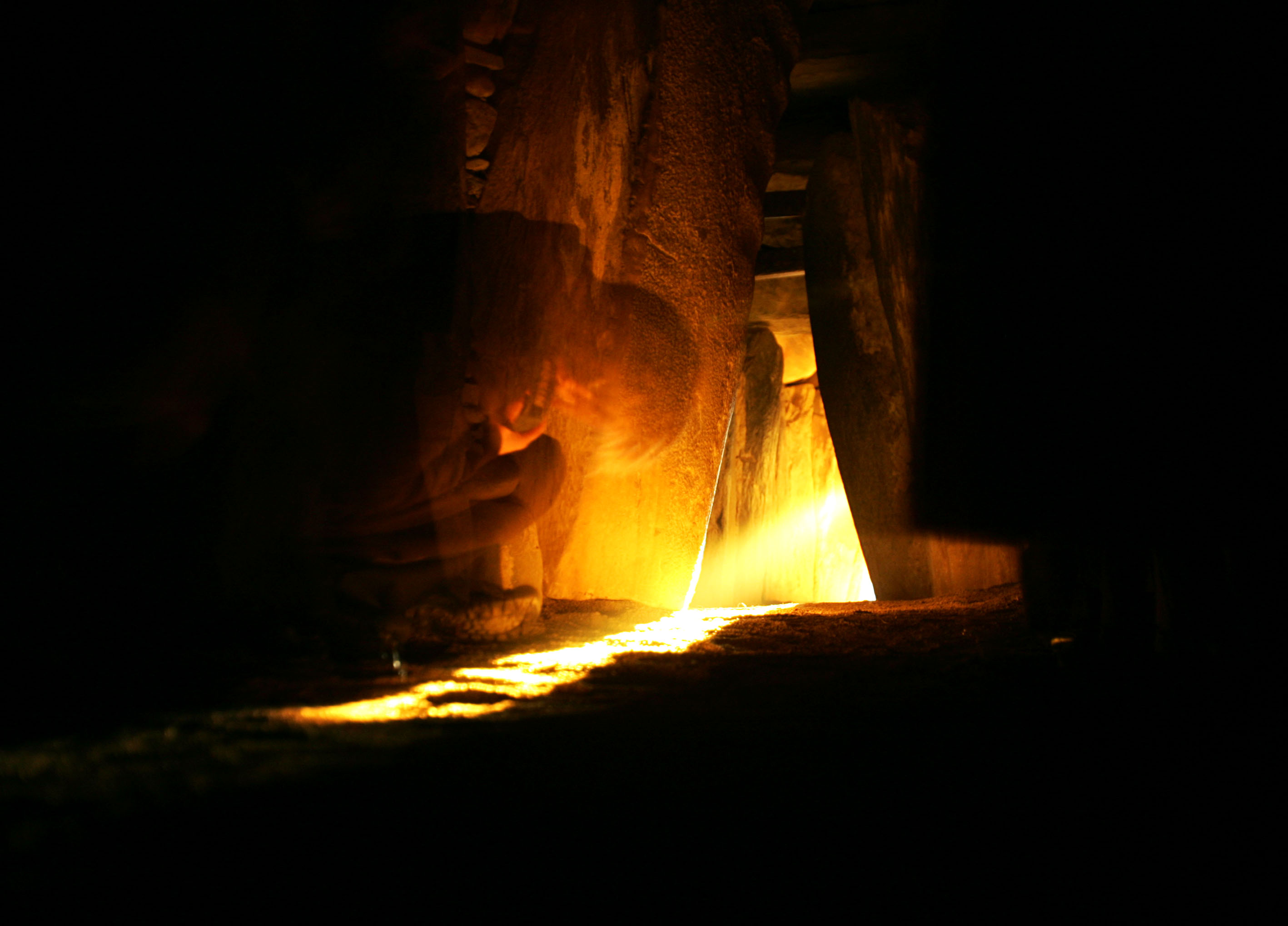
For example, how about a special sunrise at Delicate Arch, in Arches National Park?  Or at Newgrange, Ireland?

Sunrise at Delicate Arch, Arches National Park, by Alex Savage

Sunrise at Delicate Arch, Arches National Park, by Alex Savage

Solstice sunrise at Newgrange, Ireland - Photograph by Cyril Byrne - courtesy of The Irish Times

December 20, 2009, solstice sunrise at Newgrange, Ireland – Photograph by Cyril Byrne – courtesy of The Irish Times (Astronomy Picture of the Day, NASA)


Tyson figures out how to make astronomy popular: Name it “Manhattanhenge,” watch the millions flock to see it

July 12, 2012

Sunrise over Stonehenge on the summer solstice...

Sunrise over Stonehenge on the summer solstice, June 21, 2005 — the analogy of Manhattan’s skyscrapers to the rocks of Stonehenge is obvious (Photo credit: Wikipedia)

Dr. at the November 29, 2005 meeting of the NA...

Dr. Tyson at the November 29, 2005 meeting of the NASA Advisory Council, in Washington, D.C. (Photo credit: Wikipedia)

Some time ago astronomy phenom Neil de Grasse Tyson mentioned the twice-a-year happenstance of the sun’s setting perfectly in line with New York City’s east-west gridded streets.  On many streets, on most streets, you can watch the sun all the way down to the horizon, between the massive “rocks” of Manhattan skyscrapers, almost like watching the solstices at Stonehenge.

Tyson called it “Manhattan henge.”

July 11, 2012, the crowds turn out to see the phenomenon.  How many years ago was it no one bothered to give it a second glance?

Have you seen it?

In your hometown or city, what dates would the sun set right down the east-west axis of some street, if there are any?

Manhattanhenge 2011 | The Commuter

Manhattanhenge 2011 | The Commuter (Photo credit: MichaelTapp)

Michael Tapp photographs a lot of stuff around Manhattan, and he also provided a link to an NPR Science Friday video in which Tyson explains the phenomenon.  So, go see Tapp’s work (hey, maybe buy some of it); and go see Tyson’s explanation.

Manhattanhenge on 42d Street - Bloomberg Businessweek photo - Xinhua News

The sun shines down 42nd Street in New York City at sunset during “Manhattanhenge,” May 30, 2011. Photographer: Xinhua News Agency/eyevine/Redux

According to Bloomberg/Businessweek:

On May 30 at 8:16 p.m. and again on July 11 at 8:24 p.m., Manhattanhenge reaches its point of perfection as the full setting sun aligns with the city’s grid of East-West streets, according to the American Museum of Natural History’s Hayden Planetarium. The best places to view the fiery canyon of skyscrapers are at 14th, 23rd, 34th, 42nd, 57th Streets. The Empire State Building and the Chrysler Building offer especially good views.

Manhattanhenge on 34th Street, by Chaitanya Kapadia / UGC

Manhattanhenge on 34th Street, by Chaitanya Kapadia / UGC – Here’s what Chaitanya Kapadia says about this picture: “I had set up on a nice spot right in the middle of 34th Street, between the double yellow lines with a few photographers wanting to get the Empire State Building in my shot. However, I should have anticipated photographers to just swarm the streets when the sun lined up with the grid. Minutes later, the police drove down the middle of the road, getting everyone out, which only meant stepping to the side until they passed you, and then right back. Took this using three exposures hand-held.”

Manhattanhenge, July 11, 2012, by Andy Dallos

Manhattanhenge, July 11, 2012, by Andy Dallos

More: